

2016-2025 Honda Civic ABS Module: A Guide to VSA Faults, Programming, and Replacement
This guide covers the critical programming requirements, common failure symptoms, and costs of replacing the ABS control module in your 2016-2025 Honda Civic.
- A replacement ABS module MUST be programmed to your car's VIN by a dealer or a qualified independent shop with Honda-specific software.
- Part number compatibility is critical. You must match the part number from your original module exactly due to variations in engine, transmission, and trim levels.
- Driving with a failed ABS module is risky. Your standard brakes will work, but you will not have anti-lock, traction control, or stability control functions.
- Several recalls and service bulletins exist for this generation Civic related to VSA module software. Check your VIN for open recalls before beginning repairs.
Symptoms of a Failing ABS Control Module


When the ABS module in your Civic begins to fail, it will usually provide clear warnings. Ignoring these can compromise your vehicle's most important safety systems.
- ABS Warning Light: The most common symptom is an illuminated ABS warning light on your dashboard. This indicates the system has detected a fault and has likely disabled the anti-lock braking feature.
- Traction Control or VSA Light: Because the module controls multiple systems, you may also see the traction control (often a car with squiggly lines) or VSA light turn on.
- Brake Warning Light: In some cases, the main red "BRAKE" light may also illuminate, sometimes flashing to indicate a specific problem.
- Unusual Brake Pedal Feel: The brake pedal might feel unresponsive, spongy, or require more effort than usual to engage the brakes.
- Brakes Locking Up: The primary purpose of ABS is to prevent your wheels from locking. If your wheels lock up and skid during a hard stop, it's a clear sign the ABS system is not functioning.
- Diagnostic Trouble Codes (DTCs): A professional scan tool can read specific codes from the module. Common codes point to low voltage, communication errors, or internal failures. A code like 🎬 Watch: How to diagnose low voltage codes with a scanner. U0121 indicates a loss of communication with the module, while a code like U3000-49 can point to an internal ECU failure.
Known Issues, Recalls, and Service Bulletins

While the 2016-2025 Civic platform has been generally reliable, there have been specific recalls and service bulletins related to the VSA modulator and its software.
- NHTSA Recall 16V-725 (Honda Campaign KC6): This recall affected certain 2016 Civic models. The VSA module's software could prevent the electric parking brake (EPB) from engaging if applied right after turning the ignition off. This could lead to a vehicle rollaway. The fix was a software update performed by the dealer.
- Service Bulletin 16-090: This bulletin addresses the same issue as the recall, noting that a communication error could cause the BRAKE indicator to blink and may store a DTC U3000-49. The corrective action is to update the VSA modulator control unit software.
- NHTSA Recall for 2023 Civics: A small number of 2023 Civics were recalled because a damaged ball valve in the VSA modulator could cause a brake fluid leak. This could cause the vehicle to move unexpectedly if the "Brake Hold" feature was engaged. The remedy was to replace the entire VSA modulator.
Pro Tip: Before purchasing a replacement module, always check your vehicle's VIN on the NHTSA website or Honda's recall lookup page to see if any open recalls apply to your car.
Programming and Calibration: The Critical Step

Yes, a replacement ABS control module in a 2016-2025 Honda Civic MUST be programmed to the vehicle. This is the single most important fact to understand before starting this repair. The module is tied to your car's specific Vehicle Identification Number (VIN) and its unique configuration.
Failure to program a new or used module will result in the ABS and VSA systems not functioning correctly, and warning lights will remain on the dashboard. The programming process involves:
- VIN Writing: A diagnostic tool is used to write your car's VIN into the replacement module. This allows it to communicate with the other computers in the vehicle.
- VSA Sensor Neutral Position Memorization: After installation, the system's sensors (like the yaw rate and steering angle sensors) must be calibrated. This procedure teaches the module the vehicle's "neutral" or straight-ahead position.
Warning: Be wary of sellers claiming to offer "pre-programmed" or "plug-and-play" used ABS modules. Programming must be done with the module installed in the target vehicle; it cannot be done on a workbench before shipping.
Who Can Program the Module?
While a Honda dealership is always an option, they are not the only one. A well-equipped independent repair shop that has a professional-grade scan tool with J2534 pass-thru capabilities can also perform the programming. This involves using Honda's official diagnostic software (i-HDS) to perform the necessary updates and calibrations.
🎬 Watch: How to program the module using a J2534 tool.Buying a Used ABS Control Module
Purchasing a used OEM ABS module is a cost-effective way to repair your Civic, but careful selection is crucial.
- Match Part Numbers Exactly: Honda uses many different ABS modules across the Civic lineup depending on the engine (1.5L Turbo vs 2.0L), transmission (Manual vs Automatic), trim level (LX, Sport, Type R), and installed features (like Honda Sensing). The existing buyer warnings are correct: you must match the part number from your original unit to the replacement.
- Inspect for Damage: When you receive the part, check the electrical connector pins for any signs of corrosion or damage. Ensure the aluminum block of the pump is free of cracks and that the brake line ports are clean and undamaged.
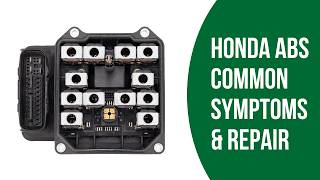
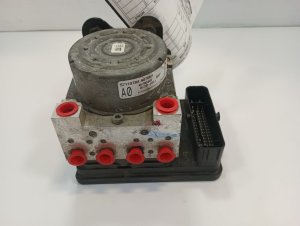
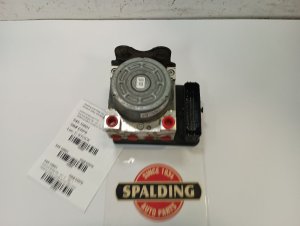
- Buy the Assembly: The ABS control module (the black electronic box) is bolted to the hydraulic pump (the aluminum block with brake line ports). They are typically sold as a single assembly. It is recommended to replace them as a unit.
- Why Used OEM is a Good Choice: For a complex electronic part that requires vehicle-specific programming, a used original equipment (OEM) part is often more reliable than a new aftermarket unit. OEM parts are designed to integrate perfectly with Honda's software and systems, reducing the risk of programming failures or incompatibility.
Cost Breakdown
The cost to replace a Honda Civic ABS module can vary significantly based on the path you choose.
| Part Type | Estimated Cost |
|---|---|
| New OEM | $1,200 - $3,000+ |
| New Aftermarket | $200 - $1,100 |
| Used OEM | $150 - $400 |
| Remanufactured | $350 - $700 |
| Shop Labor (Installation & Programming) | $200 - $400 |
Frequently Asked Questions
Can I drive my Civic with a bad ABS module?
Yes, but with significant risks. Your normal hydraulic brakes will still function, but you will not have anti-lock brakes, traction control, or stability control. This means your wheels can lock up during a hard stop, increasing stopping distances and causing a loss of steering control, especially on wet or slippery roads. It is strongly recommended to have the issue repaired as soon as possible.
Is replacing the ABS module a DIY job?
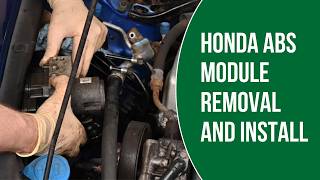
The physical replacement is possible for an experienced DIY mechanic. It involves disconnecting the battery, carefully removing brake lines (which requires line wrenches to avoid stripping), swapping the module assembly, reinstalling the lines, and thoroughly bleeding the entire brake system. 🎬 See this full tutorial on module removal and replacement. However, the final, mandatory step of programming requires expensive, specialized scan tools and software, meaning a trip to a qualified shop or dealer is almost always necessary.
Do I need to replace the ABS pump and module together?
Yes, it is highly recommended. The electronic control module and the hydraulic pump/valve body are integrated into a single unit known as the VSA modulator assembly. They are designed to work together, and nearly all new, used, and remanufactured parts are sold as a complete assembly.
Will a used ABS module from a different Civic model work?
No. The modules are specific to trim level, engine, transmission, and safety features. For example, a module from a Type R will not work in an LX sedan. You must match the OEM part number from your original unit exactly to ensure compatibility.
Helpful Videos
Technical Specifications
OEM Part Numbers: 57100-T56-J52 57100-TBG-B90 57100-TBG-B91 57100-TBG-B92 57100-TBG-B93 57100-TGH-A10 57100-TGH-A11 57100-TGH-A12 57100-TGH-C10 57100T43A62 57100T56J52 57100TBAA13 57100TBAA14 57100TBAA15 57100TBAA16
The unit is an integrated VSA (Vehicle Stability Assist) modulator, combining the electronic control unit (ECU) and the hydraulic pump/valve body.
We Have This Part in Stock





The information in this article is provided for general reference and educational purposes only. Vehicle specifications, procedures, and part compatibility can vary by production date, trim level, and region. Always consult your vehicle's factory service manual and verify part numbers before purchasing or performing repairs. Safety-critical components such as airbags, seat belts, and braking systems should be installed by a qualified professional.
- Honda Civic: