

2014-2020 Honda Civic ABS Module: VSA Faults, Programming, and Replacement Guide
This guide covers common failures, diagnostic codes, and the critical VIN-programming required when replacing the ABS control module on your 9th or 10th generation Honda Civic.
- Programming is mandatory. A replacement ABS module (new or used) must be programmed to your car's VIN by a dealer or a specialized shop to function.
- Part numbers must be matched exactly. The 2014-2020 range spans two Civic generations with different, incompatible modules.
- A faulty module disables critical safety features: ABS, Vehicle Stability Assist (VSA), and Traction Control.
- Sending your original module for repair is a viable alternative that often avoids the need for expensive reprogramming.
Understanding the 9th Gen vs. 10th Gen Civic Distinction

The 2014-2020 year range covers two distinct Honda Civic generations, and their ABS control modules are not interchangeable. It is critical to identify your vehicle's generation before sourcing a replacement part.
- 9th Generation Honda Civic: 2014-2015 model years. These models typically use part numbers beginning with 57110-TR3....
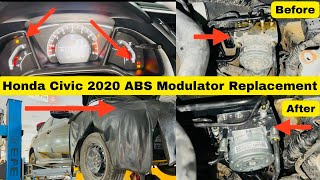
- 10th Generation Honda Civic: 2016-2020 model years. These models use 🎬 See a 10th Gen Civic ABS module replacement in action. part numbers like 57100-TBA... (for standard models) and 57100-TGH... (for Type R).
Using a module from the wrong generation will result in system incompatibility and failure to program.
Symptoms of a Failing ABS Control Module

A failing ABS module can manifest in several ways, often illuminating multiple warning lights on your dashboard simultaneously. This is because the ABS, VSA, and traction control systems are all managed by this single unit.
- Multiple Dashboard Warning Lights: The most common symptom is the simultaneous illumination of the ABS, VSA, and Power Steering (EPS) warning lights. A general brake system warning light may also appear.
- Unresponsive or Hard Brake Pedal: You might experience a change in brake pedal feel, with it becoming hard to press or feeling unresponsive.
- Wheels Locking Up: During hard braking, the wheels may lock up and skid, indicating the anti-lock function is not working.
- Loss of Traction Control: The vehicle may lose traction more easily on slippery surfaces as the traction and stability control systems are disabled.
- Inaccurate Speedometer: In some cases, a failing ABS module can affect the speedometer reading since it relies on data from the wheel speed sensors.
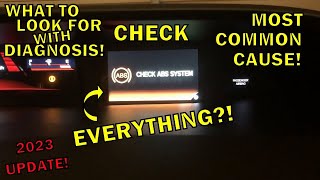
- Diagnostic Trouble Codes (DTCs): A professional scan tool may reveal codes related to the VSA modulator, wheel speed sensors, or communication errors. A very common code is U0121 (Lost Communication with ABS Control Module 🎬 Watch this diagnostic walkthrough for 9th Gen dashboard warning lights.). Other codes may point to specific wheel speed sensor failures or internal module faults.
Pro Tip: Before condemning the ABS module, check the battery and charging system. A low voltage event, such as from a weak battery or after a jump start, can sometimes trigger multiple system lights. Also, inspect the wheel speed sensors and their wiring, as a single faulty sensor can disable the entire system.
Known Issues, Recalls, and Technical Service Bulletins (TSBs)
While no widespread recalls specifically target the ABS module for all 2014-2020 Civics, a related recall exists for a small batch of 2023 models due to a manufacturing defect in the VSA modulator, highlighting the part's complexity. For the 2014-2020 range, failures are typically age and use-related. However, several recalls were issued for other braking and fuel system components on these models, so it's always wise for owners to check their VIN on the NHTSA website for any open campaigns.
Programming and Installation Requirements

Warning: A replacement ABS control module, whether new or used, MUST be professionally programmed to your vehicle's specific VIN. This is not an optional step.
This programming synchronizes the module with the rest of the car's electronics, including the engine control unit (ECU) and the immobilizer system. Failure to program the module will result in a no-start condition or non-functional VSA and ABS systems. The procedure requires specialized tools like the Honda Diagnostic System (HDS) or a compatible J2534 pass-thru device. While a Honda dealership is equipped for this, many high-level independent shops with the correct software subscription can also perform the programming. For some later models, the programming also involves an immobilizer relearn procedure; if skipped, the car may fail to start after the battery is disconnected in the future.
🎬 Learn why the immobilizer relearn is vital for Honda programming.Buying a Used ABS Control Module: A Buyer's Guide

Purchasing a used OEM ABS module can offer significant savings over a new part, but careful selection is crucial. A properly vetted, used OEM module that is correctly programmed is often a more reliable choice than a new, cheap aftermarket unit.
- Match Part Numbers Exactly: This is the most important rule. The part number on the replacement module must be an exact match or a direct, verified superseded number for your original part. Pay close attention to the generation (9th vs. 10th) and specific trim/engine variants.
- Inspect for Physical Damage: Check the aluminum pump block for cracks and the plastic electronic module for any signs of heat damage or being pried open. Ensure the electrical connector pins are straight and free of corrosion.
- Verify Vehicle Compatibility: The initial warnings highlight the complexity. Some modules are for Type R models only, some for EX-L sedans, and others depend on whether the car has Honda Sensing (pre-crash systems). Always cross-reference the part number with the donor vehicle's VIN and your vehicle's specifications.
- Factor in Programming Costs: Remember that the price of the used part is not the final cost. You must budget for professional installation and, most importantly, the programming service, which can add a few hundred dollars to the total.
- Consider a Repair Service: An alternative to buying a used module is to have your original module repaired. Companies like Circuit Board Medics or Module Master can often fix common internal failures. The primary benefit is that since your original module's data is retained, no programming is required after reinstallation, making it a true plug-and-play solution.
Cost Comparison
Prices can vary significantly based on the specific part number and vehicle trim.
| Part Type | Estimated Cost (Part Only) |
|---|---|
| New OEM | $800 - $1,600+ |
| New Aftermarket | $400 - $900 |
| Used OEM | $150 - $500 |
| Remanufactured / Repair Service | $200 - $350 |
Shop labor for replacement, which includes bleeding the brake system and programming the module, typically costs between $200 and $700.
Frequently Asked Questions (FAQ)
Can I drive my Civic with a bad ABS module?
You can, but with significant risks. Your standard hydraulic brakes will still function, but you will not have anti-lock brakes (ABS), traction control (TCS), or vehicle stability assist (VSA). This means your wheels can lock up during a panic stop, increasing stopping distances and causing a loss of steering control, especially on wet or slippery roads. It is strongly recommended to have the issue repaired as soon as possible.
Why are the ABS, VSA, and Power Steering lights all on at the same time?
These systems are all interconnected. The VSA and power steering systems rely on wheel speed data from the ABS module to function correctly. When the ABS module detects a critical fault or loses communication, it broadcasts an error message on the vehicle's data network, causing other dependent systems to shut down as a precaution and illuminate their respective warning lights.
Do I have to go to a Honda dealer for programming?
Not necessarily, but it's often the most straightforward option. Many well-equipped independent repair shops that specialize in Honda vehicles have the necessary HDS software or J2534 pass-thru tools and subscriptions to perform the VIN programming and immobilizer relearn. However, a general mechanic without this specific equipment will not be able to complete the job. Always confirm with the shop that they have the capability to program a Honda VSA modulator before committing to the repair.
What is the difference between the ABS module and the ABS pump?
The complete unit is often called the ABS modulator or VSA modulator. It consists of two main parts that are usually bolted together: the electronic ABS control module (the black plastic box with the computer inside) and the hydraulic ABS pump/modulator block (the metal part with the brake line connections and valves). While they are often replaced as an assembly, sometimes only the electronic module fails. Some repair services allow you to send in just the electronic portion for repair.
Helpful Videos
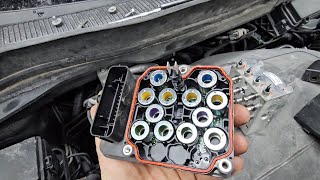
Technical Specifications
OEM Part Numbers: 57100-TGH-A10 57100-TGH-A11 57100-TGH-A12 57100-TGH-C10 57100TBAA13 57100TBAA14 57100TBAA15 57100TBAA16 57100TGHA12 57110-TGH-A030-M1 57110-TGH-C011 57110-TR3-307 57110-TR3-317 57110-TR3-A41 57110-TR3-A42 57110-TR3-A43 04571-TR3-A11
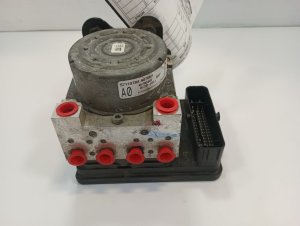
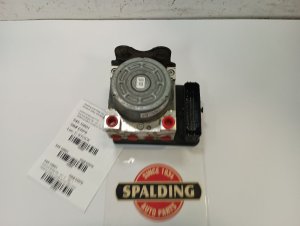
The complete assembly is often referred to as the VSA (Vehicle Stability Assist) Modulator. It consists of the electronic control unit and the hydraulic pump assembly. Replacement requires VIN-specific programming using Honda Diagnostic System (HDS) or equivalent J2534 tools.
We Have This Part in Stock





The information in this article is provided for general reference and educational purposes only. Vehicle specifications, procedures, and part compatibility can vary by production date, trim level, and region. Always consult your vehicle's factory service manual and verify part numbers before purchasing or performing repairs. Safety-critical components such as airbags, seat belts, and braking systems should be installed by a qualified professional.
- Honda Civic:
- 🎬 Helpful Videos
- 🛍️ Shop This Part
- Understanding the 9th Gen vs. 10th Gen Civic Distinction
- Symptoms of a Failing ABS Control Module
- Known Issues, Recalls, and Technical Service Bulletins (TSBs)
- Programming and Installation Requirements
- Buying a Used ABS Control Module: A Buyer's Guide
- Cost Comparison
- Frequently Asked Questions (FAQ)
- 🎟️ Get 5% Off