

2008-2017 Honda Accord ABS & VSA Module: Failure, Programming, and Replacement
This guide covers common failures, critical programming steps, and how to choose the correct used ABS/VSA modulator for your 8th or 9th generation Accord.
- Part compatibility is extremely specific; the module must match your Accord's year, engine (2.4L/3.5L), body style (Sedan/Coupe), and transmission (Auto/Manual).
- Post-installation programming and calibration ('VSA Sensor Neutral Position Memorization') with a professional scan tool is mandatory for the system to function.
- A special brake bleeding procedure using a scan tool to cycle the ABS pump is required to remove all air from the new module.
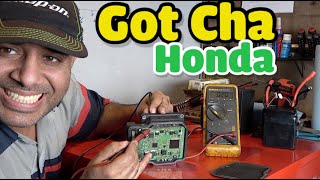
- The most common failure is internal, causing a host of warning lights (ABS, VSA, Brake, FCW, LDW). Repairing your original module is a viable, cost-effective alternative to buying new.
Symptoms of a Failing Honda Accord ABS Module


A failing ABS/VSA module is a well-documented issue on 8th Gen (2008-2012) and 9th Gen (2013-2017) Honda Accords. The most common cause of failure is the cracking of microscopic internal wires that connect the electronic controller to the hydraulic pump solenoids. When these connections break, the module can no longer communicate properly, leading to a cascade of warning lights on your dashboard.
Key symptoms include:
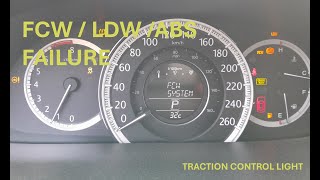
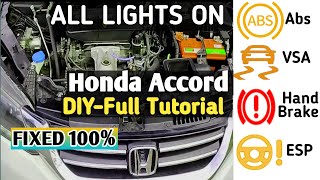
- Multiple Dashboard Warning Lights: The most obvious sign is the simultaneous illumination of the ABS, VSA (or traction control icon), and main Brake warning lights. In some cases, lights for the Forward Collision Warning (FCW), Lane Departure Warning (LDW), and Electric Power Steering (EPS) may also come on 🎬 Watch: How to diagnose and fix these dashboard warning lights, as these systems rely on data from the VSA module.
- ABS/VSA System Inoperative: The anti-lock braking and stability control features will be disabled. Your brakes will still function like a conventional system, but the wheels can lock up during a panic stop, increasing the risk of skidding.
- Unresponsive or Spongy Brake Pedal: While less common, some failures can lead to a change in brake pedal feel.
- Diagnostic Trouble Codes (DTCs): A professional scan tool is needed to read these codes. Common codes point directly to an internal module or solenoid failure.
| DTC Code | Description | Common Cause |
|---|---|---|
| 61-1 / 61-xx | Modulator-Control Unit Power Source Circuit Low Voltage | Often triggered by a weak or failing battery, but can indicate an internal module fault. |
| 66-11 / 66-13 | Pressure Sensor Circuit/Malfunction | Internal pressure sensor failure within the module. |
| 81-19 / 81-xx | Yaw Rate Sensor Internal Malfunction | Failure of the integrated yaw rate sensor inside the module. |
| 121-11 to 124-11 | VSA Solenoid Valve Malfunction | Indicates a failure in the solenoid valves that control the VSA system. |
| 31-11 to 38-11 | ABS Solenoid Valve Malfunction | Indicates a failure in the solenoid valves that control the ABS system. |
| U0121 | Lost Communication with ABS Control Module | The module is not communicating with the rest of the vehicle's network. |
Known Issues, Recalls, and Technical Service Bulletins (TSBs)

Recalls
While there hasn't been a widespread recall for the common internal electronic failure on 2008-2017 models, there have been related recalls:
- NHTSA Recall 23V-430 (June 2023): This recall affects a very small number of 2022-2023 Accord and other Honda models for a VSA modulator that was damaged during manufacturing. This could cause a brake fluid leak and unexpected vehicle movement if the brake hold feature is used. While outside the 2008-2017 range, it highlights the critical nature of the part.
- VSA Modulator Recall (March 2010): Some earlier 8th generation Accords were part of a recall where the VSA modulator could allow air to enter the system over time, leading to a soft or low brake pedal.
Technical Service Bulletins (TSBs)
Honda TSB 16-005: This bulletin addresses an issue on some 2011-2015 models where multiple warning lights appear with DTCs 61-1 (low voltage) or 81-1 (internal circuit malfunction). The cause is identified as the VSA software being overly sensitive to low battery voltage. The fix is a software update for the VSA modulator-control unit, not a hardware replacement. Always check for a weak battery and see if this TSB applies before replacing the module.
Pro Tip: Before condemning the ABS module, always ensure your vehicle's battery is fully charged and in good health. A low voltage condition is a known cause for triggering ABS/VSA fault codes on these vehicles.
Buying a Used ABS Control Module for Your 2008-2017 Accord

Given the high cost of a new OEM module, a quality used OEM part is an excellent alternative. However, compatibility is extremely specific. Buying the wrong module will result in it not working and is a waste of time and money. Pay close attention to the following details.
1. Verify Compatibility: Engine, Body Style, and Transmission are CRITICAL
The ABS/VSA module is programmed specifically for the vehicle's configuration. You must match the part to your Accord's exact specifications:
- Engine: 2.4L 4-Cylinder modules are different from 3.5L V6 modules.
- Body Style: Sedan modules are different from Coupe modules.
- Transmission: Automatic transmission modules are different from Manual transmission modules.
Warning: There is no interchangeability between these configurations. For example, a module from a V6 Coupe will not work in a 4-Cylinder Sedan. You must find a part from a donor vehicle with the exact same powertrain and body style.
2. Match the OEM Part Number
The surest way to guarantee compatibility is to match the OEM part number. This number is printed on a sticker on the side of the module. You may need a mirror and flashlight to see it while it's installed in the car. Compare this number to the part number of the used unit you plan to purchase. The provided list of OEM part numbers is a starting point, but physical verification is best.
3. Physical Inspection of the Used Part
When you receive the used module, inspect it carefully:
- Connectors: Check for any bent or corroded pins in the electrical connector.
- Pump Body: Look for signs of heavy corrosion or physical damage to the aluminum block.
- Brake Line Ports: Ensure the threads are clean and undamaged.
- Solenoids: The black cylindrical solenoids on the module should be free of cracks or damage.
Installation and Programming Requirements

Replacing the ABS/VSA module is a moderately difficult job, primarily because of the mandatory post-installation procedures.
1. Programming and Calibration are REQUIRED
A replacement ABS/VSA module—whether new or used—must be calibrated to the vehicle. This is not optional. The warning lights will not turn off and the system will not function until this is done. The key procedure is the VSA Sensor Neutral Position Memorization. This process teaches the module the 'zero point' for the steering angle sensor, yaw rate sensor, and lateral acceleration sensor.
This calibration requires a compatible professional scan tool, such as the Honda Diagnostic System (HDS) used by dealers, or high-end aftermarket scanners from brands like Autel or Snap-on. Some sources describe a manual procedure involving shorting pins on the OBD-II port, but this can be complex and is best left to professionals.
2. Specialized Brake Bleeding Procedure
After installing the module and connecting the brake lines, the system must be bled to remove all air. This is not a standard brake bleeding procedure. You must use the scan tool to activate the ABS pump and cycle the internal solenoids to force trapped air out of the modulator's hydraulic circuits. Failure to perform this automated bleed will result in a spongy brake pedal and compromised braking performance.
3. Who Can Perform the Installation?
- Dealer: Has the correct HDS tool and factory procedures. This is the most reliable, but also the most expensive option.
- Independent Shop: Many well-equipped independent shops have the necessary scan tools to perform the VSA calibration and ABS bleed procedure.
- Advanced DIY: This job is only feasible for DIY mechanics who own a high-level bidirectional scan tool capable of performing these specific Honda functions.
Cost to Replace a Honda Accord ABS Module
The cost can vary dramatically depending on the path you choose. A dealership replacement can be prohibitively expensive, often exceeding $2,000.
| Part/Service | Estimated Cost | Notes |
|---|---|---|
| New OEM Module | $1,100 - $1,800+ | Part only. Very expensive. |
| Used OEM Module | $150 - $450 | A cost-effective option, but compatibility must be exact. |
| Remanufactured/Repaired | $200 - $350 | You send your original module to be repaired. This avoids programming issues as your original unit is returned. |
| Shop Labor | $250 - $500 | Includes installation, brake bleeding, and programming. Labor time is typically 2-3 hours. |
Frequently Asked Questions (FAQ)
Do I have to program a replacement ABS module for my Accord?
Yes, programming (calibration) is mandatory. A procedure called 'VSA Sensor Neutral Position Memorization' must be performed with a professional-grade scan tool after the module is installed. Without this step, the system will not work and the warning lights will remain on.
Can I drive my Accord with the ABS and VSA lights on?
You can, but with extreme caution. Your primary braking system will still work, but you will not have anti-lock brakes (ABS) or Vehicle Stability Assist (VSA). This means your wheels can lock up and skid during a hard stop, and you will have no electronic assistance to prevent sliding on slippery roads. It is highly recommended to get the system repaired as soon as possible.
What is the difference between the ABS module and the VSA modulator?
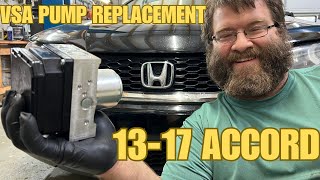
On the 2008-2017 Honda Accord, they are the same thing. The unit is a single integrated assembly that contains the electronic control module, the hydraulic pump, and the solenoid valves for both the Anti-lock Braking System (ABS) and the Vehicle Stability Assist (VSA) system. It is commonly referred to as the VSA modulator.
Is it better to repair my original module or buy a used one?
Repairing your original module can be a great option. Companies specialize in fixing the common internal failures. The main advantage is that since you are reinstalling your original part, it often does not require the same level of programming as a used unit from another vehicle, though a sensor re-learn is still recommended. However, this means your car will be undrivable while the module is shipped out and repaired. A used module can get you back on the road faster, provided you can find an exact match and have it programmed correctly.
Helpful Videos
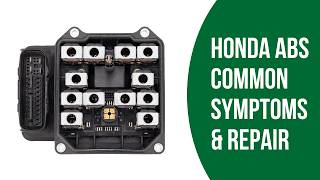
Technical Specifications
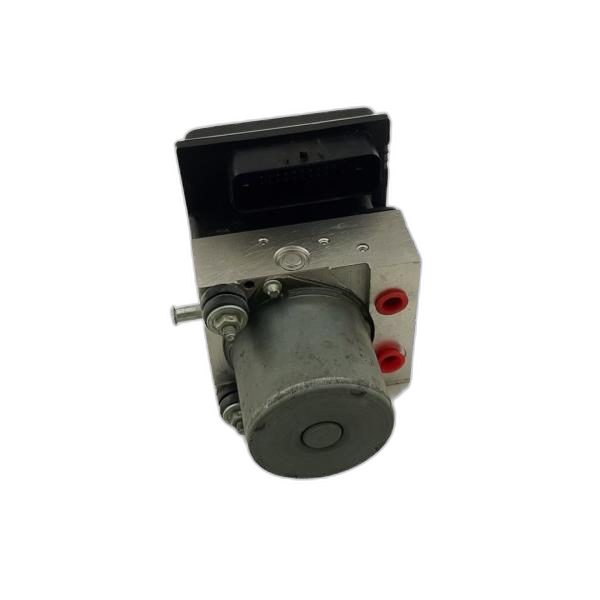
OEM Part Numbers: 04571-T2F-A01 04571-T2F-L01 04571-T2F-L71 04571-TE1-A51 04571T2FA01 04571T2FL71 57110-T2F-A02 57110-T2F-A03 57110-T2F-A04 57110-T2F-A05 57110-T2F-A06 57110-T2F-A07 57110-T2F-L72 57110-TA0-305 57110-TA0-A53 57110-TE0-306 57110-TE1-A82
Integrated ABS and VSA (Vehicle Stability Assist) control module and hydraulic pump assembly. Requires 12V power and communicates via CAN bus with other vehicle modules.
We Have This Part in Stock



The information in this article is provided for general reference and educational purposes only. Vehicle specifications, procedures, and part compatibility can vary by production date, trim level, and region. Always consult your vehicle's factory service manual and verify part numbers before purchasing or performing repairs. Safety-critical components such as airbags, seat belts, and braking systems should be installed by a qualified professional.
- HONDA ACCORD:
- 🎬 Helpful Videos
- 🛍️ Shop This Part
- Symptoms of a Failing Honda Accord ABS Module
- Known Issues, Recalls, and Technical Service Bulletins (TSBs)
- Recalls
- Technical Service Bulletins (TSBs)
- Buying a Used ABS Control Module for Your 2008-2017 Accord
- 1. Verify Compatibility: Engine, Body Style, and Transmission are CRITICAL
- 2. Match the OEM Part Number
- 3. Physical Inspection of the Used Part
- Installation and Programming Requirements
- 1. Programming and Calibration are REQUIRED
- 2. Specialized Brake Bleeding Procedure
- 3. Who Can Perform the Installation?
- Cost to Replace a Honda Accord ABS Module
- Frequently Asked Questions (FAQ)
- 🎟️ Get 5% Off