

2010-2011 Equinox & Terrain ABS Module: Programming, Symptoms, and Replacement
This guide covers the common failures, diagnostic codes, and critical programming requirements for the ABS control module in the 2010-2011 GMC Terrain and 2010 Chevrolet Equinox.
- A replacement ABS module MUST be programmed to your vehicle's VIN by a dealer or qualified shop to function.
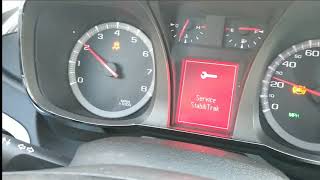
- Common symptoms include ABS, StabiliTrak, and Traction Control warning lights appearing together.
- Multiple wheel speed sensor codes (C0035, C0040, etc.) often point to a bad module, not bad sensors.
- After replacement, a special 'ABS Bleed' procedure using a scan tool is required to properly bleed the brakes.
Symptoms of a Failing ABS Control Module
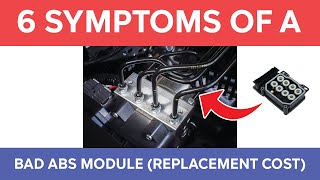
When the ABS control module in your 2010-2011 GMC Terrain or 2010 Chevrolet Equinox begins to fail, it will typically trigger a number of warnings on your dashboard and changes in brake behavior. 🎬 Watch: 6 common symptoms of a bad ABS module The most common sign is a combination of warning lights all appearing at once.
- ABS Warning Light: This is the most common and direct indicator of a problem within the anti-lock braking system.
- StabiliTrak / Traction Control Warning Lights: Because the ABS module controls these systems, its failure will disable them, illuminating their respective warning lights on the instrument cluster.
- Brake System Warning Light: A red brake warning light may also illuminate, indicating a serious fault in the braking system.
- Unintended ABS Activation: You might feel the brake pedal pulsating or hear the ABS pump running during normal, low-speed braking on dry pavement. This happens when the module misinterprets sensor data and activates the system unnecessarily.
- Unresponsive or Hard Brake Pedal: In some cases, the brake pedal may feel unusually firm or unresponsive, requiring more effort to stop the vehicle.
- Wheels Locking Up: The most critical symptom is a complete loss of ABS functionality. During a hard stop, the wheels may lock up and skid, which is what the system is designed to prevent.
Common Diagnostic Trouble Codes (DTCs)
A professional scan tool that can read ABS codes is necessary for a proper diagnosis. If your module is failing, you will likely see one or more of the following codes:
- C0035-C0050: These codes correspond to issues with the wheel speed sensor circuits (e.g., C0035 for Left Front, C0040 for Right Front). While this can indicate a bad sensor, seeing multiple wheel speed sensor codes at once often points to a faulty ABS module.
- C0110: Pump Motor Circuit Malfunction.
- C0265 / C0267 / C0268: These codes point to problems with the EBCM relay or the pump motor circuit, often indicating an internal failure within the module.
- U0121: Lost Communication With Electronic Brake Control Module.
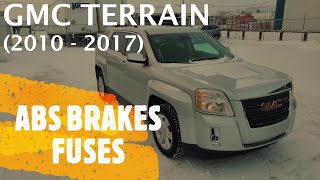
Pro Tip: Before condemning the module, always check the ABS fuses first. In the under-hood fuse box of the Terrain and Equinox, check fuse #13 (40 Amp for the ABS pump) and fuse #16 (20 Amp for the ABS module). A simple blown fuse can mimic module failure.
🎬 Watch: How to find your ABS fusesKnown Issues, TSBs, and Recalls
While there are no specific recalls for the ABS control module on the 2010-2011 GMC Terrain and 2010 Chevrolet Equinox, there was a related recall that owners should be aware of.
Recall 09298 (NHTSA Campaign 09V489000): This recall, issued in December 2009, affected over 59,000 2010 Equinox and Terrain vehicles. The issue was related to software in the center instrument panel that could cause the heating, A/C, defrost, and radio controls to become inoperative. While not directly an ABS module failure, it highlights the complex electronic nature of these vehicles. There are no widespread TSBs specifically for ABS module failure on these models, but problems are commonly discussed in owner forums.
Programming and Calibration Requirements
Warning: This is the most critical step. A replacement ABS control module—whether it is new, used, or remanufactured—MUST be programmed to your vehicle's specific Vehicle Identification Number (VIN) to function correctly.
Simply installing the part will not fix the problem. The ABS light will remain on, and the system will not work until programming is complete. This is not a plug-and-play part.
- Who can program it? A GM dealership or a well-equipped independent repair shop can perform the programming. Most DIY-level scan tools cannot perform this function. The shop will need a tool like a GM Tech 2 or MDI with an active subscription to GM's Service Programming System (SPS).
- Can I use a used module? Yes, a used module can be installed and programmed. The programming process will overwrite the VIN from the donor vehicle with your vehicle's VIN.
- Is there an anti-theft link? The programming links the module to your vehicle's other computers. While not strictly an anti-theft system like the ignition, it is a necessary security and configuration handshake that ensures all systems communicate correctly.
Buying a Used ABS Control Module
Purchasing a used OEM ABS module is a great way to save money, especially since new parts can be expensive or hard to find. However, there are important things to consider.
- Verify the Part Number: The most important step is to match the part number exactly. The OEM part numbers for this application include 25926937, 25926939, 20837392, and 25933427. While other numbers may interchange, matching the number on your original unit is the safest bet.
- Inspect the Connectors: When you receive the part, check the electrical connector pins for any signs of corrosion, bending, or damage. A clean connector is crucial for proper communication.
- Check for Physical Damage: Inspect the module housing for cracks or signs of being tampered with. The module is typically sold attached to the hydraulic pump/valve body.
- Budget for Programming: Remember that the cost of the part is not the final cost. You MUST factor in the price of having the module programmed by a shop, which typically costs between $100 and $200.
- Why Used OEM is a Good Choice: Used OEM modules are the same parts that were installed at the factory. They are designed for your vehicle and, once programmed, offer the same performance and durability as a new part, often at a fraction of the cost.
Replacement Overview
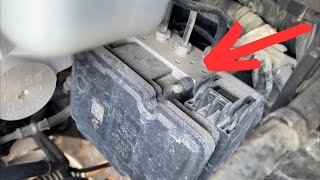
Replacing the ABS module and pump assembly is a moderately difficult job that can be done by an experienced DIY mechanic. The unit is located under the hood, beneath the fuse box on the driver's side.
Difficulty: 3/5
Key Steps:
- Disconnect the battery.
- Remove the under-hood fuse box to gain access.
- Disconnect the main electrical harness from the ABS module.
- Using flare nut wrenches to prevent stripping, carefully disconnect the brake lines from the hydraulic unit. Be prepared for some brake fluid spillage.
- Unbolt the bracket holding the ABS assembly and remove it from the vehicle.
- Installation is the reverse of removal. 🎬 See this step-by-step ABS module replacement walkthrough
Warning: After installation, the entire brake system MUST be properly bled. This often requires a scan tool that can perform an "automated bleed" or "ABS bleed" procedure to cycle the valves and pump inside the new unit to purge all trapped air. A standard manual bleed may not be sufficient.
Cost Comparison
Prices can vary, but here is a general breakdown of what to expect:
| Part Type | Estimated Cost |
|---|---|
| New OEM (Dealer) | $500 - $700+ |
| Remanufactured Aftermarket | $200 - $400 |
| Used OEM | $75 - $200 |
| Shop Labor (Replacement) | $160 - $235 |
| Shop Labor (Programming) | $100 - $200 |
Frequently Asked Questions (FAQ)
Can I drive my Equinox or Terrain with a bad ABS module?
Yes, but with extreme caution. When the ABS module fails, your vehicle's primary braking system will still work, but you will not have anti-lock brakes, traction control, or stability control. This means your wheels can lock up during a hard stop, increasing stopping distances and the risk of skidding, especially on wet or slippery roads. It is highly recommended to have the vehicle repaired as soon as possible.
What happens if I don't program the new ABS module?
If you do not program the module, the ABS, StabiliTrak, and traction control warning lights will remain on, and none of these systems will function. The module will not be able to communicate with your vehicle's other computers until it is programmed with your VIN.
Why are my ABS, StabiliTrak, and Traction Control lights all on at the same time?
These three systems are all managed by the Electronic Brake Control Module (EBCM). When the module detects a critical fault within itself or the ABS, it shuts down all related safety systems as a precaution. Therefore, a single fault in the ABS module triggers warnings for all dependent systems.
Could a bad wheel speed sensor cause these symptoms instead of the module?
Yes, absolutely. A single faulty wheel speed sensor can also trigger the ABS and traction control lights. A key diagnostic clue is the number of trouble codes. If you have a code for a single wheel speed sensor (e.g., C0040 - Right Front Wheel Speed Circuit), the sensor or its wiring is the likely culprit. If you have codes for multiple sensors simultaneously, or communication codes, the module itself is the more probable cause.
Helpful Videos
Technical Specifications
OEM Part Numbers: 25926937 25926939 20837392 25933427
Fits 2010-2011 GMC Terrain and 2010 Chevrolet Equinox with either the 2.4L 4-cylinder or 3.0L V6 engine. Requires VIN programming upon installation.
We Have This Part in Stock



The information in this article is provided for general reference and educational purposes only. Vehicle specifications, procedures, and part compatibility can vary by production date, trim level, and region. Always consult your vehicle's factory service manual and verify part numbers before purchasing or performing repairs. Safety-critical components such as airbags, seat belts, and braking systems should be installed by a qualified professional.
- GMC Terrain:
- Chevrolet Equinox:
- 🎬 Helpful Videos
- 🛍️ Shop This Part
- Symptoms of a Failing ABS Control Module
- Common Diagnostic Trouble Codes (DTCs)
- Known Issues, TSBs, and Recalls
- Programming and Calibration Requirements
- Buying a Used ABS Control Module
- Replacement Overview
- Cost Comparison
- Frequently Asked Questions (FAQ)
- 🎟️ Get 5% Off