

Genesis G80 & Hyundai Genesis ABS Module: Fire Recall, Part Numbers, and Programming Guide (2015-2024)
A crucial guide to the fire-risk recall, complex part compatibility, and mandatory programming for the ABS module in 2015-2016 Hyundai Genesis and 2017-2024 Genesis G80 models.
- A major fire risk recall (NHTSA 21V-160) affects 2015-2016 Hyundai Genesis and 2017-2020 Genesis G80 models. Park these vehicles outdoors until the recall is performed.
- Part compatibility is extremely complex. The correct module depends on the model year, engine (3.3L, 3.8L, 5.0L, etc.), and drivetrain (RWD vs. AWD). You must match the OEM part number exactly.
- All replacement ABS modules (new or used) require professional programming to the vehicle's VIN to function correctly.
- A used OEM module offers huge cost savings over a new dealer part, which can exceed $2,000, making it a practical repair solution.
Symptoms of a Failing ABS Control Module

A failing ABS module can present a range of symptoms, from simple warning lights to dangerous changes in braking behavior. The most severe symptoms for 2015-2020 models are related to a critical fire risk recall.
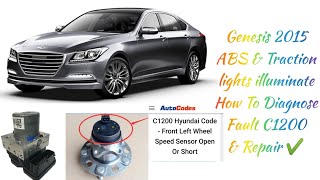
- ABS, ESC, or Traction Control Warning Lights: The most common sign of a problem is an illuminated ABS, ESC (Electronic Stability Control), or traction control light on your dashboard. These systems are all managed by the ABS module, so a fault in the module will disable them. 🎬 See how a faulty wheel speed sensor mimics module failure
- Brakes Locking Up: With the ABS system disabled, your wheels can lock up during a panic stop, causing the vehicle to skid and increasing your stopping distance.
- Unresponsive or Spongy Brake Pedal: You might notice the brake pedal feels different, either becoming hard to press or feeling soft and unresponsive.
- Recall-Specific Warnings (2015-2020 models): Due to a potential for an internal electrical short, you may notice more alarming symptoms. These include a burning or melting smell, visible smoke from the engine bay, or the illumination of the Malfunction Indicator Lamp (Check Engine Light) or battery light. These signs indicate an immediate fire risk.
Critical Safety Recall: Fire Risk (2015-2020 Models)

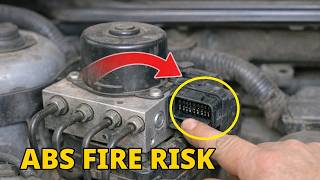
Warning: Hyundai has issued a major safety recall (NHTSA Campaign Number 21V-160) for approximately 95,000 vehicles, including the 2015-2016 Hyundai Genesis and 2017-2020 Genesis G80. The ABS module on these vehicles can malfunction and develop an electrical short. This can lead to a fire in the engine compartment, both while driving and while the vehicle is parked and turned off.
🎬 Watch: Understanding the HECU short circuit and fire riskGenesis advises owners of affected vehicles to park outside and away from structures until the recall service has been performed. The official remedy involves dealers installing a new, lower-amperage fuse for the ABS module circuit at no charge to limit the electrical current and prevent a short. You can check if your specific vehicle is included in the recall by entering your VIN on the NHTSA website.
Vehicle and Part Compatibility: A Critical Guide

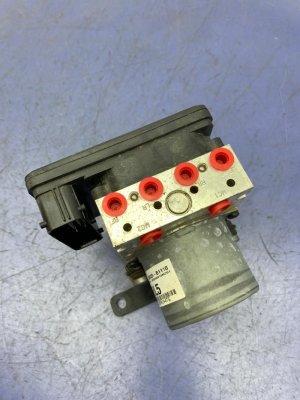
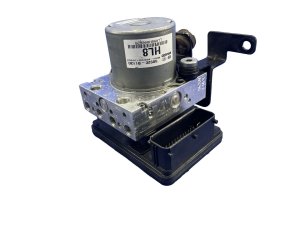
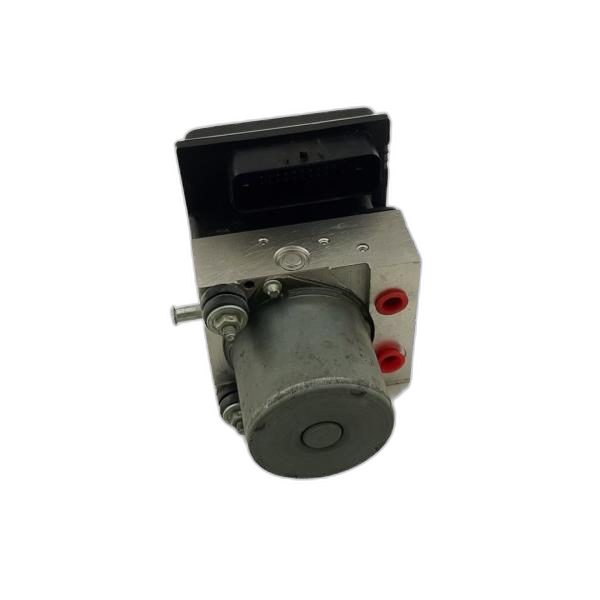
Matching the part number on your ABS module is absolutely essential. The correct module depends on your vehicle's model year, engine, and drivetrain (RWD vs. AWD). Installing the wrong part will result in system failure and warning lights. The unit is a complete assembly including the electronic control module and the hydraulic pump block.
2015-2016 Hyundai Genesis & 2017-2020 Genesis G80 (DH Platform)
This generation has numerous part numbers based on specific vehicle configurations. The warnings in our database are validated by findings of different part numbers for different engines and drivetrains. Always match the OEM number from your original part to the replacement.
- 3.8L Engine: Modules differ between Rear-Wheel Drive (RWD) and All-Wheel Drive (AWD) models. For example, part number
58920-B1110is listed for 2017 G80 3.8L models, while58920-B1630is for a 2018 G80 3.8L with AWD. - 5.0L V8 Engine: These models use a specific module compatible with the V8 powertrain and are typically RWD.
- 3.3L Twin-Turbo V6 (G80 Sport): These models require a unique module. Part number
58920-B1AF0fits 2018-2020 G80 Sport models.
2021-2024 Genesis G80 (RG3 Platform)
The second-generation G80 (model code RG3) uses entirely different ABS modules and is not part of the fire risk recall. Compatibility is still critical and depends on the engine.
- 2.5L Turbo Engine: These models use their own specific ABS module. Part number
58500-T1010is listed for a 2022 G80, indicating the new series of parts for this generation. - 3.5L Twin-Turbo V6 Engine: This engine also uses a unique module.
Buying a Used ABS Control Module: What to Look For

Given the extremely high cost of a new OEM module, a used unit from a reputable recycler is a smart financial choice. Here’s what to consider:
- Match the Part Number Exactly: This is the most important rule. Do not rely on visual similarity. The OEM part number must be a perfect match to ensure the internal software and hardware are correct for your car's features.
- Inspect for Corrosion: Check the aluminum block for heavy oxidation and the electrical connector pins for any green or white corrosion. Corrosion is a sign of moisture intrusion, which is a common cause of failure.
- Check for Physical Damage: Ensure the electrical connector housing isn't cracked and that none of the brake line ports have stripped threads. The unit should be free of dents or other signs of impact.
- Why Used OEM is a Good Choice: Original Equipment (OEM) modules are built to the manufacturer's strict quality and safety standards. Unlike new aftermarket parts, which may have questionable software or internal components, a used OEM module is guaranteed to have the correct hardware for your vehicle. Considering a new OEM unit can cost over $1,800, a used one for $100-$300 offers significant savings.
Programming and Installation Requirements
Replacing the ABS module is a job for an experienced DIYer or a professional technician due to the need for special procedures.
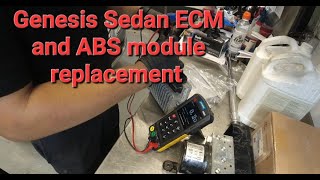
Warning: A replacement ABS module—whether new or used—must be programmed to your vehicle's Vehicle Identification Number (VIN). This process, sometimes called 'variant coding', ensures the module can communicate correctly with the engine computer, steering angle sensor, and other systems. Failure to program the module will result in warning lights and a non-functional ABS/ESC system.
- Who can program it? A Genesis dealership or a qualified independent shop with professional-grade scan tools (like Autel, Launch, or the factory GDS system) can perform the programming.
- Brake Bleeding: After installing the module and connecting the brake lines, the entire brake system must be bled to remove air. This often requires a scan tool to activate the 'HCU Air Bleeding Mode', which cycles the internal valves of the ABS pump to purge all trapped air.
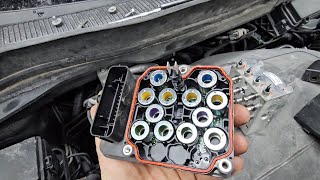
Pro Tip: For highly skilled mechanics, it is possible to replace only the electronic control unit portion of the module without opening the hydraulic brake lines. This involves carefully unbolting the electronic module from the hydraulic block and swapping it with the one from the donor part. This advanced procedure saves several hours of work and avoids the need for brake bleeding, but it is delicate and carries the risk of damaging the components if done incorrectly.
🎬 Watch: Pro tip for swapping the module without bleeding brakesReplacement Cost Comparison
The cost to replace an ABS module varies significantly between new and used options. Programming costs are an additional factor.
| Part Type | Estimated Cost | Notes |
|---|---|---|
| New OEM | $1,800 - $2,700 | Very expensive and varies by part number. For example, part 58920-B1AF0 for the 3.3T Sport has an MSRP over $2,600. |
| Used OEM | $100 - $400 | Offers substantial savings. Prices depend on vehicle configuration and part availability. |
| New Aftermarket | Not Widely Available | Due to the complexity and programming requirements, aftermarket options are rare for these vehicles. |
| Shop Labor (Installation) | $150 - $250 | This covers the physical swap. Does not include bleeding or programming. |
| Shop Labor (Programming) | $150 - $300 | A separate charge for programming the new module to the vehicle's VIN. |
Frequently Asked Questions (FAQ)
Can I still drive my car with the ABS light on?
Yes, but with extreme caution. Your standard brakes will still work, but the anti-lock (ABS), traction control (TCS), and stability control (ESC) safety features will be disabled. This means your wheels can lock up in a panic stop, increasing the risk of skidding and losing control, especially on wet or snowy roads. For 2015-2020 models, an ABS light could also be a precursor to the fire risk, so it should be addressed immediately.
Is the ABS module the same as the ABS pump?
For these Genesis models, the part is a single integrated assembly called the Hydraulic and Electronic Control Unit (HECU). It consists of the electronic ABS control module (the computer) bolted directly to the hydraulic ABS pump (the valve block). They are replaced as one piece.
Does a used ABS module need to be programmed?
Yes, absolutely. Any replacement module, new or used, must be electronically coded to your car's specific VIN and configuration. Without this step, the car's computer will not recognize the new part, and the safety systems will not function. This requires a professional scan tool.
What OBD-II codes are related to a bad ABS module?
While many codes can point to an ABS issue, codes specifically for the module or pump are most relevant. Look for codes like C0110 (Pump Motor Circuit), C0121 (Valve Relay Circuit Malfunction), or codes indicating a communication failure with the module. However, the most common ABS-related codes are often for faulty wheel speed sensors (e.g., C0035, C0040, C0045, C0050), which should be ruled out first.
Helpful Videos
Technical Specifications
OEM Part Numbers: 58500-T1000 58500-T1010 58520-T1000 58520-T1010 58920-B1130 58920-B1950 58920-B1AF0 58920-B1110 58920-B1530 58920-B1630 58920-B1AC0 58920-B1010 58920-B1650
The part is a combined Hydraulic and Electronic Control Unit (HECU). It is located in the engine compartment and requires programming and a specialized brake bleeding procedure upon installation.
We Have This Part in Stock




The information in this article is provided for general reference and educational purposes only. Vehicle specifications, procedures, and part compatibility can vary by production date, trim level, and region. Always consult your vehicle's factory service manual and verify part numbers before purchasing or performing repairs. Safety-critical components such as airbags, seat belts, and braking systems should be installed by a qualified professional.
- Genesis G80:
- Hyundai Genesis:
- 🎬 Helpful Videos
- 🛍️ Shop This Part
- Symptoms of a Failing ABS Control Module
- Critical Safety Recall: Fire Risk (2015-2020 Models)
- Vehicle and Part Compatibility: A Critical Guide
- 2015-2016 Hyundai Genesis & 2017-2020 Genesis G80 (DH Platform)
- 2021-2024 Genesis G80 (RG3 Platform)
- Buying a Used ABS Control Module: What to Look For
- Programming and Installation Requirements
- Replacement Cost Comparison
- Frequently Asked Questions (FAQ)
- 🎟️ Get 5% Off