

Ford F-150 & Lincoln Mark LT ABS Module Failure (2000-2010): Lights, Codes, and Programming
This guide covers the common failures, diagnostic codes, and critical programming requirements for the ABS control module on 2000-2010 Ford F-150 and 2006 Lincoln Mark LT trucks.
- A replacement ABS module MUST be programmed to your truck's VIN to function correctly. This is not a plug-and-play part.
- Compatibility is extremely specific. You must match the OEM part number and be aware of major differences between 2WD/4WD, model years (especially 2009), and special packages.
- Common failure symptoms include the ABS/traction lights being on and the ABS pump motor running constantly, even with the truck off.
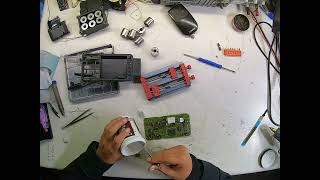
- Sending your original module for repair is a great option that costs around $300 and avoids the need for programming.
Symptoms of a Failing ABS Control Module

A faulty ABS module can cause several distinct symptoms. While many issues can trigger the ABS light, a combination of these signs often points directly to a problem with the module itself.
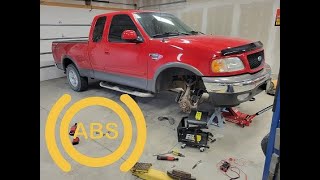
- ABS and Traction Control Warning Lights: The most common symptom is an illuminated ABS warning light on the dashboard. Often, the traction control or stability control light will also come on, as these systems rely on the ABS module to function.
- ABS Pump Motor Runs Constantly: You may hear a continuous humming or buzzing sound from the engine bay, even when the truck is off. This is the ABS pump motor running nonstop due to an internal failure in the electronic module.
- Brake Pedal Feels Different: The brake pedal might feel unusually hard to press, or it may feel spongy and unresponsive. This happens when the module incorrectly controls the hydraulic valves, affecting brake pressure.
- Erratic Speedometer: In some cases, a failing ABS module can cause the speedometer to behave erratically or stop working completely. This is because the module processes wheel speed data that is shared with the instrument cluster.
- No Anti-Lock Function: During a panic stop, you may notice the wheels lock up and screech, without the characteristic pulsing sensation in the brake pedal. This indicates the anti-lock feature is not engaging.
Common Diagnostic Trouble Codes (DTCs)
A professional scan tool can read codes from the ABS module to help pinpoint the problem. While wheel speed sensor codes (like C1145 or C1165) are common and should be investigated first, the following codes are strongly associated with module failure:
- B1342: Internal Control Module Fault.
- C1300: ABS Pump Motor Circuit Failure.
- C1073: Pump Motor Control Circuit.
- B2477: Module Configuration Failure (This code specifically indicates a programming issue).
Pro Tip: Before condemning the ABS module, always check the related fuses first. For 2009-2014 models, these are typically fuses #36, #47, and #54 in the under-hood power distribution box. Also, inspect the wheel speed sensors and their wiring for damage or debris, as a bad sensor can mimic module failure.
Buying a Used ABS Control Module: Compatibility and Programming


Purchasing a used OEM ABS module is a cost-effective solution, but success depends entirely on getting the right part and programming it correctly. This is not a simple plug-and-play part.
1. Programming is REQUIRED
Any replacement ABS module—new or used—must be programmed to your vehicle's VIN. The module's software is configured for specific options like engine size, tire size, and drivetrain (2WD vs. 4WD). Without programming, the module will not work correctly, the ABS light will stay on, and you may get a "Module Configuration Failure" code.
- How it's done: A mechanic uses a professional scan tool (like the Ford IDS or a high-end aftermarket tool) to perform a "Programmable Module Installation" (PMI). This process copies the vehicle-specific "as-built" data from your old module and writes it to the replacement.
- What if the old module is dead? If the original module can't communicate, the as-built data can be downloaded from Ford's service website using your truck's VIN and then loaded onto the new module.
- Who can do it? While a Ford dealer can do it, they are often hesitant to work with used parts. An experienced independent shop that services Fords is often a better choice, as they are more familiar with programming used components. Some advanced DIYers use software like FORScan to perform the programming themselves.
2. Critical Compatibility Warnings
The ABS module for this generation of F-150 is extremely specific. Ordering the wrong one is a common and costly mistake. Pay close attention to these details:
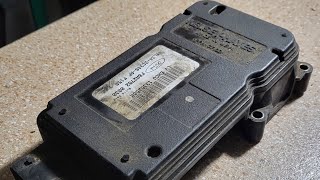
Warning: Always match the OEM part number from your original module to the replacement. Do not rely on year and model alone.
- 2WD vs. 4WD: Modules are different for two-wheel drive and four-wheel drive models. Ensure you get the correct one for your drivetrain.
- 2000-2004 (Heritage): Modules for 2000-2003 F-150s and the 2004 F-150 Heritage are for models with 4-wheel ABS only. They will not work on trucks with the 7700 lb. Heavy Duty Payload Package or high-performance Lightning models.
- 2004-2005 (New Body Style): For 2004 "New Style" and 2005 F-150s, there are specific modules for trucks built on or before November 28, 2004. Many of these early new-body-style modules are for 2WD (RWD) trucks only.
- 2009 F-150: This is a one-year-only module. It is not compatible with other years. A 2010 module can be adapted, but it requires adding a brake booster vacuum sensor and custom wiring, a complex job not recommended for most.
- 2010 F-150: Modules for this year are often specific to 2WD models equipped with Electronic Stability Control (ESC).
The 2006 Lincoln Mark LT shares its platform and ABS components with the corresponding 2006 Ford F-150. The same symptoms, part numbers, and compatibility rules apply.
3. Physical Inspection
When your used part arrives, inspect it carefully before installation:
- Check the electrical connector pins for any signs of corrosion, bending, or damage.
- Ensure the plastic housing is not cracked or broken.
- Look at the solenoid valves on the bottom (if separated from the pump). They should be clean and free of debris.
Replacement Overview
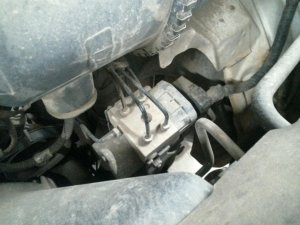
The ABS control module is located in the engine compartment, typically on the driver's side, bolted directly to the top of the ABS hydraulic pump assembly. In many cases, you can replace just the electronic module without opening the hydraulic brake lines, which simplifies the job significantly.
- Disconnect the negative battery terminal.
- Gain access to the module. This may require removing the air filter housing or the driver's side inner fender liner.
- Disconnect the large main electrical connector. It has a slide-lock mechanism that must be released.
- Remove the four T20 Torx screws that secure the electronic module to the hydraulic unit.
- Carefully pull the module straight up and away from the pump. Cover the exposed solenoids on the pump to protect them from dirt.
- Installation is the reverse of removal. After the new module is installed and connected, it must be programmed.
Important: If you are replacing the entire ABS pump and module assembly, you will need to disconnect the brake lines. This will require you to bleed the entire brake system afterward. A standard brake bleed is not enough; you must use a scan tool to perform an "ABS Bleed" or "Service Bleed" to purge air from the hydraulic unit.
Cost Comparison
Replacing an ABS module can be expensive, but buying a used OEM part offers significant savings.
| Part Type | Estimated Cost | Notes |
|---|---|---|
| New OEM | $1,200 - $1,700+ | Highest cost, may be backordered or discontinued. |
| New Aftermarket | $350 - $600 | Limited availability for some years. Quality can vary. |
| Remanufactured | $300 - $550 | A good option, but still requires programming. |
| Used OEM | $75 - $250 | Best value, but requires careful part number matching and programming. |
| Repair Service | $250 - $350 | Your original module is rebuilt. The main benefit is that no programming is needed upon reinstallation. |
| Shop Labor (Module Only) | $60 - $150 | For swapping the electronic module and programming. |
| Shop Labor (Full Assembly) | $200 - $400 | Higher cost due to bleeding the brake system. |
Frequently Asked Questions (FAQ)
Do I have to program a replacement ABS module?
Yes, absolutely. Whether the part is new, used, or remanufactured, it must be programmed to your truck's VIN to configure it for your vehicle's specific options. The only exception is if you send your original module out to be repaired and then reinstall it.
Can I drive my truck with a bad ABS module?
Yes, but with caution. Your standard brakes will still work, but the anti-lock, traction control, and stability control safety features will be disabled. This means your wheels can lock up during a hard stop, increasing the risk of skidding, especially on wet or icy roads.
Where is the ABS module located on a 2000-2010 F-150?
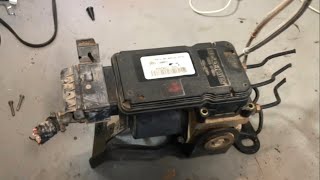
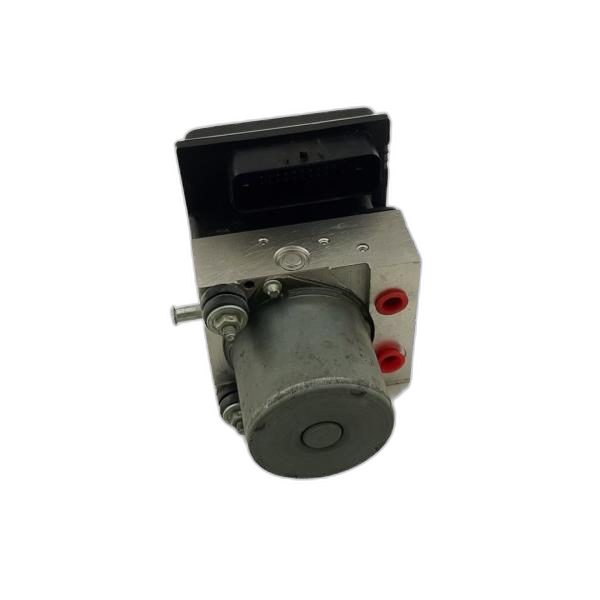
It is located in the engine bay on the driver's side. It's the black electronic box bolted to the aluminum hydraulic block with brake lines coming out of it. On some models, you may need to remove the airbox to see it clearly.
What's the difference between the ABS module and the ABS pump?
The ABS module is the electronic computer, while the ABS pump (also called the hydraulic control unit or HCU) is the mechanical part with valves and a motor that controls brake fluid pressure. They are bolted together into one assembly. Often, only the electronic module fails and can be replaced separately.
Helpful Videos
Technical Specifications
OEM Part Numbers: 1L342C346AA 4L342C065AA 4L342C065AB 4L3A2C219AA 4L3Z2B373AA 4L3Z2C065AA 6L3Z2B373BA 6L3Z2C065AA 6L3Z2C219A 9L342C215AB 9L342C215AC 9L34AB 9L34AC 9L3Z2C405C AL342C215AA
Module requires programming (VIN-specific configuration). Location: Driver's side of engine bay, mounted to hydraulic unit. Module is secured with four T20 Torx fasteners.
We Have This Part in Stock





The information in this article is provided for general reference and educational purposes only. Vehicle specifications, procedures, and part compatibility can vary by production date, trim level, and region. Always consult your vehicle's factory service manual and verify part numbers before purchasing or performing repairs. Safety-critical components such as airbags, seat belts, and braking systems should be installed by a qualified professional.
- Ford F-150:
- Lincoln Mark LT:
- 🎬 Helpful Videos
- 🛍️ Shop This Part
- Symptoms of a Failing ABS Control Module
- Common Diagnostic Trouble Codes (DTCs)
- Buying a Used ABS Control Module: Compatibility and Programming
- 1. Programming is REQUIRED
- 2. Critical Compatibility Warnings
- 3. Physical Inspection
- Replacement Overview
- Cost Comparison
- Frequently Asked Questions (FAQ)
- 🎟️ Get 5% Off