

Ford F-150 & Raptor ABS Module Failure (2009-2018): Lights, Codes, and Programming
This guide covers the common ABS control module failures in 2009-2017 Ford F-150 and 2017-2018 F-150 Raptor trucks, focusing on diagnosis, complex part matching, and programming requirements.
- A replacement ABS module (new or used) MUST be programmed to your truck's VIN using a tool like FORScan or by a dealer.
- Part compatibility is extremely complex; you must match the part number exactly and verify the drivetrain (4x2/4x4) and specific model year, as 2009 and 2012 have unique requirements.
- Having your original module repaired is often the best option, as it costs less than a new part and does not require programming.
- The electronic module can be replaced without opening brake lines, meaning you do not have to bleed the brakes for the swap.
Symptoms of a Failing ABS Control Module

A bad ABS module on a Ford F-150 or Raptor isn't subtle. The failure often triggers a cascade of warnings on the instrument cluster because multiple safety systems rely on it. Before assuming the module is bad, always check for simpler issues first, like blown fuses or damaged wheel speed sensor wiring, which can cause similar symptoms.
- ABS and Traction Control Lights: The most common symptom is the illumination of the ABS and traction control (AdvanceTrac) warning lights on your dashboard.
- Brake Warning Light: The main red "BRAKE" light may also illuminate.
- Constant ABS Pump Noise: You may hear the ABS pump motor running continuously, even when the truck is turned off. 🎬 Watch: How to fix a continuously running ABS pump motor. This can drain the battery. To stop it temporarily, you can pull the 50-amp ABS fuse in the under-hood fuse box.
- Instrument Cluster Warnings: You may see messages like "Service AdvanceTrac," "Hill Start Assist Not Available," or "Hill Descent Control Fault."
- Communication Codes: A professional scan tool may show codes indicating a loss of communication with the ABS module, such as U0415, or internal fault codes like B1342, B1596, C1073, or C1266.
- Unusual Brake Pedal Feel: In some cases, the brake pedal may feel soft, spongy, or unresponsive.
Known Issues, Recalls, and Technical Bulletins

While there are no widespread recalls specifically for ABS control module failure on the 2009-2018 F-150 and Raptor, this is a well-documented common failure part. The issues typically stem from internal electronic component failure, such as cracked solder joints on the circuit board or failed transistors that control the pump motor.
It's important to note that other issues can mimic a failed module:
- Wiring Damage: Chafed or broken wires leading to the wheel speed sensors are a common cause of ABS and traction control lights. A visual inspection of the wiring harnesses, especially around the wheels, is a crucial first diagnostic step.
- Brake Master Cylinder Recall (2013-2014 F-150): Some 2013-2014 F-150s were recalled for a brake master cylinder that could leak fluid into the brake booster, causing a loss of front brake function. While this is a separate part, it can cause brake system warning lights and performance issues. Always check your VIN for any open recalls.
Warning: Before replacing the module, have the system professionally diagnosed. A mechanic can use a high-end scan tool to attempt to communicate with the module and check for power, ground, and communication network signals at the module's connector. This can rule out a simple wiring or fuse problem.
Buying a Used ABS Control Module: What to Look For

Due to the high cost of new OEM modules, a used or remanufactured unit is a popular choice. However, compatibility is extremely complex. Buying the wrong module will result in it not working, even after programming.
1. Match the Part Number EXACTLY
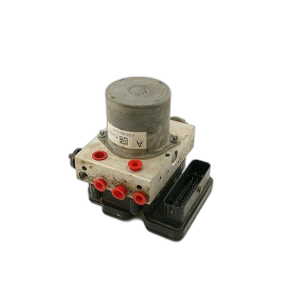
This is the most important rule. The engineering part number is printed on a sticker on the module itself. Do not rely on a seller's generic description; you must match the number from your original part. Part numbers like 9L34-2C405-BH, AL34-2C215-AB, or HL34-2C405-AF are examples of what you're looking for.
2. Verify Vehicle Specifications
Even with a matching part number, be cautious. These modules are specific to the truck's configuration:
- Drivetrain: Modules for 4x2 (RWD) and 4x4 trucks are different and not interchangeable.
- Model Year Nuances:
- 2009 Models: The 2009 F-150 uses a unique ABS module. A module from a 2010 or newer truck will not work correctly without significant wiring modifications to add a vacuum sensor that the 2009 truck's system doesn't have from the factory. It is critical to source a module specifically from a 2009 F-150.
- 2012 Models: There was a production change during the 2012 model year. Modules for trucks built on or before November 4th, 2011, are different from those built on or after November 5th, 2011. Check your vehicle's door jamb sticker for the manufacturing date.
3. Physical Inspection
When you receive the used module, inspect it carefully. Look for any signs of corrosion on the aluminum housing or pins in the electrical connectors. Check that the plastic connector housings aren't cracked or broken. A module that has been previously opened and resealed (often with silicone) might indicate a prior failed repair attempt.
4. Consider a Repair Service
An excellent alternative to buying a used module is to have your original one repaired. Companies specialize in rebuilding these units, which typically costs less than a used part and comes with a warranty. The biggest advantage is that since you are reinstalling your original module, no programming is required, saving a significant step and potential cost.
Programming and Calibration Requirements

Critical: A replacement ABS module (new or used) MUST be programmed to your truck's Vehicle Identification Number (VIN). If you skip this step, the ABS and brake warning lights will remain on, and the system will not function correctly.
This process, often called Programmable Module Installation (PMI), writes your truck's specific configuration (VIN, tire size, axle ratio, etc.) to the replacement module so it can communicate with the Powertrain Control Module (PCM), instrument cluster, and other systems.
Who Can Program the Module?
- Ford Dealership: A dealer can perform the programming using their proprietary IDS software. This is the most straightforward but also the most expensive option.
- Independent Shop: Many independent repair shops with advanced diagnostic tools (like an Autel or Snap-on scanner with programming capabilities) can perform the PMI procedure.
- DIY with FORScan: For the tech-savvy DIYer, it is possible to program the module yourself using a laptop, a compatible OBD-II adapter, and the FORScan software. The process generally involves connecting to the truck, using FORScan to download the vehicle's original "As-Built" data from Ford's servers, and writing this data to the new (used) module. This overwrites the donor vehicle's information. After programming, you may also need to run the "IVD Initialization Procedure" within FORScan to calibrate the sensors.
Pro Tip: If using FORScan, an annual license is inexpensive and provides access to the functions needed for programming. It's crucial to use a high-quality, recommended OBD-II adapter to ensure a stable connection during the programming process.
Replacement Overview
One of the benefits of this design is that the electronic control module can be replaced without removing the hydraulic control unit (HCU) or opening any brake lines. This means you do not need to bleed the brakes if you are only swapping the electronic part.
- Disconnect the negative battery terminal.
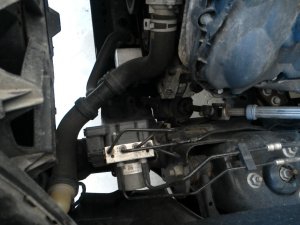
- Locate the ABS module assembly. It's on the driver's side frame rail, typically below the air filter housing. Removing the air filter box provides much better access.
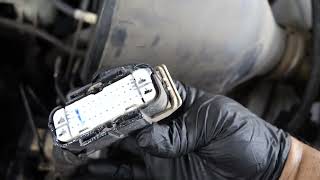
- Disconnect the large main electrical connector. It has a slide-lock mechanism that must be pulled out to release the connector.
- Disconnect the smaller electrical connector that goes to the pump motor.
- Remove the four T20 Torx screws that secure the electronic module to the hydraulic block.
- Carefully pull the module straight off the hydraulic unit. The solenoids will be exposed; be careful not to damage them or allow dirt to enter.
- Installation is the reverse of removal. After the new module is installed and connected, reconnect the battery and proceed with the required programming. 🎬 Watch this step-by-step guide to replacing the ABS module yourself.
Cost Comparison
Prices for an ABS control module can vary dramatically depending on the source.
| Part Source | Estimated Cost | Notes |
|---|---|---|
| New OEM | $750 - $2,200+ | Very expensive, especially for 2009-2014 models. Price depends heavily on year and part number. |
| New Aftermarket (Dorman) | $400 - $550 | Typically a remanufactured unit with upgraded components. Still requires programming. |
| Used OEM | $75 - $350 | Cost-effective but carries risk. Compatibility must be perfect, and programming is required. |
| Repair Service | $150 - $300 | Excellent value. You send your original module for repair. Usually comes with a warranty and does not require programming. |
| Shop Labor (Module Swap) | $100 - $300 | Labor is relatively low as it's an electronic swap with no brake bleeding. This does not include the cost of programming. |
| Shop Labor (Programming) | $100 - $250 | Typically one to two hours of labor at a dealer or qualified independent shop. |
Frequently Asked Questions (FAQ)
Can I drive my F-150 with a bad ABS module?
Yes, but with significant risks. Your truck will still have its standard hydraulic brakes, but the anti-lock (ABS), traction control, and stability control safety features will be disabled. This means your wheels can lock up during a panic stop, increasing the risk of skidding and losing control, especially on wet or slippery roads. It is strongly recommended to get the issue fixed as soon as possible.
Do I have to bleed the brakes after replacing the ABS module?
No, not if you are only replacing the electronic control module. The module can be unbolted from the hydraulic unit without opening the sealed brake fluid system. If you replace the entire assembly (module and hydraulic pump), you will introduce air into the system and will need to perform a full brake bleeding procedure, including an electronic "service bleed" of the ABS pump using a scan tool.
Will a used ABS module from a different year F-150 work?
Almost certainly not. Compatibility is extremely specific. Modules differ between 2WD and 4WD, and there are year-specific and even mid-year production changes. For example, a 2009 module is unique to that year. Always match the part number from your original module exactly.
Why is repairing my original module a good option?
Repairing your original module has two major benefits. First, it guarantees compatibility since it's the exact part that came with your truck. Second, it eliminates the need for expensive and complicated VIN programming, as the module already contains your truck's correct information. This makes it a simpler and often more reliable solution than installing a used part.
Helpful Videos
Technical Specifications
OEM Part Numbers: 9L342C215AB 9L342C215AC 9L34AB 9L34AC 9L3Z2C405C AL342C215AA AL342C215AB AL342C215AC AL342C215EA AL34AA AL34AB AL34AC AL34EA AL3Z2C405G BL34C2C15BA 9L34-2C405-BH 9L34-2C405-A BL34-2C215-BA HL342C405AF
Module is secured by four T20 Torx bolts. Connects via one large multi-pin connector with a slide-lock and one smaller pump motor connector.
We Have This Part in Stock





The information in this article is provided for general reference and educational purposes only. Vehicle specifications, procedures, and part compatibility can vary by production date, trim level, and region. Always consult your vehicle's factory service manual and verify part numbers before purchasing or performing repairs. Safety-critical components such as airbags, seat belts, and braking systems should be installed by a qualified professional.
- Ford F-150:
- Ford F-150 Raptor:
- 🎬 Helpful Videos
- 🛍️ Shop This Part
- Symptoms of a Failing ABS Control Module
- Known Issues, Recalls, and Technical Bulletins
- Buying a Used ABS Control Module: What to Look For
- 1. Match the Part Number EXACTLY
- 2. Verify Vehicle Specifications
- 3. Physical Inspection
- 4. Consider a Repair Service
- Programming and Calibration Requirements
- Who Can Program the Module?
- Replacement Overview
- Cost Comparison
- Frequently Asked Questions (FAQ)
- 🎟️ Get 5% Off