

2013-2019 Explorer & Police Interceptor Utility ABS Module: Failures, Codes, and Programming
Diagnose warning lights and brake problems in your Ford Explorer or Police Interceptor Utility and understand the critical reprogramming steps required for a replacement ABS module.
- Programming is mandatory for any replacement ABS module (new or used) to match the vehicle's VIN and options.
- Part numbers must be matched exactly to ensure compatibility. Fitment can depend on build date and options like adaptive cruise control.
- A failed module disables ABS, traction control, and stability control, compromising vehicle safety in emergency situations.
- Proper brake bleeding after replacement requires a scan tool to cycle the ABS pump; this is not a standard brake bleeding job.
Symptoms of a Failing ABS Control Module
A failing ABS module in a 2013-2019 Ford Explorer or Police Interceptor Utility will almost always provide clear warnings on the dashboard. Because the module integrates with multiple safety systems, you may see several lights and experience noticeable changes in brake behavior.
- ABS Warning Light: The most common symptom is a solid amber ABS light on the instrument cluster.
- Traction Control/Stability Control Light: A light showing a swerving car (the AdvanceTrac or stability control symbol) often illuminates along with the ABS light, as these systems rely on the same hardware.
- Unusual Brake Pedal Feel: The brake pedal may feel hard to press, or you might feel the ABS pump activating at inappropriate times, like during slow, normal braking.
- Wheels Locking Up: In a panic stop, the system may fail to prevent the wheels from locking up, increasing the risk of skidding.
- Inaccurate Speedometer: In some cases, a failing ABS module can disrupt the vehicle speed reading, causing the speedometer to read incorrectly or not at all.
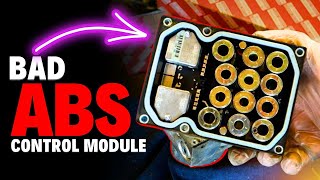
- Pump Running Constantly: You may hear the ABS pump motor running continuously, even when the vehicle is parked. 🎬 Watch: Learn more about bad ABS module symptoms
Common Diagnostic Trouble Codes (DTCs)
A professional scan tool can read codes stored in the ABS module to help diagnose the issue. Common codes associated with failure include:
- C1095 / C0020: These codes point to a failure in the ABS pump motor circuit.
- B1342 / C1342: Indicates an internal malfunction within the ABS control module itself.
- U0121 / 01130: These are communication codes, indicating that other modules in the vehicle have lost communication with the ABS module.
Pro Tip: Before condemning the module, especially for a C0020 code on a 2020-2021 model, check for Technical Service Bulletin (TSB) 21-2030. It notes that a poor ground connection can cause this code, and the fix is to clean and tighten the ground, not replace the expensive module.
Known Issues, Recalls, and Technical Service Bulletins (TSBs)
While there are no widespread recalls specifically for the ABS module on the 2013-2019 Explorer and Police Interceptor Utility, it's important to be aware of related issues. Always check for open recalls on your specific vehicle using its VIN on the NHTSA website.
- TSB 21-2030: As mentioned, this TSB for some 2020-2021 models addresses an ABS light with code C0020, which may be due to a bad ground (G108) rather than a faulty module. While this TSB is for a slightly newer model, the principle of checking grounds first is a wise diagnostic step for any electrical issue.
- Wheel Speed Sensor Issues: Often, symptoms that appear to be a major module failure are actually caused by a much cheaper and more common problem: a bad wheel speed sensor or a corroded tone ring on the axle. A piece of rust or debris on the magnetic pickup ring can cause erratic signals, leading to false ABS activation. A proper diagnosis should always rule out wheel speed sensors before replacing the entire ABS assembly.
CRITICAL: Programming and Calibration Requirements
This is the most important factor to understand when replacing this part. A replacement ABS module—whether it is new, used, or remanufactured—must be programmed to your vehicle's specific Vehicle Identification Number (VIN).
The module's software needs to be configured for your vehicle's exact options, such as drivetrain (FWD/AWD), tire size, and whether it has features like adaptive cruise control. Skipping this step will result in a non-functional system, persistent warning lights, and potentially incorrect brake operation.
Warning: Do not trust sellers claiming to offer "pre-programmed" or "plug-and-play" used ABS modules. Programming must be done while the module is installed in the target vehicle. Any claims to the contrary are misleading.
Who Can Program the Module?
- Ford/Lincoln Dealerships: They have the proprietary IDS (Integrated Diagnostic System) software and are guaranteed to be able to perform the programming. However, some dealers may be reluctant to program a used part.
- Independent Repair Shops: Many professional shops have the same IDS software or an equivalent J2534 pass-thru device that can perform the required "Programmable Module Installation" (PMI) procedure.
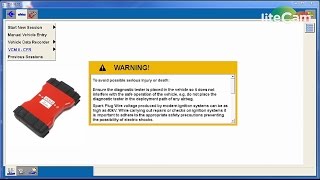
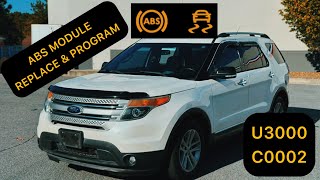
- Advanced DIYers: Software like FORScan, combined with a compatible OBD-II adapter, can be used to program a replacement module. This is an advanced procedure and requires careful attention to detail. 🎬 See how to program a Ford ABS module
Buying a Used ABS Control Module: What to Look For
A used OEM module can be a reliable and cost-effective alternative to an expensive new part, provided you buy smart.
- Match the Part Number EXACTLY: This is non-negotiable. There are many different part numbers for these vehicles based on model year, build date, and options. The provided part numbers (DB53-2C215-AA, FB5Z-2C215-A, etc.) are a starting point. You must physically check the number on your original module and match it to the replacement. Note that some part numbers are specific to vehicles without adaptive cruise control.
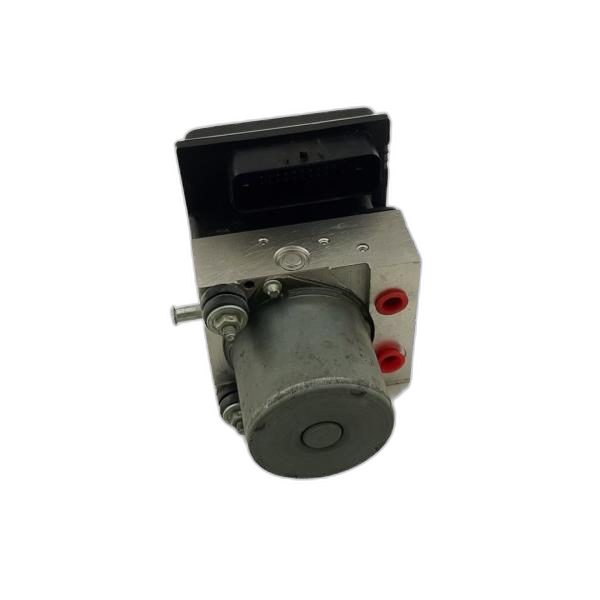
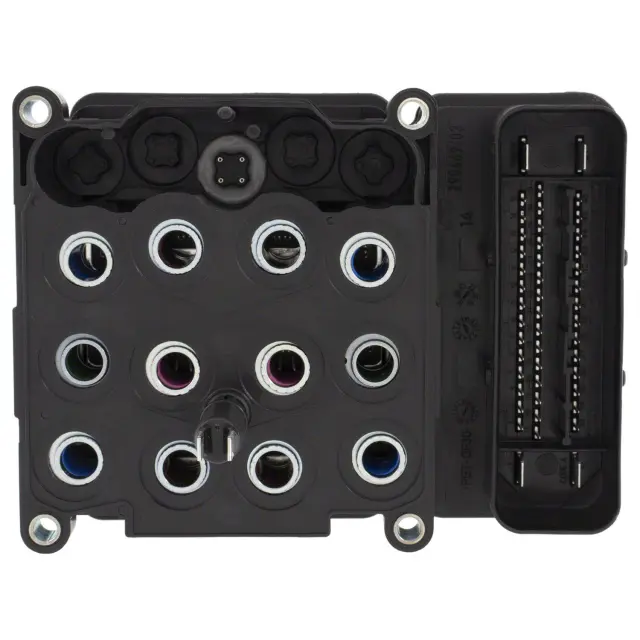
- Physical Inspection: When you receive the used part, inspect it carefully. Look for any corrosion on the aluminum hydraulic block, damage to the plastic electrical connector, or bent/corroded pins. Ensure there are no signs of brake fluid leaks.
- Source from a Reputable Supplier: Purchase from a recycled parts seller that offers a warranty. This protects you in case the part is faulty. A 1-year warranty is a good sign.
- Understand It's an Assembly: This part is a complete unit that includes both the electronic control module and the hydraulic control unit (HCU) or pump. They should not be separated.
Replacement Overview & Cost
Replacing the ABS module is a moderately difficult job, primarily because it involves opening the hydraulic brake system and requires special procedures and tools.
Difficulty: 4 out of 5
DIY Feasible: Not recommended for beginners due to mandatory programming and special brake bleeding procedures.
Process: The module is typically located in the engine bay. The process involves disconnecting the battery, carefully disconnecting the multiple brake lines (labeling them is a good idea) and the main electrical connector, and unbolting the assembly from the vehicle. After installing the new unit, the brake system must be bled. This isn't a standard brake bleed; it requires a scan tool to cycle the ABS pump and valves to purge all trapped air from the new hydraulic unit. Failure to do this correctly will result in a spongy pedal and unsafe braking.
Cost Comparison
Prices can vary significantly based on the source of the part and local labor rates.
| Part/Service | Estimated Cost |
|---|---|
| New OEM Part | $430 - $930 |
| Remanufactured Part / Repair Service | $400 - $600 |
| Used OEM Part | $99 - $250 |
| Shop Labor (Replacement & Bleeding) | $257 - $377 |
| Shop Labor (Programming) | $100 - $200 |
| Total Estimated Cost (Used Part) | $456 - $827 |
| Total Estimated Cost (New Part) | $787 - $1,507 |
Frequently Asked Questions (FAQ)
Do I really have to program a replacement ABS module?
Yes, absolutely. The module is tied to your vehicle's VIN and safety systems. Without programming, it will not function correctly, and you will have warning lights on your dash.
Can I drive with a bad ABS module?
You can, but it is not recommended for safety reasons. Your standard brakes will still work, but you will not have anti-lock brakes, traction control, or stability control. This significantly increases the risk of skidding and losing control in an emergency maneuver or on slippery surfaces.
Is my ABS light on because of the module or a wheel speed sensor?
It could be either. A faulty wheel speed sensor is a very common cause for an ABS light and is a much cheaper fix. A proper diagnostic scan that can read ABS-specific codes is needed to determine if the fault lies with a specific sensor or the module itself.
Can I just replace the electronic part of the module and keep my old pump?
These units are sold and designed as a single assembly. While it may be physically possible to separate them, it is not recommended. The electronic module and hydraulic pump are calibrated to work together. Replacing the entire assembly is the standard and most reliable repair method.
Helpful Videos

Technical Specifications
OEM Part Numbers: DB532C215AA DB532C219DA DB532C219DB DB532C219DC DB532C219DD DB5Z-2C215-A DB5Z-2C219-B DB5Z2C215A DB5Z2C219B FB532C215AA FB532C215AB FB532C405AF FB5Z2C215A FB5Z2C219A HB532C405AC
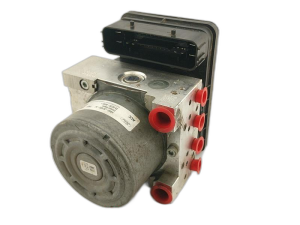
This part is a combined assembly including the electronic control module and the hydraulic control unit (pump).
We Have This Part in Stock



The information in this article is provided for general reference and educational purposes only. Vehicle specifications, procedures, and part compatibility can vary by production date, trim level, and region. Always consult your vehicle's factory service manual and verify part numbers before purchasing or performing repairs. Safety-critical components such as airbags, seat belts, and braking systems should be installed by a qualified professional.
- Ford Explorer:
- Ford Police Interceptor Utility:
- 🎬 Helpful Videos
- 🛍️ Shop This Part
- Symptoms of a Failing ABS Control Module
- Common Diagnostic Trouble Codes (DTCs)
- Known Issues, Recalls, and Technical Service Bulletins (TSBs)
- CRITICAL: Programming and Calibration Requirements
- Who Can Program the Module?
- Buying a Used ABS Control Module: What to Look For
- Replacement Overview & Cost
- Cost Comparison
- Frequently Asked Questions (FAQ)
- 🎟️ Get 5% Off