

2001-2008 Ford Escape & Mercury Mariner ABS Module: Recalls, Programming, and Replacement
This guide covers the common failures, critical safety recalls, and replacement procedures for the anti-lock brake system (ABS) control module in the 2001-2008 Ford Escape and 2005-2008 Mercury Mariner.
- A replacement module MUST be programmed to your vehicle's VIN using a compatible scan tool.
- Early models (2001-2004) were subject to major safety recalls for ABS module fire risk due to fluid intrusion; check your vehicle's history.
- A special, multi-step brake bleeding procedure using a scan tool is required after replacing the hydraulic unit.
- Always match the part number from your original module exactly when purchasing a used replacement.
Known Issues, Recalls, and Technical Service Bulletins (TSBs)
The first-generation Ford Escape and its sibling, the Mercury Mariner, were subject to significant safety recalls concerning the ABS control module. These issues primarily revolve around fluid intrusion and the risk of an electrical short, which could lead to a fire.
Fire Risk Warning: Due to the nature of these recalls, an electrical short in the ABS module could occur even when the vehicle is turned off. Ford specifically recommended that owners park their vehicles outdoors and away from structures until the recall repairs were completed.
NHTSA Safety Recall 07S51
This was the initial major recall for this issue, affecting certain 2001-2004 Ford Escape models. The problem identified was that the wire seals in the ABS module's electrical connector could be missing or improperly seated. This defect allowed moisture and contaminants, such as brake fluid, to enter the connector, creating a pathway for an electrical short. Symptoms included an illuminated ABS warning light, a burning smell, smoke, and in some cases, a fire originating from the module area.
NHTSA Safety Recall 11S24
This subsequent recall targeted 2001-2002 Ford Escape models, addressing a related but distinct issue. It was discovered that the master cylinder reservoir cap could leak brake fluid, which could then drip onto the ABS module connector below. If the connector seals were also compromised (an issue that Recall 07S51 was supposed to fix), the leaking fluid could cause corrosion and an electrical short. The remedy involved replacing the reservoir cap and installing a new fused relay to ensure the ABS module only received power when the ignition was on, mitigating the risk of a fire when the vehicle was parked.
Symptoms of a Failing ABS Control Module
When the ABS module begins to fail, your vehicle will provide several distinct warnings. Ignoring these can compromise your vehicle's safety systems.
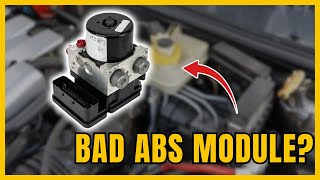
🎬 Watch: A breakdown of the top 8 bad ABS module symptoms.- ABS Warning Light: This is the most common symptom. A constant ABS light on the dashboard indicates the system has detected a fault and has been disabled.
- Traction Control Light: Since the ABS and traction control systems share the same module and sensors, a fault in the module will often disable both systems, illuminating the traction control warning light.
- Unusual Brake Pedal Behavior: You might experience a brake pedal that feels different, such as being overly hard, soft, or unresponsive, particularly at low speeds.
- Wheels Locking Up: The primary function of ABS is to prevent your wheels from locking during hard braking. If your wheels lock up and skid during a sudden stop, it's a clear sign the ABS system is not functioning.
- Inaccurate Speedometer: In some cases, a failing ABS module can disrupt the vehicle speed signal, causing the speedometer to stop working or provide erratic readings.
- Associated OBD-II Codes: A professional scan tool can read codes stored in the module. Common codes pointing to a faulty module include B1342 (ABS Control Module Malfunction), C1095 (ABS Hydraulic Pump Motor Circuit Failure), C1155 (Speed Wheel Sensor LF Input Circuit Failure), and various communication codes (U-codes).
Diagnosing the Issue
Before condemning the ABS module, it's important to rule out other, more common issues. The wheel speed sensors are a frequent point of failure and can produce similar symptoms.
- Check for OBD-II Codes: Use a scanner capable of reading ABS codes. Codes pointing to a specific wheel speed sensor (e.g., C1155) suggest the sensor or its wiring is the problem, not the entire module. Codes like B1342 or C1095 point more directly to the module or its pump motor.
- Inspect Wheel Speed Sensors: Visually inspect the wheel speed sensors and their wiring at each wheel for damage, corrosion, or debris.
- Check Fuses and Relays: Consult your owner's manual and check all fuses and relays related to the ABS system. A simple blown fuse can disable the entire system.
- Inspect the Module Connector: Given the recall history, carefully inspect the main electrical connector on the ABS module for any signs of corrosion, moisture, or melted plastic.
Programming and Calibration Requirements
Yes, a replacement ABS module must be programmed to the vehicle. This is a critical step that cannot be skipped.
The module's software is tied to the vehicle's specific features and Vehicle Identification Number (VIN). Without programming, the new module will not communicate correctly with the vehicle's other computers, resulting in a VIN mismatch error code and a non-functional ABS system.
If the original module can still communicate, a technician can often download the configuration data from the old unit and upload it to the replacement. If the old module is completely dead, the technician will need to use Ford's diagnostic software (like IDS or FORScan) to download the vehicle's "as-built" data from a factory database and program the new module from scratch.
🎬 Watch: How to find Ford As-Built data for module programming.Pro Tip: While a dealership can perform this programming, many independent shops and mobile diagnostic technicians with the right scan tools can also program a used ABS module, often at a lower cost.
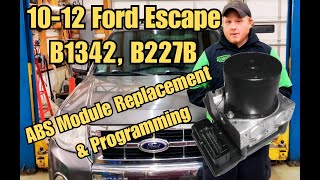
🎬 See this walkthrough for replacing and programming a Ford ABS module.Brake Bleeding Procedure
After replacing the ABS module and pump assembly, a special brake bleeding procedure is required. Standard manual bleeding is not sufficient to remove all air from the new hydraulic unit. A scan tool must be used to cycle the ABS pump and valves, which purges trapped air from the internal passages. The typical process is: manual bleed, scan tool bleed, and then another manual bleed.
Buying a Used ABS Control Module
A used OEM ABS module is often a reliable and cost-effective alternative to an expensive new unit. However, careful inspection and verification are key.
- Match Part Numbers Exactly: The most critical step is to match the OEM part number from your original module to the replacement unit. There are many variations, and even a small difference can lead to incompatibility.
- Inspect the Electrical Connector: Closely examine the connector pins on the used module. Look for any signs of green or white corrosion, bent pins, or heat damage. A pristine connector is a good sign.
- Check for Physical Damage: Inspect the housing for cracks or damage. Ensure all brake line ports are clean and the threads are in good condition.
- Verify Drivetrain Compatibility: The initial data for these vehicles shows conflicting information about whether 2WD and 4WD models use different ABS assemblies. While some part numbers appear to fit both, it is safest to source a replacement from a donor vehicle with the same drivetrain (2WD or 4WD) as yours to ensure compatibility.
- Why Used OEM is a Good Choice: For electronic modules like this, a used OEM part that has been tested and verified is often superior to a new, cheap aftermarket alternative. OEM units are built to the manufacturer's original quality and fitment standards, reducing the risk of programming issues or premature failure.
Cost Comparison
Replacing the ABS module can be expensive, but sourcing a used part can significantly reduce the cost.
| Part Type | Estimated Cost |
|---|---|
| New OEM | $600 - $1,200+ |
| New Aftermarket | $250 - $500 |
| Used OEM | $75 - $200 |
| Remanufactured | $200 - $400 |
| Shop Labor (Replacement & Programming) | $250 - $450 |
Frequently Asked Questions (FAQ)
Can I drive my Ford Escape or Mercury Mariner with a bad ABS module?
Yes, but with significant risks. Your standard hydraulic brakes will still function, but you will not have anti-lock braking, traction control, or stability control. This means your wheels can lock up during a hard stop, increasing the risk of skidding and losing control, especially on wet or icy roads.
Is the ABS module the same as the ABS pump?
They are two separate but connected components, often sold together as a single assembly. The ABS pump (or hydraulic control unit) is the mechanical part with valves and a motor that controls brake fluid pressure. The ABS module is the electronic computer that controls the pump. On these vehicles, the electronic module can often be unbolted from the pump assembly.
Do I have to replace the whole assembly or just the electronic module?
It depends on the failure. If the problem is purely electronic (e.g., a B1342 code with no hydraulic issues), you may be able to replace only the electronic module and swap it onto your existing pump. This can sometimes avoid the need to open the hydraulic system and perform the complex bleeding procedure. However, most used parts are sold as a complete assembly.
Why are my ABS and 4WD lights on at the same time?
On 4WD models, the ABS system and the 4WD system share information, particularly from the wheel speed sensors. A fault in the ABS system, such as a bad sensor or module, can cause the 4WD computer to disable its functions as a precaution, leading to both warning lights illuminating.
Helpful Videos
Technical Specifications
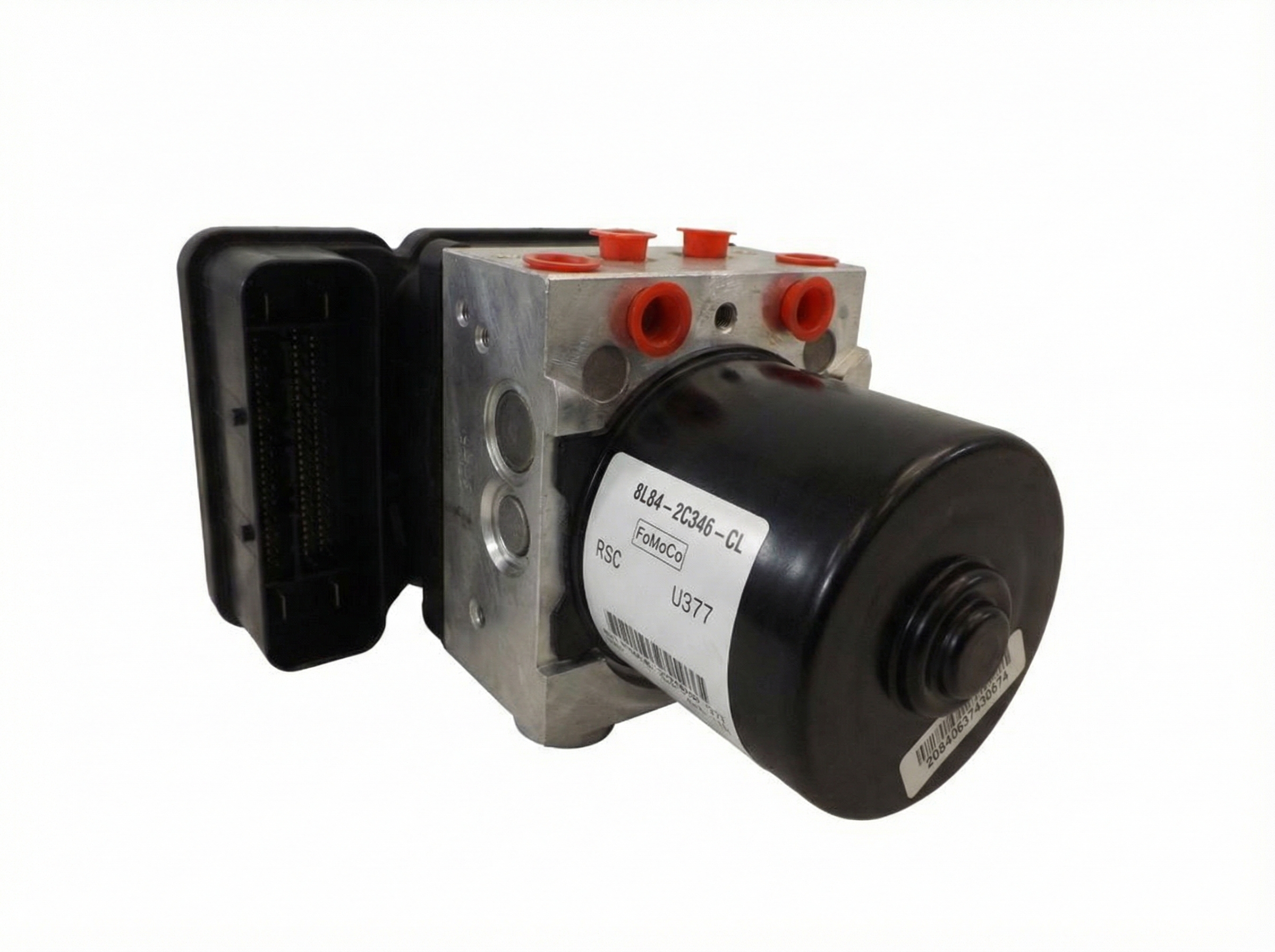
OEM Part Numbers: 5L8Z2B373AC 5L8Z2B373BC 5L8Z2C286AA 8L842C346CC 8L842C346CD 8L842C346CE 8L842C346CF 8L842C346CG 8L842C346CH 8L842C346CJ 8L842C346CK 8L842C346DA 8L842C346DB 8L842C346DC 8L842C346DD
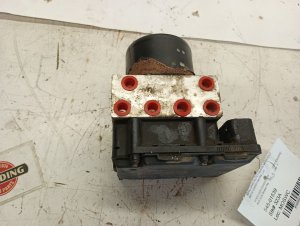
The assembly consists of an electronic control module and a hydraulic pump/valve body. Requires programming and a scan tool-activated brake bleed procedure upon installation.
We Have This Part in Stock




The information in this article is provided for general reference and educational purposes only. Vehicle specifications, procedures, and part compatibility can vary by production date, trim level, and region. Always consult your vehicle's factory service manual and verify part numbers before purchasing or performing repairs. Safety-critical components such as airbags, seat belts, and braking systems should be installed by a qualified professional.
- Ford Escape:
- Mercury Mariner:
- 🎬 Helpful Videos
- 🛍️ Shop This Part
- Known Issues, Recalls, and Technical Service Bulletins (TSBs)
- NHTSA Safety Recall 07S51
- NHTSA Safety Recall 11S24
- Symptoms of a Failing ABS Control Module
- Diagnosing the Issue
- Programming and Calibration Requirements
- Brake Bleeding Procedure
- Buying a Used ABS Control Module
- Cost Comparison
- Frequently Asked Questions (FAQ)
- 🎟️ Get 5% Off