

2002-2004 Ford E-150, E-250 & E-350 ABS Module: Match the Part Number to Avoid Programming
A guide to diagnosing, replacing, and buying a used ABS module for your Ford van, including critical recall information and compatibility warnings.
- A critical safety recall (NHTSA 04V444000) exists for a fire risk; ensure your vehicle has been serviced.
- You can avoid expensive dealer programming by replacing your module with a used or remanufactured unit with the EXACT same part number.
- The electronic module can be replaced without opening brake lines, meaning you do not need to bleed the brakes for this repair.
- This part fits 4-wheel ABS vans only, and for the E-350, it is specific to Single Rear Wheel (SRW) models.
Critical Safety Recall: Fire Risk

Warning: Before diagnosing or replacing your ABS module, you must be aware of NHTSA Campaign #04V444000 (Ford Recall 04S22). This recall affects certain 2003-2004 Ford E-Series vans. A diode inside the ABS module can short circuit, which may cause the module to overheat. This can result in a burning odor, smoke, or even a fire. Since the module has constant battery power, this can happen even when the vehicle is turned off and unattended. Ford's official recommendation was not to park the vehicle in a garage or other enclosed structure until the recall service was completed. The recall involved installing a new fuse and a heat shield. While the warranty extension for this issue has expired, it is crucial to check if your vehicle was affected and if the recall was performed.
Symptoms of a Failing ABS Module

A bad ABS module can cause a range of symptoms, from a simple warning light to noticeable changes in braking behavior. Here are the most common signs:
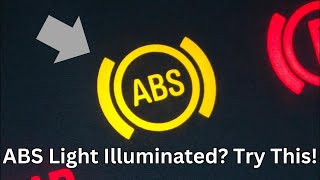
- ABS Warning Light is On: This is the most obvious sign of a problem. The system has detected a fault and has likely disabled the ABS function.
- Brakes Lock Up Under Hard Braking: With the ABS disabled, your vehicle reverts to standard braking. On slippery surfaces, this means the wheels can lock, causing a skid.
- ABS Pump Motor Runs Constantly: You may hear a humming or buzzing sound from under the hood that doesn't shut off. This is often 🎬 Watch: How a failed module causes constant pump humming. caused by a failed internal relay on the module's circuit board.
- Unresponsive or Spongy Brake Pedal: While less common, a faulty module can sometimes interfere with the hydraulic unit, leading to an unusual pedal feel.
- Diagnostic Trouble Codes (DTCs): A scanner that can read ABS codes is the best way to diagnose the issue. Common codes for a failed module include:
- C1096: ABS Pump Motor Circuit Failure / Open Circuit. This is a very common code pointing to an internal module or pump failure.
- C1266: ABS Valve Power Relay Circuit Failure.
- Codes indicating no communication with the ABS module.
Pro Tip: Don't immediately assume the module is bad. Wheel speed sensor codes (like C1165 or C1235) are often caused by corrosion in the wiring harness or a faulty sensor, not the module itself. Always inspect the wiring and connectors for damage before replacing the module.
The #1 Question: Does It Need Programming?

No, in most cases, programming is not required. This is the best news for DIY mechanics and anyone looking to save money. If you replace your failed ABS module with a used or remanufactured unit that has the exact same part number, it should be a plug-and-play installation. Many remanufacturers ship these modules pre-programmed and ready to install.
The key is to match the engineering ID number printed on your original module's sticker. This number typically looks like 2C24-2C219-AA. The suffix (the last two letters) is critical and must match. Using a module with a different part number will likely result in communication errors and a non-functional ABS system, which would then require dealer-level programming tools to resolve.
Buying a Used ABS Control Module

A used OEM module is an excellent, cost-effective solution for these vans, provided you follow these rules:
- Match The Part Number EXACTLY: This is the most important rule. Before you even remove the part, find the identification sticker on your original module. Write down the number (e.g., 2C24-2C219-AA or 2C24-2C219-BA) and buy a replacement with that identical number. Do not rely on visual similarity alone. For all 2004 models, this is especially critical.
- Inspect the Connectors: Look for any signs of corrosion (green or white crust), bent pins, or physical damage on the electrical connector port. A module with a clean connector is a much safer bet.
- Check for Physical Damage: Avoid any units with cracked plastic housings or signs of being forcibly pried apart.
- Buy from a Reputable Seller: Purchase from a seller that offers a warranty and has a good return policy. This gives you protection in case the part is dead on arrival.
Choosing a used OEM module over a cheap aftermarket alternative is often wise. The used OEM part was designed specifically for your vehicle's software and hardware, which is why it can be plug-and-play when the numbers match. Aftermarket units can sometimes introduce compatibility issues.
Important Compatibility Warnings
- This module is for vehicles with 4-wheel ABS only.
- For 2003-2004 Ford E-350 models, this part is only for vans with Single Rear Wheels (SRW). It will not work on dually (DRW) models.
- For all 2004 models, it is critical to match the identification number from your original part to ensure compatibility.
Replacement Overview (The Easy Way)
One of the best features of this ABS system design is that the electronic control module can often be replaced without opening the hydraulic brake lines, meaning no brake bleeding is required. This turns a complex job into a much simpler one.
- Disconnect the Battery: Always disconnect the negative battery terminal before working on any electronic components.
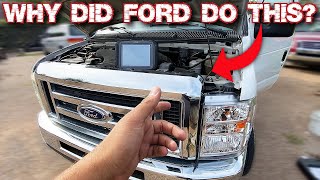
- Locate the ABS Module: It is located on the driver's side frame rail, under the hood. You will likely need to unbolt and move the power steering fluid reservoir for access.
- Disconnect the Electrical Connector: Unplug the large wiring harness from the module.
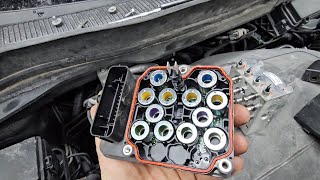
- Remove the Module: The electronic module is typically held to the hydraulic block by several Torx screws (often T20 or T25). Remove these screws.
- Separate the Module: Gently pull the old module straight off the hydraulic block. Be careful not to damage the solenoid pins on the hydraulic unit.
- Install the New Module: Carefully align the new module and slide it into place. Reinstall the screws and reconnect the electrical harness and battery.
After installation, the ABS light should turn off after a short drive as the system completes its self-check.
Cost Comparison
| Part/Service | Estimated Cost |
|---|---|
| New OEM (Dealer) | $800 - $1,200+ (part only) |
| New Aftermarket | $550 - $700 |
| Remanufactured | $250 - $620 |
| Used OEM | $75 - $250 |
| Shop Labor | $100 - $200 |
Frequently Asked Questions
Can I drive with a bad ABS module?
Yes, but with extreme caution. Your normal brakes will still work, but you will not have the anti-lock function. This means your wheels can lock up during a hard stop, increasing the risk of skidding and losing steering control, especially on wet or gravel roads. It is highly recommended to get it repaired as soon as possible.
What does SRW (Single Rear Wheel) mean?
SRW stands for Single Rear Wheel. It refers to a standard van or truck that has one wheel on each side of the rear axle. This is in contrast to a DRW (Dual Rear Wheel) or "dually" truck, which has two wheels on each side of the rear axle for increased stability and payload capacity. This part is not for dually models.
Do I need to bleed the brakes after replacing the module?
Not if you only replace the electronic part of the module. If you replace the entire assembly including the hydraulic pump and valve block, you will have opened the brake lines and the entire brake system will need to be professionally bled.
What tools do I need to replace the ABS module?
You will need basic hand tools, including a socket set to move the power steering reservoir and a set of Torx drivers (likely T20 or T25) to remove the module itself. No special diagnostic tools are needed if you are replacing it with a part-number-matched unit.
Helpful Videos
Technical Specifications
OEM Part Numbers: 2C24-2C219-AA 2C24-2C219-BA 2C2Z2B373AB 6C2Z2C286CA
For vehicles with 4-wheel ABS. E-350 fitment is for Single Rear Wheel (SRW) models only.
We Have This Part in Stock



The information in this article is provided for general reference and educational purposes only. Vehicle specifications, procedures, and part compatibility can vary by production date, trim level, and region. Always consult your vehicle's factory service manual and verify part numbers before purchasing or performing repairs. Safety-critical components such as airbags, seat belts, and braking systems should be installed by a qualified professional.
- Ford E-150:
- Ford E-250:
- Ford E-350:
- 🎬 Helpful Videos
- 🛍️ Shop This Part
- Critical Safety Recall: Fire Risk
- Symptoms of a Failing ABS Module
- The #1 Question: Does It Need Programming?
- Buying a Used ABS Control Module
- Important Compatibility Warnings
- Replacement Overview (The Easy Way)
- Cost Comparison
- Frequently Asked Questions
- 🎟️ Get 5% Off