

2016-2020 Kia Optima 2.4L A6MF2 Transmission: Problems, Identification, and Used Replacement
Identify common A6MF2 failures, decode your VIN, and learn exactly what to check before buying a used replacement transmission.
- The 68-digit solenoid calibration code from the replacement unit's barcode sticker MUST be programmed into the vehicle's computer to prevent severe shifting problems.
- Verify the replacement transmission is for a US-built Optima (1st VIN digit '5') with the 2.4L engine (8th VIN digit '3') and matches OEM part number 45000-3BYE0.
- During installation, always use the torque converter that comes with the replacement unit, flush the cooler lines, and replace the front pump seal (part #46131-3B000) and axle seals.
- Use only genuine Kia/Hyundai SP-IV or SP4M-1 transmission fluid; using universal or incorrect fluids can cause significant damage.
- Before purchasing, inspect any used unit for cracks in the bellhousing and ensure the barcode sticker with the calibration data is intact and legible.
Identifying the Correct A6MF2 Transmission for Your Optima

The 2016-2020 Kia Optima with the 2.4L gasoline direct injection (GDI) engine uses a specific version of the A6MF2 6-speed automatic transaxle. 🎬 Watch: Step-by-step transmission replacement walkthrough A transaxle combines the transmission and differential into a single unit for a front-wheel-drive (FWD) vehicle. Getting the exact match is critical, as other versions from different models or even different Optima engines will not work.
Critical VIN Check
Before purchasing a replacement, check your vehicle's Vehicle Identification Number (VIN). The VIN is a 17-digit code found on your dashboard (visible through the driver's side windshield) and on the driver's door jamb sticker.
| VIN Digit | Required Value | Significance |
|---|---|---|
| 1st Digit | MUST be '5' | Signifies the vehicle was built in the United States. This transmission is not compatible with Korea-built models (which have a 'K' as the first VIN digit) due to differences in wiring, mounts, and case design. |
| 8th Digit | MUST be '3' | Confirms the vehicle has the naturally aspirated 2.4L Theta II GDI engine, which this transmission is specifically calibrated and built for. |
Part Numbers and Identification Codes
To be certain, match the numbers on the replacement transmission with your original unit. Look for a barcode sticker on the top of the transmission case, near where it bolts to the engine.
- OEM Part Number: The main part number is 45000-3BYE0. A remanufactured unit may have the number 45000-3BYE0R.
- Etched Codes: You may also find codes like "EA" or "FA" etched into the case near the shift cable bracket.
Pro Tip: Take a clear photo of the barcode sticker on your original transmission and any potential replacement unit. The sticker contains critical 68-digit calibration data and is easily damaged by brake cleaner, degreaser, or pressure washing.
What Will Not Fit
This A6MF2 transmission is not interchangeable with others from the same family. Avoid transmissions from:
- Optima 1.6L Turbo, 2.0L Turbo, or Hybrid models: These use entirely different transmissions or versions of the A6MF2 with different gear ratios, torque converter specs, and internal programming.
- Other Hyundai/Kia models (Elantra, Sonata, Sorento): While they may also use an "A6" series transmission, the case mounting points, wiring connectors, and gear ratios are different.
- Korea-built Optimas (VIN starts with 'K'): These have physical differences that prevent a direct fit.
Common Failure Symptoms

A failing A6MF2 transmission can show several warning signs. If you experience these issues, a diagnostic check by a professional technician is recommended to confirm the transmission is the root cause.
- Harsh or Delayed Shifting: The car may slam into gear, hesitate before engaging Drive or Reverse, or have rough transitions between gears.
- Slipping: The engine RPMs may flare up between shifts without a corresponding increase in vehicle speed, as if the transmission is momentarily in neutral.
- Shuddering or Vibration: A noticeable shudder, especially during light acceleration or when shifting, can indicate torque converter or internal clutch problems.
- Warning Lights: The Check Engine Light may illuminate, and the gear position indicator on the dash might start blinking.
- Fluid Leaks: Reddish transmission fluid found under the car is a clear sign of a problem, often from a failing front pump seal.
Diagnostic Flowchart

Known Problems, Recalls, and Technical Service Bulletins (TSBs)
Automakers issue Technical Service Bulletins (TSBs) to help technicians diagnose and repair common issues. While not a recall, they are official repair guides. There are no major safety recalls for this specific transmission, but several TSBs and known failure points exist.
- Solenoid Calibration Data (TSB TRA067 / NHTSA ID 10128163): Affects 2017-2020 models. When replacing the transmission, the unique 68-digit calibration code from a sticker on the new unit must be programmed into the Transmission Control Unit (TCU). Failure to do this will cause severe shift shock and immediate performance issues.
- Shift Quality & Wake-Up Logic (TSB SA316B / NHTSA ID 10162049): Affects 2017-2018 models with the 2.4L engine. This issue can cause harsh shifting. The fix is a software update for the Engine Control Unit (ECU) and TCU.
- Internal Wire Harness & Temp Sensor Failure (P0711 / P2709): The internal plastic wiring harness and the fluid temperature sensor it contains can become brittle and crack over time due to heat cycles. This leads to high resistance, diagnostic trouble codes, and erratic shifting behavior.
- Front Pump Seal Blowout / Leak: A common failure point is the front pump seal (also called the torque converter seal, OEM part #46131-3B000). This seal can leak or blow out, leading to a loss of transmission fluid and eventual failure. It is highly recommended to install a new, updated OEM seal before installing any replacement transmission.
- Cracked Bellhousing: Bottoming out or hard impacts can crack the bellhousing. Always inspect the rear mount and bellhousing area.
What Fails at Every Mileage Band
Pro Tip: The mileage bands below describe the typical condition of used replacement units at that mileage. The checklists provided are critical steps to perform WHILE INSTALLING the purchased transmission, not maintenance for your current failing unit.
Under 60,000 Miles
Transmissions in this range are generally healthy, but early failures can occur. Known issues include harsh shifting or hesitation when cold, software glitches in the Transmission Control Module (TCM), and premature failure of the internal transmission fluid temperature sensor. In rare cases, sudden and complete transmission failure happens with little to no warning.
- ✓Do during install (required): Update the TCM and ECU software to the latest version to resolve known shift quality and logic issues (addresses TSB SA316B).
- ✓Do during install (recommended): Perform a complete transmission fluid flush and replacement with genuine Kia SP-IV/SP4M fluid.
- ✓Cheap insurance while the engine is out: Replace the internal transmission fluid temperature sensor and wire harness as a preventative measure, as it is a known failure point and difficult to access later. Inspect and replace the front pump seal and axle seals.
60,000 - 100,000 Miles
Wear and tear become more apparent. You may see harsh downshifting, jerking, and lurching, often linked to outdated TCM software. Delayed shifting, fluid leaks, torque converter problems, and solenoid failures begin to appear. Shuddering and clunky gear changes are indicative of general wear patterns.
- ✓Do during install (required): Perform a complete transmission fluid and filter service with the correct SP-IV fluid. Ensure all TCM/ECU software updates have been performed.
- ✓Do during install (recommended): Replace the front pump seal, torque converter seal, and axle seals.
- ✓Cheap insurance while the engine is out: Consider replacing the valve body solenoids if the donor unit's history is unknown, as they can be a source of future shift issues.
100,000 - 150,000 Miles
At this stage, there is an increased likelihood of internal component failure, leading to slipping or delayed engagement. Torque converter clutch shudder becomes common, often feeling like driving over rumble strips at light throttle. External components like the transmission range sensor may fail due to age, and fluid leaks from aging seals are highly probable.
- ✓Do during install (required): Install a new torque converter. Reusing a high-mileage converter is a major risk. Perform a complete fluid and filter change with SP-IV fluid and flush the cooler lines.
- ✓Do during install (recommended): Replace all external seals, including axle seals and the front pump seal.
- ✓Cheap insurance while the engine is out: Replace the internal wire harness and temperature sensor, as the plastic becomes brittle with age and heat cycles. Proactively replace the valve body solenoids and the transmission range sensor.
Over 150,000 Miles
General internal wear and tear leading to slipping, loss of gears, or complete failure is the primary concern. Catastrophic failure of hard parts like clutch packs and drums is more likely. The transmission may be at or near the end of its expected service life (typically 150,000 to 200,000 miles), especially if fluid changes were neglected.
- ✓Do during install (required): At this mileage, purchasing a remanufactured unit with a warranty is strongly advised over a high-mileage used unit. If installing a used unit, a complete rebuild is the safest approach. A new torque converter, a new or thoroughly flushed external cooler, and new cooler lines are essential. Perform all software updates and the solenoid calibration process.
- ✓Do during install (recommended): Replace all seals, gaskets, clutches, steels, solenoids, and the internal harness during the rebuild.
- ✓Cheap insurance while the engine is out: Replace all transmission mounts.
Real Owner Experiences
Here is what real owners and technicians have reported regarding A6MF2 transmission failures and repair costs.
| Source | Mileage | What Happened | Cost |
|---|---|---|---|
| Reddit r/kia | 58,000 | Complete transmission failure with no prior warning signs. The vehicle suddenly had trouble shifting into gear one day before failing entirely. | Quoted $8,000 for a new transmission at the dealership. |
| YouTube - Technician Report | 50,000 | Stuck in 2nd gear and refused to shift. Traced to a faulty transmission fluid temperature sensor circuit. | Sensor part cost $229, but replacement requires removing the valve body, making labor a significant factor. |
| RepairPal | 67,334 (Average) | Jerking and lurching when downshifting, triggering the check engine light. Often attributed to outdated TCM software. | Software update is the primary remedy. Higher if component failure. |
| Reddit r/kia | 88,000 | Shuddering starts and clunky gear changes (second failure, identical to a previous failure at 50k miles). | Covered under warranty. |
| CarParts.com | Around 103,000 | Hesitation and power loss. Often misdiagnosed as a transmission problem when it is actually a Throttle Position Sensor (TPS) issue. | Varies depending on part replacement rates. |
| Technician Reports | Around 120,000+ | Torque converter clutch shudder becomes a common complaint, especially on units with deferred fluid service. | Fluid exchange may help, but often the torque converter requires replacement. |
| Reddit r/kia | 198,742 | Reached high mileage, indicating long-term reliability is possible with proper care. | N/A |
| Reddit Cartalk | Unknown (~4,000 on used unit) | Replaced a failed 2014 transmission with a low-mileage used transmission. | $1,050 ($450 for the part, $600 for labor). |
Repair or Replace?
Deciding whether to repair your current transmission or replace it entirely depends on the specific failure mode.
When Repair Makes Sense
| Condition | Reasoning |
|---|---|
| Temp Sensor Failure (Codes P0711, P0713) | If the vehicle is experiencing hard shifting and throws these specific codes, replacing the sensor ($40 to $116 plus labor) is a cost-effective first step. |
| Solenoid Failure | If codes point to a specific solenoid and the transmission is mechanically sound, replacing the solenoid ($60 to $105 plus labor) is much cheaper than a full unit replacement. |
| External Fluid Leak | For identifiable and accessible leaks (like a pan gasket or fluid line), a repair is almost always the better choice. |
When Replacement is Smarter
Replacement is the recommended course of action when the transmission has suffered major internal mechanical failure, such as slipping gears, severe shuddering, or when a rebuild is estimated to exceed the cost of a quality used or remanufactured unit. It is also smarter when multiple components are failing simultaneously.
Questions to Ask Your Installer
Before handing over your keys, ask your mechanic these critical questions:
- Have you worked on this specific A6MF2 transmission before?
- Will you be programming the 68-digit solenoid calibration code from the replacement unit to my car's computer?
- Does your quote include flushing the transmission cooler and lines?
- Will you be replacing the front pump seal and axle seals during the installation?
- What brand and type of transmission fluid will you be using? (It MUST be SP-IV/SP4M-1).
- How will you ensure the torque converter is properly seated before mating the engine and transmission?
- Is the cost of a four-wheel alignment after dropping the subframe included in your quote?
Replacement Cost Estimates
The cost to replace a transmission varies based on the part source and local labor rates. The job typically takes a professional 6 to 12 hours.
| Item | Estimated Cost (USD) | Notes |
|---|---|---|
| Used OEM Assembly | $192 - $1,150 | Price depends heavily on mileage and warranty. |
| Remanufactured OEM Assembly | $2,500 - $3,800+ | Often requires a significant core charge ($1,000+) until the old unit is returned. |
| New OEM Assembly | Over $3,500 | May be a remanufactured unit sold as new by dealers; also requires a core charge. |
| Shop Labor | $900 - $1,800+ | Based on a labor rate of $150/hour for 6-12 hours of work. Some estimates range from $1,116 to $1,637. |
Warning: These prices are estimates. Always get a detailed quote from the parts supplier and repair shop before beginning work.
Freight & Delivery Reality for Used Transmissions

If you are buying a used transmission online, understand how it will arrive. This is not a small parcel delivery.
- Size and Weight: The A6MF2 assembly weighs approximately 214 lbs and measures roughly 32" x 28" x 24" before crating.
- Shipping Method: It ships as Less-Than-Truckload (LTL) freight strapped to a wooden pallet.
- Delivery Requirements: You will need a delivery location that can accommodate a freight truck. If delivering to a residence or a shop without a loading dock, you must request a truck with a liftgate.
- Inspect Before Signing: Never sign the driver's delivery receipt until you have fully inspected the transmission for transit damage (especially cracked bellhousings or broken sensors). Once you sign, you accept it in its current condition.
- Pre-Purchase Verification: A reputable supplier will conduct a pre-purchase verification interview to confirm your VIN, engine size, and FWD configuration before shipping.
Installation and Programming Essentials

Professional Installation Recommended
Replacing this transmission is an advanced job. It requires dropping the front subframe, supporting the engine, and using specialized tools including an engine support bar/bridge, a transmission jack or subframe jack, a CV axle popper tool or slide hammer, a 32mm axle nut socket, and a professional bidirectional scan tool (like Kia KDS, Autel, or Launch). DIY installation is not recommended for beginners.
Required Programming: Solenoid Calibration
This is the most critical post-installation step. The A6MF2 uses direct-control solenoids that are individually calibrated at the factory.
- The technician MUST use a professional scan tool to write the 68-digit solenoid calibration code from the sticker on the replacement transmission into the vehicle's TCU.
- After inputting the code, a "Resetting Auto T/A Values" procedure must be performed to clear the old adaptive learning data.
- Finally, a specific drive cycle is required to allow the TCU to learn the new transmission's characteristics.
Warning: Skipping the solenoid programming will result in immediate and severe shifting problems. Protect the barcode sticker on the replacement transmission at all costs.
Critical Installation Steps & Gotchas
- Torque Converter: Always use the torque converter that comes with the replacement transmission. Reusing the old one will contaminate the new unit with old fluid and metal debris. Ensure it is fully seated (often described as "three clicks" or approx 11-12mm depth) before bolting the transmission to the engine to avoid destroying the new transmission's internal oil pump gear.
- Flush Cooler Lines: The external transmission fluid cooler and lines must be professionally flushed with solvent to remove any debris from the previous transmission failure.
- Use Correct Fluid: This transmission requires Kia/Hyundai Genuine ATF SP-IV (also called SP4M or SP4M-1). Using universal or multi-vehicle ATF can cause damage.
- Replace Seals: Always install a new front pump/torque converter seal and new axle seals when replacing the transmission.
- Subframe Alignment: Dropping the front subframe is mandatory; use alignment pins or carefully align it to the body to prevent throwing off the wheel alignment.
Arrival Inspection for Your Used Transmission
When your used A6MF2 transmission arrives, inspect it closely before you spend hours installing it. Catching a problem now saves you from doing the job twice.
Check the Fluid Color and Smell
Used transmissions usually ship drained, but some fluid always stays inside. Open the fill plug or drain plug to check the leftover fluid. The A6MF2 uses SP-IV automatic transmission fluid. New fluid is red. Used fluid turns light brown over time, which is normal. If the fluid is black, thick, or smells like burnt toast, the internal clutches are likely fried. Do not install a transmission with burnt fluid.
Inspect the Magnetic Drain Plug
The A6MF2 transmission does not have a traditional bottom pan that you can easily remove. Instead, it has a magnetic drain plug on the bottom of the metal case. Remove this plug and look at the magnet. A small amount of fine, gray metal paste is normal wear. If you see large metal shavings, chunks, or pieces of brass, the transmission has major internal damage.
Examine the Torque Converter Hub and Splines
The torque converter is the large, heavy metal bowl attached to the front of the transmission. It connects the engine to the transmission. Pull the torque converter off carefully to check the parts behind it.
- Input Shaft Splines: Look at the grooved teeth on the shaft sticking out of the transmission. The teeth must be straight and sharp. If they are twisted, worn down, or chipped, the transmission will slip or fail to move the car.
- Torque Converter Hub: Check the smooth metal tube sticking out of the back of the torque converter. This hub slides into the transmission's front pump seal. If the hub has deep grooves, rust, or scratches, it will destroy the new seal and leak fluid immediately.
Frequently Asked Questions
What kind of fluid does the 2016-2020 Optima 2.4L transmission use?
It requires a specific fluid: Kia/Hyundai Genuine ATF SP-IV or an equivalent that explicitly meets the SP-IV or SP4M-1 specification. Do not use generic multi-vehicle fluids.
Does a used transmission need to be reprogrammed?
Yes, absolutely. A technician must use a compatible bidirectional scan tool to input the 68-digit solenoid calibration code from the used transmission's barcode sticker into your car's computer. This step is mandatory for proper shifting.
Can I reuse my old torque converter?
No. The torque converter holds contaminated fluid and metal shavings from the failed transmission. Reusing it will immediately damage the replacement unit. A quality used transmission should always include its matching torque converter.
Is there a dipstick to check the fluid level?
No, this transmission does not have a dipstick. The fluid level must be checked by a technician. The procedure involves getting the transmission fluid to a specific temperature (122°F–140°F), leveling the vehicle, and removing an overflow level plug on the front valve body cover while the engine is running in Park.
What is included with a used A6MF2 transmission assembly?
A standard used assembly includes the main transmission case, all internally lubricated parts, the extension/tail housing, the vertical plastic front valve body cover, the torque converter, the valve body, and the transmission pan. It typically does NOT include external sensors, the neutral safety switch, the Transmission Control Module (TCM), shifter linkage, the flexplate, or external fluid cooler lines.
Helpful Videos
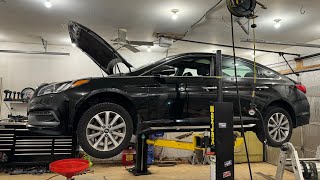
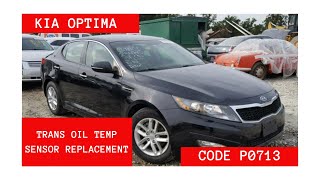
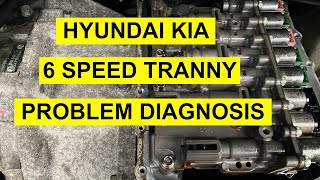

Technical Specifications
OEM Part Numbers: 45000-3BYE0 45000-3BYE0R
Type: 6-speed automatic transaxle; Model: A6MF2; Application: 2016-2020 Kia Optima (US-built); Engine: 2.4L Theta II GDI; Drive Type: Front-Wheel-Drive (FWD); Fluid Type: Kia/Hyundai Genuine ATF SP-IV / SP4M / SP4M-1; Weight: Approx. 214 lbs; Dimensions: Approx. 32" x 28" x 24"
We Have This Part in Stock


The information in this article is provided for general reference and educational purposes only. Vehicle specifications, procedures, and part compatibility can vary by production date, trim level, and region. Always consult your vehicle's factory service manual and verify part numbers before purchasing or performing repairs. Safety-critical components such as airbags, seat belts, and braking systems should be installed by a qualified professional.
- Kia Optima:
- 🎬 Helpful Videos
- 🛍️ Shop This Part
- Identifying the Correct A6MF2 Transmission for Your Optima
- Critical VIN Check
- Part Numbers and Identification Codes
- What Will Not Fit
- Common Failure Symptoms
- Diagnostic Flowchart
- Known Problems, Recalls, and Technical Service Bulletins (TSBs)
- What Fails at Every Mileage Band
- Under 60,000 Miles
- 60,000 - 100,000 Miles
- 100,000 - 150,000 Miles
- Over 150,000 Miles
- Real Owner Experiences
- Repair or Replace?
- When Repair Makes Sense
- When Replacement is Smarter
- Questions to Ask Your Installer
- Replacement Cost Estimates
- Freight & Delivery Reality for Used Transmissions
- Installation and Programming Essentials
- Professional Installation Recommended
- Required Programming: Solenoid Calibration
- Critical Installation Steps & Gotchas
- Arrival Inspection for Your Used Transmission
- Check the Fluid Color and Smell
- Inspect the Magnetic Drain Plug
- Examine the Torque Converter Hub and Splines
- Frequently Asked Questions
- 🎟️ Get 5% Off