

2016 Toyota Mirai A/C Amplifier: Symptoms, Diagnosis, and Replacement
Understand the function, failure symptoms, and replacement requirements for the A/C amplifier in your 2016 Toyota Mirai.
- The A/C Amplifier is generally a plug-and-play part; no programming is needed if you match the OEM part number exactly.
- Failure of this specific module on the 2016 Mirai is uncommon; always check fuses, relays, and refrigerant levels first.
- Multiple OEM part numbers exist (88650-62042, 88650-62051, etc.); you must verify and match the number on your original part.
- Diagnostic trouble codes specific to the climate system (B-codes) are the most effective way to confirm a module failure.
Symptoms of a Failing A/C Amplifier
When the A/C amplifier in a 2016 Mirai begins to fail, you will likely notice that the climate control system behaves erratically or stops working altogether. Since this is a control module, failures are typically electronic rather than mechanical. Before suspecting the amplifier, it's wise to first check simpler components like fuses, relays, and the system's refrigerant level.
- Incorrect Temperature Output: The system blows hot air when set to cold, or cold air when set to hot, regardless of the setting.
- Inconsistent or No Fan Speed Control: The blower fan may be stuck on one speed, may not change speed when you adjust it, or may not turn on at all.
- Airflow Stuck in One Position: The system is unable to switch airflow between the defrost, dash vents, and floor vents.
- A/C Compressor Does Not Engage: The 'A/C' button lights up, but the compressor does not receive the signal to turn on, resulting in no cold air.
- Unresponsive Controls: The buttons or screen on your main climate control interface do not respond to inputs, or the entire panel is dead.
Diagnostic Trouble Codes (DTCs)
A professional scan tool that can read Toyota-specific body codes (B-codes) is the best way to diagnose an issue. Generic OBD-II readers often only show powertrain (P-codes) and may not see faults within the climate system. Look for the following codes, which point to issues with the amplifier or the components it communicates with:
| Code | Description |
|---|---|
| B1411/11 | Room Temperature Sensor Circuit |
| B1412/12 | Ambient Temperature Sensor Circuit |
| B1413/13 | Evaporator Temperature Sensor Circuit |
| B1441/41 - B1446/46 | Air Mix Damper Control Servo Motor Circuit |
| B1497/97 | BUS IC Communication Malfunction |
| U0100, U0142, etc. | Lost Communication with other vehicle modules (ECM, Body ECU) |
The presence of communication codes like B1497 or U-codes strongly suggests an issue with the amplifier module itself or its wiring.
Known Issues, Recalls, and TSBs for the 2016 Mirai
As of this writing, there are no specific recalls or Technical Service Bulletins (TSBs) from Toyota or the NHTSA related to widespread failure of the A/C amplifier module for the 2016 Mirai. The low volume of reported issues suggests that failure of this specific part is not a common problem.
However, Toyota has issued related bulletins for the Mirai and other models, including:
- T-TT-0520-19: Guidelines for improved A/C system inspection to prevent repeat repairs for refrigerant leaks.
- T-SB-0142-13 Rev2: A procedure to minimize naturally occurring odors from the HVAC system.
- T-TT-0441-17: A warning that A/C 'stop leak' products are not approved and can cause damage to system components if moisture is introduced.
Pro Tip: Before replacing any expensive electronic modules, always perform a basic diagnosis. Check all related fuses in the interior and under-hood fuse boxes. A simple blown fuse is a common cause for an unresponsive climate control system.
Buying a Used 2016 Mirai A/C Amplifier
Given the high cost of new electronic modules, a used OEM amplifier is an excellent value. Failures of this part appear to be rare, so a tested, recycled part from a reputable seller is a reliable option. Here’s what to look for.
Part Number Compatibility is Crucial
You must match the OEM part number from your original module exactly. Several part numbers were used for the 2016 Mirai, likely representing minor hardware or software revisions. While they may be interchangeable, an exact match is the only way to guarantee perfect function without potential issues.
Known OEM part numbers for the 2016 Mirai A/C Amplifier include:
- 88650-62042
- 88650-62051
- 88650-62052
- 88650-62053
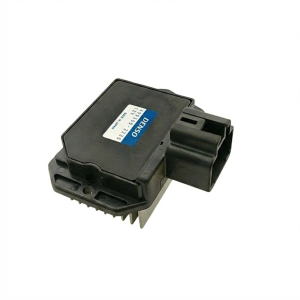
The part number is printed on a label on the module's housing. Always verify this number before purchasing a replacement.
Physical Inspection
When buying a used module, inspect it for any signs of physical damage. Check the plastic housing for cracks and ensure all electrical connector pins are straight and free of corrosion. Any evidence of water intrusion or a burnt electronics smell is a major red flag.
Programming and Calibration
For most Toyota vehicles, the A/C amplifier is a plug-and-play component that does not require programming or flashing after installation. As long as you install a replacement with the exact same part number, the system should recognize it and function correctly. In the rare case that a different revision is used, a calibration procedure using Toyota's Techstream diagnostic software might be necessary for all features to work correctly. However, there is no indication that a dealer visit is required for a standard, like-for-like replacement.
Cost Comparison
Replacing the A/C amplifier can be costly if you buy new, making a used OEM part a financially smart choice.
| Part Type | Estimated Cost |
|---|---|
| New OEM | $400 - $600+ |
| New Aftermarket | Not commonly available |
| Used OEM | $100 - $200 |
| Shop Labor | $125 - $185 |
Frequently Asked Questions (FAQ)
Does the 2016 Mirai A/C amplifier need to be programmed?
No, programming is generally not required when replacing the module with one that has the exact same OEM part number. It is considered a plug-and-play part. If you use a module with a different part number, a system calibration with dealer-level software may be needed.
Where is the A/C amplifier located on the 2016 Toyota Mirai?
The A/C amplifier is typically located deep within the dashboard, often behind the glove box or near the center of the HVAC unit. Access may require removing the glove box assembly and potentially other dash panels.
Can I replace the A/C amplifier myself?
Yes, for a mechanically inclined person, this is a feasible DIY job. The main challenge is accessing the module's location within the dashboard. The replacement itself usually involves disconnecting electrical connectors and removing a few screws. No special programming is typically needed, making the electronic side of the job straightforward.
My A/C is blowing warm. Is the amplifier definitely bad?
Not necessarily. A/C system failures are most commonly caused by refrigerant leaks, a bad A/C compressor, or a faulty pressure switch. Always have the system's refrigerant level and pressure checked before condemning an expensive electronic module. A faulty amplifier is a less common cause of A/C issues.
Technical Specifications
OEM Part Numbers: 88650-62042 88650-62051 88650-62052 88650-62053
Also known as: Air Amplifier Assembly, A/C Control Module, Climate Control Module.
We Have This Part in Stock




The information in this article is provided for general reference and educational purposes only. Vehicle specifications, procedures, and part compatibility can vary by production date, trim level, and region. Always consult your vehicle's factory service manual and verify part numbers before purchasing or performing repairs. Safety-critical components such as airbags, seat belts, and braking systems should be installed by a qualified professional.
- Toyota Mirai:
- 🛍️ Shop This Part
- Symptoms of a Failing A/C Amplifier
- Diagnostic Trouble Codes (DTCs)
- Known Issues, Recalls, and TSBs for the 2016 Mirai
- Buying a Used 2016 Mirai A/C Amplifier
- Part Number Compatibility is Crucial
- Physical Inspection
- Programming and Calibration
- Cost Comparison
- Frequently Asked Questions (FAQ)
- 🎟️ Get 5% Off