

2018-2021 Hyundai Kona A/C Control Module: Fixing Unresponsive Climate Systems
This guide covers common failures, diagnosis, and how to choose the right used A/C control module for your 2018-2021 Hyundai Kona with automatic temperature control.
- This module is ONLY for 2018-2021 Kona models with Automatic Temperature Control (ATC); it will not work with manual A/C systems.
- Common failure symptoms include a blank screen, unresponsive buttons, and air blowing at the wrong temperature or from the wrong vents.
- Replacement is a simple, plug-and-play process that does not require dealer programming, making it a great DIY-friendly repair.
- Used OEM modules are a cost-effective solution, as new aftermarket versions are not readily available.
Symptoms of a Failing A/C Control Module
When the A/C control module in a 2018-2021 Hyundai Kona begins to fail, it can cause a range of frustrating issues. Because it controls the entire HVAC (Heating, Ventilation, and Air Conditioning) system, a fault here can make your ride uncomfortable, especially in extreme weather. Here are the most common signs to watch for:
- Blank or Flickering Display: The most obvious sign is a control panel that is completely dark, intermittent, or displays garbled information.
- Unresponsive Buttons or Knobs: You might find that pressing buttons or turning knobs does nothing, or only works sporadically. This can leave you stuck with the last setting for fan speed, temperature, or airflow direction.
- Incorrect Temperature Output: The system may blow only hot air, only cold air, or air that doesn't match the temperature you've selected. This happens when the module fails to properly command the blend door actuators that mix air from the heater core and A/C evaporator.
- Airflow Stuck in One Position: If the air is stuck coming out of the defrost vents and won't switch to the panel or floor vents (or vice-versa), the module may not be sending the correct signal to the mode door actuators.
- Fan Speed Problems: The blower fan may be stuck on one speed (often high), or it may not turn on at all, regardless of your inputs.
Pro Tip: Before assuming the module is bad, try a simple reset. Some owners have reported that intermittent glitches can be solved by turning the vehicle off for a few minutes and restarting it. Some control units may also have a tiny, recessed reset button that can be pressed with a paperclip.
Known Issues, TSBs, and Recalls
As of late 2026, there are no specific recalls issued by the National Highway Traffic Safety Administration (NHTSA) for the A/C temperature control module itself on the 2018-2021 Hyundai Kona. However, it's important to distinguish between a faulty control module and other A/C system problems.
- General A/C System Complaints: Some owners have reported issues like refrigerant leaks or faulty compressors, which can also cause a lack of cold air but are not related to the control module.
- Kona EV Models: The Kona Electric (EV) has a different, more complex climate system that incorporates a heat pump and battery cooling. Some TSBs and recalls exist for the Kona EV's cooling and power control systems, but these do not apply to the gas-engine models covered by this guide.
Always verify your vehicle's VIN for any open recalls or service campaigns, as new ones can be issued at any time.
Buying a Used A/C Temperature Control Module
Purchasing a used OEM control module is a popular and cost-effective repair. Since new aftermarket versions are not widely available for this part, a reliable used unit is often the best alternative to an expensive new one from the dealer. Here’s what to look for:
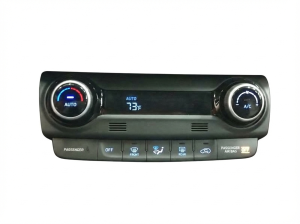
Warning: This vehicle was offered with two different climate control systems: a manual version and an automatic version. The control modules are NOT interchangeable. This guide and the part numbers listed are ONLY for vehicles with the Automatic Temperature Control (ATC) system. You can identify an ATC unit by its specific temperature markings (e.g., 72°F) and an "AUTO" button. Manual systems have simple blue and red zones for temperature.
Key Checks Before You Buy:
- Verify the Part Number: The most critical step is to match the part number. If possible, remove your original module to find the number printed on the back. Known OEM part numbers for the automatic control unit are 97250J9410 and 97250J9410TMT.
- Physical Inspection: Carefully inspect all photos of the used unit. Look for deep scratches on the screen or button faces, broken mounting tabs, and cracked plastic. Pay close attention to the electrical connector ports—they should be clean, with no bent or corroded pins.
- Check for Compatibility Notes: Reputable sellers will note that the part is for US market, gas-engine models only. It will not work in Kona EV models, which have a different system.
- Seller Reputation and Warranty: Buy from a seller with a good return policy and warranty. This protects you in case the unit is dead on arrival or has an undisclosed issue.
Replacement Overview
Replacing the A/C control module on a 2018-2021 Kona is a relatively straightforward job that most DIYers can handle. No special programming is required; it is a plug-and-play installation as long as you have the correct part number.
- Difficulty: 2 out of 5
- Estimated Time: 30-45 minutes
- Tools Needed: Plastic trim removal tools, Phillips head screwdriver.
Basic Steps:
- Disconnect the Battery: As a safety precaution, disconnect the negative battery terminal.
- Remove Trim: Using plastic trim tools to avoid scratching your dashboard, carefully pry away the trim piece that surrounds the climate control unit and infotainment screen.
- Unscrew the Module: The control module is typically held in place by a few Phillips head screws. Remove them.
- Disconnect and Replace: Gently pull the old unit out, disconnect the electrical connectors from the back, and plug them into the new unit.
- Reassemble: Secure the new module with the screws, snap the trim piece back into place, and reconnect the battery. Test all functions.
Cost Comparison
The cost savings of buying a used OEM module are significant. Below is a typical cost breakdown for this part.
| Part Type | Estimated Cost |
|---|---|
| New OEM | $425 - $700 |
| New Aftermarket | Not Commonly Available |
| Used OEM | $75 - $200 |
| Shop Labor | $100 - $200 |
Frequently Asked Questions (FAQ)
Do I need to program a replacement A/C control module?
No. For the 2018-2021 Hyundai Kona, the A/C temperature control module is a plug-and-play part. As long as you install a unit with the correct part number for your vehicle's options (i.e., automatic control), no special programming or calibration is needed.
My A/C is blowing warm air. Is the control module definitely the problem?
Not necessarily. While a faulty module can cause this, the most common reason for an A/C system to blow warm air is a refrigerant leak. Other potential causes include a bad A/C compressor, a clogged cabin air filter, or a faulty blend door actuator. If the controls appear to be working normally (display is on, fan speed changes), you should have the refrigerant level and other components checked before replacing the control module.
How can I tell if I have automatic or manual climate control?
Look at your control panel. An automatic climate control unit will have specific temperature settings (like 68°, 72°, etc.) and an "AUTO" button. A manual system will have a simple knob with a blue band for cold and a red band for hot, without specific degree markings.
Can a bad control module cause a problem if the knob is physically stuck?
It's possible, but if a knob is physically jammed and will not turn, the problem may be mechanical. In some vehicles, a stuck blend door or a broken control cable behind the dash can prevent the knob from turning. In this case, replacing the control module alone will not fix the issue.
Technical Specifications
OEM Part Numbers: 97250J9410 97250J9410TMT
For US market gasoline vehicles with Automatic Temperature Control (ATC). Not for EV models or vehicles with manual A/C.
We Have This Part in Stock

The information in this article is provided for general reference and educational purposes only. Vehicle specifications, procedures, and part compatibility can vary by production date, trim level, and region. Always consult your vehicle's factory service manual and verify part numbers before purchasing or performing repairs. Safety-critical components such as airbags, seat belts, and braking systems should be installed by a qualified professional.
- Hyundai Kona: