

2016-2025 Tesla Model S & X A/C Evaporator: Fixing the Smell and Replacement Guide
This guide explains the common musty A/C smell in the Model S and Model X, how to fix it, and what's involved in a full evaporator core replacement.
- The most common issue is a bad smell, which is fixed by cleaning the evaporator and replacing filters, not by replacing the part.
- A major system change occurred in 2021; parts from pre-2021 cars are NOT compatible with 2021+ 'Palladium' refresh models.
- Replacement is a massive, professional-only job requiring removal of the entire dashboard, with labor costs often exceeding $1,500.
- If your only symptom is a bad odor, do not pursue a costly replacement. Start with a cleaning procedure.
A Critical Warning: Two Different Systems

Warning: The A/C evaporator core and the HVAC assembly it sits in are NOT the same for all 2016-2025 Model S and Model X vehicles. There was a major system change in 2021.
- Pre-2021 Models: These vehicles use a more conventional HVAC system with a resistive heater.
- 2021+ Models (Refresh / 'Palladium'): These vehicles use a highly efficient and complex heat pump system that integrates cabin climate control with battery thermal management.
These two systems are architecturally different, and their core components, including the evaporator, are not interchangeable. Before purchasing any part, you must verify compatibility based on your vehicle's specific year of manufacture.
The #1 Issue: Musty or Vinegar-Like Smell

By far, the most common A/C issue reported by Tesla Model S and Model X owners is a foul smell from the vents, often described as musty, sour, like vinegar, or like dirty socks. This smell is caused by mold and bacteria growing on the evaporator core. Because the evaporator gets cold and wet from condensation, it creates a perfect breeding ground for mildew if it doesn't dry out properly. The problem can be worse after rain or a car wash.
For this specific issue, a full evaporator replacement is almost never the first or correct solution. The standard fix involves two steps:
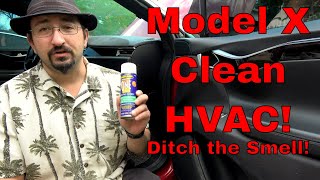
- Replacing the Cabin Air Filters: These filters trap dust and debris, but can also absorb moisture and contribute to the odor. 🎬 Watch this guide on fixing terrible Tesla AC smells.
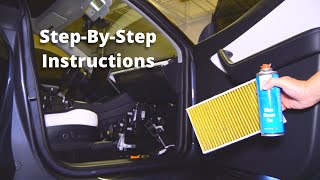
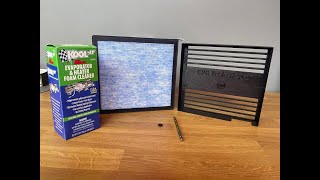
- Cleaning the Evaporator Core: This is done by injecting a specialized foaming cleaning agent into the HVAC case, usually through the blower motor or a sensor opening. 🎬 See how to use the sensor opening for cleaning. The foam expands to cover the evaporator fins, killing the mold and bacteria. As the foam condenses, it drains out of the vehicle's A/C drain tube, taking the contaminants with it.
Pro Tip: You can help prevent the smell from returning by turning off the A/C a few minutes before you reach your destination but leaving the fan running. This helps dry the evaporator core so mold can't grow. Tesla also released software updates to improve how the system dries itself after use.
Symptoms of a Failed Evaporator Core

While the odor issue is most common, the evaporator core can also fail mechanically. Symptoms of a true failure are different from just a bad smell.
- Weak or No A/C Cooling: If the air from the vents is not cold, it can be a symptom of many issues, including a failing compressor, low refrigerant, or a clogged evaporator. If the evaporator is leaking refrigerant, the system loses its ability to cool.
- Sweet Chemical Smell Inside the Cabin: Refrigerant often has a distinct, faintly sweet smell. If you notice this inside the car, it's a strong indicator of a leak in the evaporator core, as it's the only part of the A/C's refrigerant loop located inside the cabin.
- Windows Fogging Unexpectedly: A functioning evaporator removes humidity. If it fails, the air blown onto the windshield will be moist, causing it to fog up and be difficult to clear.
- Water Leaking into Passenger Footwell: The evaporator produces a lot of condensation, which is supposed to exit the car through a drain tube. If this tube becomes clogged with debris, the water can back up and leak into the passenger-side footwell.
Known Issues, TSBs, and Recalls
There are no recalls for direct mechanical failure of the A/C evaporator core itself.
- NHTSA Recall 22V-063 (Tesla SB-22-18-002): This recall applies to 2021-2022 Model S and Model X vehicles with the heat pump. A software error could cause a valve to stick open in very cold weather, trapping refrigerant and disabling the heat pump, which results in a loss of heat and defrost capability. This was corrected with an over-the-air (OTA) software update and does not relate to a leaking or physically failed evaporator.
- MCU Recall (NHTSA 21V035000): Affecting 2016-2018 Model S and Model X, this recall was for the main touchscreen's memory chip failing. While this could prevent you from *controlling* the HVAC system, it was not a failure of the evaporator or HVAC hardware itself.
Buying a Used A/C Evaporator Core
Due to its integration, you will likely be purchasing a complete used HVAC housing, not just the evaporator core. This makes careful inspection and verification critical.
- Verify the Generation: This is the most important step. Confirm if your car is a pre-2021 model or a 2021+ 'Palladium' model with the heat pump. They are not cross-compatible. Match the part number from your original unit to the used one.
- Inspect the Housing: Check the entire plastic HVAC case for any cracks, broken mounting tabs, or signs of damage. The unit is buried in the dash, and any damage likely happened during removal from the donor vehicle.
- Check the Fins: If you can see the evaporator or heater core fins through any openings, look for heavy corrosion (white or green powder) or significant physical damage (crushed or bent fins).
- Look for Cut Wires or Pipes: Ensure all electrical connectors are intact and that none of the aluminum A/C pipes leading into the unit have been cut or severely bent.
- Ask About the Donor Vehicle: If possible, find out the mileage and condition of the vehicle the part came from. A part from a lower-mileage, front-end collision is often a better bet than one from a high-mileage vehicle with unknown history.
Why Used OEM? For a part this integrated and difficult to access, a used Original Equipment Manufacturer (OEM) unit is a smart choice. It guarantees the precise fitment and connections that a new aftermarket part might lack. Given the high cost of labor for this job, ensuring the part is correct the first time is essential.
Cost of A/C Evaporator Replacement (2016-2025 Model S & X)
The primary cost of this repair is the extensive labor required to remove and reinstall the dashboard.
| Item | Estimated Cost | Notes |
|---|---|---|
| Evaporator Cleaning Service | $145 - $250 | For fixing the odor issue. Includes new filters and cleaning foam. |
| New OEM HVAC Assembly | $800 - $1,500+ | Price from Tesla Service. Varies by generation (heat pump vs. older style). |
| Used OEM HVAC Assembly | $300 - $600 | A cost-effective option, but requires careful verification of part numbers. |
| Shop Labor for Replacement | $1,200 - $2,000+ | This is a 8-10+ hour job at typical shop rates. |
| A/C System Recharge | $150 - $300 | Required any time the refrigerant system is opened. |
Installation: A Job for Professionals

Difficulty: 5 out of 5. Replacing the evaporator core in a Tesla Model S or Model X is an extremely complex and time-consuming job that is not feasible for a DIY mechanic.
The official Tesla service procedure involves:
- Safely recovering the A/C refrigerant.
- Disconnecting the 12V power supply.
- Removing both front seats and the entire center console.
- Systematically removing the glove box, various trim panels around the dash, A-pillars, and steering column.
- Disconnecting dozens of electrical connectors for the screen, speakers, airbags, and control modules.
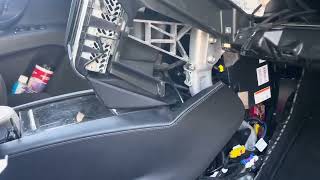
- Removing the entire instrument panel (dashboard) assembly from the vehicle as one large piece. 🎬 Watch this video to see the complex dashboard removal process.
- Only then can the HVAC module be accessed, removed, and disassembled to replace the evaporator core.
After installation, the A/C system must be properly vacuumed and recharged with the correct type and amount of refrigerant and oil. Due to the complexity and the need for specialized A/C service equipment, this repair should only be performed by a qualified professional technician.
Frequently Asked Questions (FAQ)
Why does my Tesla's A/C smell like vinegar or mildew?
This is the most common complaint and is caused by mold and bacteria growing on the damp evaporator coil. The fix is to replace the cabin air filters and use a foaming cleaner to disinfect the evaporator core itself.
Can I just clean the evaporator instead of replacing it?
Yes. If your only symptom is a bad smell, cleaning the evaporator is the correct procedure. Replacement is only necessary if the core is leaking refrigerant or is so clogged internally that it blocks airflow, which is much less common.
Is the evaporator in a 2017 Model S the same as a 2022 Model X?
No. In 2021, Tesla switched to a new heat pump system for the Model S and X. The HVAC assemblies, including the evaporator, are completely different between the pre-2021 and 2021+ 'Palladium' generations and are not interchangeable.
Do I have to replace the receiver/drier at the same time?
Yes. In any A/C system, the receiver/drier (or desiccant bag) is a critical component that removes moisture from the refrigerant. Standard best practice requires replacing it any time the system is opened to the atmosphere, such as during an evaporator replacement. Failure to do so can lead to premature failure of the new components.
Helpful Videos

Technical Specifications
OEM Part Numbers: 1059335-00-B 1116133-00-B 1116133-00-C 111613300B 1688888-00-C 1688888-00-D 1688888-00-F 168888800D 1060432-00-A
Compatibility is determined by vehicle manufacturing date. Pre-2021 models use a resistive heating system, while 2021 and newer 'Palladium' models use an integrated heat pump system. The HVAC assemblies are not interchangeable between these generations.
We Have This Part in Stock



The information in this article is provided for general reference and educational purposes only. Vehicle specifications, procedures, and part compatibility can vary by production date, trim level, and region. Always consult your vehicle's factory service manual and verify part numbers before purchasing or performing repairs. Safety-critical components such as airbags, seat belts, and braking systems should be installed by a qualified professional.
- Tesla Model X:
- Tesla Model S:
- 🎬 Helpful Videos
- 🛍️ Shop This Part
- A Critical Warning: Two Different Systems
- The #1 Issue: Musty or Vinegar-Like Smell
- Symptoms of a Failed Evaporator Core
- Known Issues, TSBs, and Recalls
- Buying a Used A/C Evaporator Core
- Cost of A/C Evaporator Replacement (2016-2025 Model S & X)
- Installation: A Job for Professionals
- Frequently Asked Questions (FAQ)
- 🎟️ Get 5% Off