

Tesla Model 3 & Y A/C Condenser Guide (2017-2025): Heat Pump vs. Non-Heat Pump Failures
This guide clarifies the critical differences between the two A/C systems used in the Model 3 and Model Y, helping you diagnose failures and choose the correct parts.
- There are two different A/C systems: 2017-2020 Model 3s use a standard condenser, while 2021+ Model 3s and all Model Ys use a more complex Heat Pump assembly. The parts are not interchangeable.
- A musty/vinegar smell is a common problem caused by the evaporator and filters, not the condenser. It requires cleaning and filter replacement.
- Heat pump models (2021+) are subject to a known failure of refrigerant sensors, covered by TSB SB-21-18-002, which causes a total loss of heating and cooling.
- Replacement is not a DIY job because it requires specialized equipment to legally recover and recharge the A/C system's refrigerant.
Critical Compatibility Warning: Two Different A/C Systems

Warning: The Tesla Model 3 and Model Y use two completely different thermal management systems depending on the year of manufacture. The A/C condenser is NOT interchangeable between them. Before purchasing a part, you must identify which system your vehicle has.
- 2017-2020 Model 3: These vehicles use a standard A/C system with a resistive heater (similar to a space heater). They use a standalone A/C condenser, part number 1077083-00-B or a similar variant.
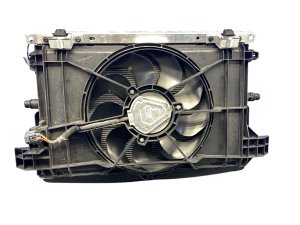
- 2021-2025 Model 3 & all 2020-2023 Model Y: These vehicles use a highly integrated Heat Pump system. The condenser is part of a larger front-end module, often referred to as the radiator fan shutter assembly (part number 1103545-00-B or similar). This system is more efficient but also more complex and prone to different failures.
How to tell which system you have: The easiest way is by model year. If you have a Model Y, you have a heat pump. If you have a Model 3 from the 2021 model year or newer, you have a heat pump. The 2021 refresh for the Model 3, which included the heat pump, also introduced changes like a powered trunk and chrome delete.
Symptoms of a Failing A/C Condenser

Whether you have a heat pump or not, the symptoms of a physically failing condenser are similar, as its basic function remains the same. Because it's located at the very front of the car, it is vulnerable to damage from rocks and road debris.
- Warm or Weak A/C Performance: This is the most common symptom. The air from your vents is not as cold as it used to be, or it may blow warm air altogether. A damaged or clogged condenser cannot release heat from the refrigerant effectively.
- Visible Refrigerant Leaks: You may notice an oily, greasy residue on the condenser fins or on the ground under the front of your car. Refrigerant contains oil to lubricate the compressor, and when it leaks, it leaves this tell-tale sign.
- A/C System Shuts Off Unexpectedly: Modern A/C systems have pressure sensors. If the condenser is blocked or clogged, pressure and temperature can build up, causing the system to shut down to prevent damage to the compressor.
- Engine Overheating at Idle (in some vehicles): While less common in EVs, a blocked condenser can restrict airflow to the main radiator behind it, potentially affecting the cooling of the battery and drive units during stationary periods.
Known Issues & Service Bulletins

Issue 1: Musty, Vinegar-Like Smell from Vents (All Models)
One of the most frequent complaints from Model 3 and Model Y owners is a sour or musty smell when the A/C is first turned on. This is NOT a condenser problem. It is caused by moisture accumulating on the A/C evaporator coils (located inside the dashboard), leading to the growth of mold and mildew.
The Fix:
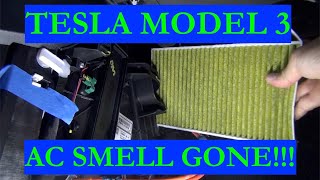
- Replace the two cabin air filters.
- Clean the evaporator coils using a dedicated foaming A/C cleaner sprayed into the system after the filters are removed. 🎬 Watch: Step-by-step guide to cleaning your A/C coils and filters
Tesla is aware of the issue, but it is generally not covered under warranty and is considered a maintenance item.
Issue 2: Heat Pump Failure (2021+ Model 3 & All Model Y)
Vehicles with the heat pump system are known to experience a sudden loss of both heating and cooling. This is a well-documented problem, especially in cold climates.
- Cause: The issue is often traced to faulty refrigerant pressure/temperature (P/T) sensors within the heat pump's complex manifold. When these sensors provide unreliable data, the vehicle's software shuts down the heat pump to protect it.
- TSB: Tesla issued Service Bulletin SB-21-18-002 to address this. The prescribed fix is to replace the faulty sensors. 🎬 See: Diagnosing heat pump HVAC failures and sensor issues
- Other Failures: In more severe cases, owners have reported failures of the A/C compressor or the entire "Supermanifold" assembly, sometimes due to internal contamination or compressor failure. These repairs can be extremely expensive.
- Error Codes: This issue may be accompanied by on-screen warnings like "Climate system requires service" or specific error codes like VCFRONT_a447 or VCFRONT_a531.
Buying a Used A/C Condenser or Assembly
A used OEM part can be a great value, but careful inspection is key. Given the two different systems, verifying you have the right part is the most critical step.
- Verify the Part Number and System Type: This is the most important step. For a 2017-2020 Model 3, you need part number 1077083-00-B or equivalent. For a 2021+ Model 3 or any Model Y, you need the entire front fan/shutter assembly, 1103545-00-B. Do not mix them up.
- Inspect for Physical Damage: Look closely at the cooling fins. A few bent fins are normal and can be carefully straightened with a fin comb, but avoid units with large areas of crushed or damaged fins, as this will impede airflow.
- Check for Leaks: Examine the entire surface for oily residue, which indicates a past leak. Pay special attention to the welds where the lines connect to the body of the condenser.
- Examine the Connections: Ensure the threaded fittings for the A/C lines are clean, undamaged, and not cross-threaded. Damaged threads will prevent a proper seal and cause leaks.
- Look for Corrosion: Check for heavy white, chalky corrosion. While light surface oxidation is normal on used aluminum, heavy corrosion can weaken the metal and cause future leaks, especially in regions that use road salt.
Pro Tip: Whenever replacing an A/C condenser, you MUST also replace the receiver/drier or desiccant bag. The desiccant absorbs moisture from the refrigerant. A used condenser has been exposed to the atmosphere, saturating the desiccant. Re-using it will lead to poor A/C performance and potential system damage.
Cost Comparison
Repair costs vary significantly between the older resistive system and the newer heat pump system.
| Part / Service | Estimated Cost | Notes |
|---|---|---|
| New Aftermarket Condenser (2017-2020) | $150 - $400 | Part only. |
| Used OEM Condenser (2017-2020) | $100 - $250 | Part only. |
| Used OEM Heat Pump Assembly (2021+) | $300 - $600+ | Refers to the entire front module (1103545-00-B). |
| Shop Labor (Condenser R&R + Recharge) | $500 - $1,000+ | Applies to a standard condenser replacement. |
| Heat Pump Sensor Replacement (TSB SB-21-18-002) | $450 - $900 | At a dealer or independent shop. |
| Heat Pump Compressor/Manifold Replacement | $2,500 - $4,500+ | A major repair for heat pump systems. |
Replacement Information

- Difficulty: 4 out of 5.
- Why it's difficult: While the physical unbolting of the part is straightforward for a mechanic, the A/C system must be evacuated of refrigerant before work begins and then properly recharged and tested after installation. This requires specialized, expensive equipment and certification. It is not a DIY-friendly job for most home mechanics due to the legal and technical requirements of handling refrigerant. The front bumper cover must also be removed 🎬 Watch: Front bumper removal and A/C condenser repair walkthrough to access the condenser.
Frequently Asked Questions
How do I know for sure if my Model 3 has a heat pump?
The changeover happened with the 2021 model year refresh. If your Model 3 was built in late 2020 for the 2021 model year, or any year after, it has a heat pump. These 'refresh' models also typically have black exterior trim ('chrome delete') and a power trunk lid, which are good visual indicators. All Model Y vehicles have a heat pump from the start of production.
Why does my Tesla A/C smell like vinegar or wet socks?
This common issue is caused by moisture building up on the evaporator coils, not the condenser. This allows mold and bacteria to grow. The solution is to replace your cabin air filters and use a foaming cleaner to disinfect the evaporator coils.
Can I replace the A/C condenser myself?
It is not recommended for a DIYer unless you are a certified A/C technician with access to refrigerant recovery and recharging equipment. It is illegal to vent refrigerant into the atmosphere. The mechanical work of removing the bumper and swapping the part is manageable, but the refrigerant handling requires professional tools and knowledge.
My A/C and heat stopped working in my 2022 Model Y. What's the problem?
This is a classic symptom of the heat pump failure covered by Tesla Service Bulletin SB-21-18-002. The likely cause is one or more faulty refrigerant pressure/temperature sensors. You should book a service appointment and reference the TSB. If the vehicle is under warranty, this should be a covered repair.
Helpful Videos

Technical Specifications
OEM Part Numbers: 1077083-00-B 107708300B 1077081-00-D 1077082-00-C 1103545-00-A 1103545-00-B 110354500B
System Type 1 (2017-2020 Model 3): Resistive Heat with standalone condenser. System Type 2 (2021+ Model 3 / All Model Y): Integrated Heat Pump with condenser as part of a larger front-end module.
We Have This Part in Stock

The information in this article is provided for general reference and educational purposes only. Vehicle specifications, procedures, and part compatibility can vary by production date, trim level, and region. Always consult your vehicle's factory service manual and verify part numbers before purchasing or performing repairs. Safety-critical components such as airbags, seat belts, and braking systems should be installed by a qualified professional.
- Tesla 3:
- TESLA Y:
- 🎬 Helpful Videos
- 🛍️ Shop This Part
- Critical Compatibility Warning: Two Different A/C Systems
- Symptoms of a Failing A/C Condenser
- Known Issues & Service Bulletins
- Issue 1: Musty, Vinegar-Like Smell from Vents (All Models)
- Issue 2: Heat Pump Failure (2021+ Model 3 & All Model Y)
- Buying a Used A/C Condenser or Assembly
- Cost Comparison
- Replacement Information
- Frequently Asked Questions
- 🎟️ Get 5% Off