

2003-2013 Mazda 6 A/C Condenser: Identifying the Correct Part for Your Generation
This guide clarifies the critical differences between first and second-generation Mazda 6 A/C condensers to help you diagnose failures and buy the right used part.
- The A/C condenser is NOT interchangeable between the 1st Gen (2003-2008) and 2nd Gen (2009-2013) Mazda 6. Verify your year before buying.
- When buying a used condenser, ensure the ports are capped to prevent moisture contamination, which can ruin the entire A/C system.
- Replacement requires specialized equipment to recover old refrigerant, vacuum the system, and recharge it with the correct amount of refrigerant and oil.
- Before replacing the condenser for a leak on a 2009-2013 model, inspect the high-pressure A/C line for cracks, as this is a known failure point.
Critical Compatibility Warning: Two Generations, Two Different Parts

Warning: The 2003-2013 Mazda 6 spans two distinct vehicle generations that use different A/C condensers. These parts are not interchangeable. Ordering the wrong part will lead to wasted time and money. Always verify your vehicle's model year before purchasing.
- First Generation: 2003, 2004, 2005, 2006, 2007, 2008 Mazda 6
- Second Generation: 2009, 2010, 2011, 2012, 2013 Mazda 6
This guide is divided into sections for each generation to ensure you identify the correct part numbers and issues.
Symptoms of a Failing A/C Condenser

A bad A/C condenser will prevent your air conditioning from working correctly. Here are the most common signs of failure:
- A/C Blows Warm or Lukewarm Air: This is the most immediate and obvious symptom. A damaged or clogged condenser cannot cool the refrigerant, so the system just circulates warm air.
- Visible Refrigerant Leaks: The refrigerant in your A/C system is mixed with a special oil to lubricate the compressor. If the condenser is cracked or punctured, this oil will leak out, leaving a greasy, grimy residue on the condenser fins or on the ground beneath the front of the car.
- A/C System Shuts Off Intermittently: If the condenser is internally or externally clogged, it can cause pressure in the A/C system to build to dangerous levels. High-pressure safety switches will then shut down the A/C compressor to prevent damage, causing the system to cut out, especially when idling or in stop-and-go traffic.
- Burning Smell from Vents: A severely restricted condenser can put a huge strain on the A/C compressor. This can cause the compressor or its clutch to overheat, producing a distinct burning smell that travels through the vents.
- Engine Overheating at Idle: Because the condenser sits in front of the radiator, a condenser that is completely clogged with road debris, leaves, or dirt can block airflow to the engine's radiator. This can cause the engine temperature to rise when the car is stationary.
Known Issues, Recalls, and Technical Service Bulletins (TSBs)

While there are no recalls specifically for the A/C condenser, owners should be aware of related issues and major safety recalls for these vehicles.
A/C System TSBs & Known Faults (2009-2013 Models)
Owners of second-generation models should investigate these issues before assuming the condenser is the sole problem:
- Cracked High-Pressure A/C Line: A known issue for the 2.5L engine is a cracked high-pressure A/C pipe due to engine vibration. This causes a refrigerant leak and a loss of cooling. Always inspect the A/C lines for oily residue before replacing the condenser.
- TSB SB-07-009-09 & SB-07-004-10: These bulletins address poor A/C performance or high engine temperatures at idle or low speeds. The cause may be an inoperative cooling fan or a software malfunction, not necessarily a bad condenser.
- TSB 07-001/21: Addresses a musty or mildew odor from the vents, which is caused by mold on the evaporator core. While not a condenser issue, it's a common A/C complaint for this model.
CRITICAL SAFETY RECALL: Takata Airbags (All 2003-2013 Models)
Urgent Safety Warning: All 2003-2013 Mazda 6 vehicles are affected by the massive and dangerous Takata airbag recall. The airbag inflators can explode during deployment, sending sharp metal fragments into the cabin, which can cause serious injury or death. You can check if your vehicle has an outstanding recall by entering your VIN at the NHTSA website (NHTSA.gov/recalls). All recall repairs are performed by dealers free of charge.
First Generation (2003-2008) Mazda 6 Condenser Details

The condenser for the first-generation Mazda 6 is a distinct part that includes an integrated receiver/drier. This means you do not need to purchase a separate drier when replacing the condenser assembly.
| Specification | Details |
|---|---|
| Years | 2003, 2004, 2005, 2006, 2007, 2008 |
| Engines | 2.3L 4-Cylinder, 3.0L V6 |
| Known OEM Part Numbers | GK2G-61-480K, GK2G-61-480J, GK2G-61-480H, GK2G-61-480G, GK2G-61-480B |
| Includes Drier? | Yes, integrated into the unit. |
Second Generation (2009-2013) Mazda 6 Condenser Details
The second-generation Mazda 6 uses a different condenser design, though it also includes an integrated receiver/drier. Part numbers for this generation are completely different from the first.
| Specification | Details |
|---|---|
| Years | 2009, 2010, 2011, 2012, 2013 |
| Engines | 2.5L 4-Cylinder, 3.7L V6 |
| Known OEM Part Numbers | GEG1-61-480, GS3L-61-480B, GS3L-61-480C, GS3L-61-480A | 🎬 Watch a refrigerant recharge on a 2011 Mazda 6.
| Includes Drier? | Yes, integrated into the unit. |
Buying a Used A/C Condenser: What to Check
A used OEM condenser can be a great value, but a bad one is worthless. Here’s what to inspect before you buy:
- Check for Leaks: Look for any oily or grimy patches on the fins and especially around the inlet/outlet pipe connections. This is a dead giveaway of a leak.
- Inspect the Ports: The inlet and outlet ports MUST be capped or sealed. A condenser that has been sitting open to the air has absorbed moisture, which will destroy other A/C components like the compressor. Do not buy a condenser with open ports.
- Examine the Fins: A few bent fins are normal and can be carefully straightened with a fin comb. However, avoid units with large areas of crushed fins, as this will restrict airflow and reduce performance.
- Check for Physical Damage: Look for cracks, deep gouges, or bent mounting brackets. A condenser from a front-end collision may have hidden stress fractures that will leak under pressure.
- Verify the Part Number: Cross-reference the part number on the unit with the lists in this guide to ensure you are buying the correct condenser for your Mazda 6 generation.
Replacement Overview & Difficulty
Replacing the A/C condenser is a moderately difficult job that involves both mechanical work and specialized A/C service.
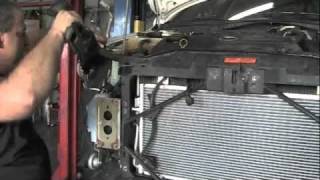
- Mechanical Work: Accessing the condenser typically requires removing the front bumper cover, 🎬 Watch this step-by-step Mazda 6 condenser replacement video. and possibly other components like the radiator support brackets. The condenser itself is then unbolted and the A/C lines are disconnected.
- A/C System Service: This is the critical part of the job and requires special equipment. The law and proper procedure require that a shop use a recovery machine to capture any refrigerant left in the system before opening it. After the new condenser is installed, the system must be put under a deep vacuum for at least 30-45 minutes 🎬 See how to vacuum and recharge a 2008 Mazda 6. to boil off all moisture. Finally, the exact weight of refrigerant and the correct type and amount of PAG oil must be charged back into the system.
Pro Tip: Many DIY mechanics choose to do the mechanical replacement themselves and then take the vehicle to a shop for the final vacuum and recharge service. This can save significant money on labor while ensuring the A/C system is serviced correctly.
Cost Comparison
Prices can vary, but here is a general breakdown of what to expect:
| Part/Service | Estimated Cost | Notes |
|---|---|---|
| New OEM Condenser | $260 - $440 | Varies by generation. |
| New Aftermarket Condenser | $80 - $220 | Wide range of quality and price. |
| Used OEM Condenser | $100 - $175 | Good value if inspected properly. |
| Shop Labor (Replacement) | $275 - $550 | Includes mechanical labor and the A/C service (evacuate & recharge). |
| Total Professional Job | $750 - $1,010+ | Using a new aftermarket or OEM part at a repair shop. |
Frequently Asked Questions (FAQ)
Can I replace just the receiver/drier on my Mazda 6 condenser?
No. For both the first and second-generation Mazda 6, the receiver/drier (also called a desiccant bag) is integrated into the condenser assembly and is not sold as a separate, serviceable part. You must replace the entire condenser unit.
Do I need to add oil when installing a new condenser?
Yes. When a condenser is replaced, a specific amount of PAG (Polyalkylene Glycol) oil must be added to the system to replenish what was lost with the old part. The exact amount depends on the A/C system capacity and what other parts are being replaced. This is a critical step that a professional A/C service will handle during the recharge process.
Why is my A/C still blowing warm after replacing the condenser?
If the new condenser is good, there could be other issues. Common culprits include an incorrect refrigerant charge (too much or too little), air/moisture left in the system from an improper vacuum, a failing compressor, a bad pressure switch, or a separate leak elsewhere in the system, like the known issue with the high-pressure line on 2009-2013 models.
Is a small leak from the condenser a big deal?
Yes. Any leak is a problem. The A/C system is a closed loop that operates under high pressure. Even a small leak will eventually allow all the refrigerant to escape, causing the A/C to stop working. Furthermore, where refrigerant can get out, moisture can get in, leading to more expensive component failures down the road.
Helpful Videos
Technical Specifications
OEM Part Numbers: GK2G-61-480K GK2G-61-480J GK2G-61-480H GK2G-61-480G GK2G-61-480B GEG1-61-480 GS3L-61-480C GS3L-61-480B GS3L-61-480A
Construction: Aluminum Parallel Flow. Includes integrated non-serviceable receiver/drier. Fitment is specific to generation (2003-2008 vs 2009-2013).
We Have This Part in Stock



The information in this article is provided for general reference and educational purposes only. Vehicle specifications, procedures, and part compatibility can vary by production date, trim level, and region. Always consult your vehicle's factory service manual and verify part numbers before purchasing or performing repairs. Safety-critical components such as airbags, seat belts, and braking systems should be installed by a qualified professional.
- Mazda 6:
- 🎬 Helpful Videos
- 🛍️ Shop This Part
- Critical Compatibility Warning: Two Generations, Two Different Parts
- Symptoms of a Failing A/C Condenser
- Known Issues, Recalls, and Technical Service Bulletins (TSBs)
- A/C System TSBs & Known Faults (2009-2013 Models)
- CRITICAL SAFETY RECALL: Takata Airbags (All 2003-2013 Models)
- First Generation (2003-2008) Mazda 6 Condenser Details
- Second Generation (2009-2013) Mazda 6 Condenser Details
- Buying a Used A/C Condenser: What to Check
- Replacement Overview & Difficulty
- Cost Comparison
- Frequently Asked Questions (FAQ)
- 🎟️ Get 5% Off