

2018-2025 Honda Accord A/C Condenser Leaks: Guide to the Defect & Warranty
This guide covers the widespread A/C condenser leak issue in 10th and 11th generation (2018-2025) Honda Accords, including Honda's warranty extension, symptoms, and how to inspect a used part.
- 2018-2025 Accords are known for a manufacturing defect causing the A/C condenser to leak.
- Honda has extended the condenser warranty to 10 years/unlimited miles for affected 2018+ models to cover this specific issue.
- The primary symptom of failure is warm air blowing from the A/C vents due to refrigerant loss.
- Replacing a condenser is not a DIY job because it requires expensive, specialized equipment to legally handle refrigerant.
Known Issues by Accord Generation

The reliability of the A/C condenser in the Honda Accord varies significantly between the 9th generation (2013-2017) and the 10th/11th generations (2018-2025). The later models are known for a specific, widespread manufacturing defect.
2018-2025 Honda Accord (10th & 11th Gen): Widespread Condenser Leaks
Many 2018 and newer Honda Accords suffer from a manufacturing defect in the A/C condenser. According to Honda's service bulletins, the condenser was not made to proper specifications, which can lead to the development of tiny holes in the tube walls. These holes allow refrigerant to leak out, causing the A/C system to stop blowing cold air. This is not caused by road debris, but by corrosion resulting from the manufacturing flaw.
In response, American Honda extended the warranty on the A/C condenser to 10 years from the original purchase date with unlimited mileage for affected vehicles. This warranty extension covers replacement of a condenser that has failed due to this specific defect. It does not cover damage from foreign objects like rocks. The relevant service bulletin for the 2018-2020 Accord is 21-018.
2013-2017 Honda Accord (9th Gen): Standard Failure Modes
The 9th generation Accord does not suffer from the same widespread manufacturing defect as later models. Failures on these vehicles are more typical of any car, usually caused by:
- Road Debris: Rocks and other debris kicked up on the highway can strike the condenser, puncturing tubes or damaging the delicate cooling fins.
- Corrosion: Over time, exposure to road salt and moisture can cause the aluminum to corrode, leading to leaks.
- Weld Failure: Cracks can develop in the welds where tubes connect, causing refrigerant to escape.
Symptoms of a Failing A/C Condenser

Whether from a defect or damage, the signs of a failing condenser are the same. The most common symptom is a gradual loss of cooling performance.
- A/C Blows Warm Air: This is the most obvious sign. As refrigerant leaks out, the system loses its ability to remove heat from the cabin.
- A/C is Not as Cold as it Used to Be: Before it stops working completely, you may notice the air from the vents is only cool, not cold. This indicates a low refrigerant charge, likely from a slow leak.
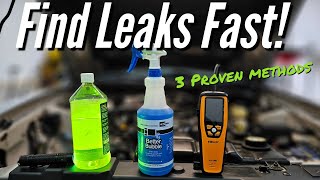
- Visible Leaks: Refrigerant contains a special oil to lubricate the A/C compressor. When it leaks, this oil can escape and attract dirt, leaving a greasy or oily residue on the condenser fins or where the lines connect. If a UV dye has been added to the system, a leak will appear as a bright green or yellow stain under a blacklight. 🎬 Watch: How to find refrigerant leaks in your AC system
- Burning Smell: In some cases, a failing condenser can't dissipate heat properly, causing other A/C components to get too hot and emit a burning smell through the vents.
- Engine Overheating at Idle: Because the condenser sits in front of the radiator, a severely clogged or blocked condenser can restrict airflow to the radiator, potentially causing the engine to overheat when the vehicle is stationary.
Buying a Used A/C Condenser: What to Check

Purchasing a used OEM condenser can be a cost-effective option, especially for the 9th generation Accord. However, extreme caution is needed for 10th and 11th generation models due to the known defect.
1. Verify Compatibility and Part Numbers
The condensers for the 9th and 10th/11th generations are not interchangeable. Always confirm the part number fits your specific year and engine.
| Generation | Years | Engines | Common OEM Part Numbers |
|---|---|---|---|
| 9th Gen | 2013-2017 | 2.4L & 3.5L Gasoline | 80110-T2F-A01 |
| 10th/11th Gen | 2018-2025 | 1.5L & 2.0L Turbo (Non-Hybrid) | 80100-TVA-A01 (Replaced by A02), 80100-TVA-A02 |
Warning: For 2018+ models, part number 80100-TVA-A02 is the revised part that supersedes 80100-TVA-A01. If buying used for a 10th or 11th gen Accord, prioritize finding the newer part number, as it may be less likely to have the manufacturing defect. However, there is no guarantee a used part won't develop the same leak.
2. Perform a Thorough Physical Inspection
Before buying, inspect the used condenser carefully:
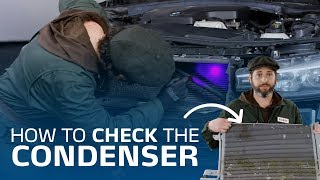
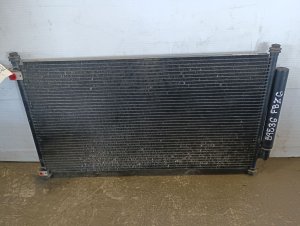
- Check for Leaks: Look for any oily residue, especially around the inlet/outlet connections and at the bottom of the unit. This is a clear sign of a past or present leak.
- Inspect the Fins: A few bent fins are normal and can be carefully straightened with a fin comb. However, large areas of crushed or missing fins will reduce performance and should be avoided.
- Examine the Tubes: Look for any cracks, punctures, or significant corrosion on the tubes that run horizontally through the fins. Damage to the tubes is not repairable.
- Check Mounting Points: Ensure all mounting brackets are intact and not cracked or broken.
Pro Tip: When you remove the plastic caps from the inlet and outlet ports, there should be a slight hiss of air pressure. Reputable recyclers often pressurize condensers with nitrogen to ensure they are leak-free. A lack of pressure could indicate a leak.
Replacement Cost Breakdown
The cost to replace an Accord A/C condenser includes the part itself, new O-rings for the lines, and the labor to evacuate and recharge the A/C system with refrigerant.
| Item | Estimated Cost | Notes |
|---|---|---|
| New OEM Part | $150 - $280 | Price from an online Honda dealership. |
| New Aftermarket Part | $70 - $150 | Prices vary by brand and quality. |
| Used OEM Part | $50 - $125 | A good value, especially for the 9th Gen. Risky for 10th/11th Gen. |
| Shop Labor | $200 - $430 | Includes recovering old refrigerant, installation, and recharging the system. |
| Total Professional Job | $580 - $730+ | Using a new OEM or aftermarket part. |
Installation Overview & Difficulty

- Difficulty Rating: 4 out of 5
- Estimated Time: 2-3 hours
- DIY Feasible: Not Recommended
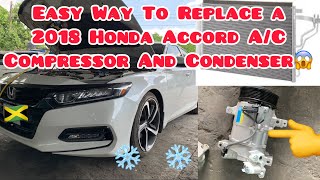
While the physical unbolting and bolting of the condenser is straightforward for a mechanically inclined person, handling refrigerant makes this a job best left to professionals.
Warning: It is illegal to release A/C refrigerant into the atmosphere under Section 608 of the Clean Air Act. The system must be evacuated with a specialized recovery machine before any lines are disconnected. After installation, the system must be put into a deep vacuum to remove moisture before being recharged with the precise amount of refrigerant. Failure to do so will result in poor performance and potential damage to other A/C components.
Basic Replacement Steps:
- A certified technician recovers all refrigerant from the A/C system.
- The front bumper cover and various support brackets are removed to access the condenser.
- The high and low-pressure A/C lines are disconnected from the condenser.
- The condenser mounting bolts are removed, and the old unit is carefully lifted out.
- The new condenser is installed, and new, lubricated O-rings are used on the A/C line connections.
- The bumper and other components are reinstalled.
- A technician pulls a vacuum on the system for at least 30 minutes to boil off any moisture.
- The system is recharged with the exact weight of refrigerant specified for the vehicle.
Frequently Asked Questions (FAQ)
Is the A/C condenser leak on my 2019 Accord a recall?
No, it is not a safety recall. It is a warranty extension. This means Honda will perform the repair for free within the specified time (10 years), but only if the part fails due to the specific manufacturing defect. You will not be automatically notified to bring your car in for service like you would for a recall.
Can I just add more refrigerant if my A/C is blowing warm?
This is not a permanent solution. The A/C system is sealed, so if it's low on refrigerant, there is a leak. Adding more refrigerant without fixing the leak is a temporary fix at best, and the new refrigerant will simply leak out again. It is also harmful to the environment.
Should I replace the receiver/drier with the condenser?
Yes, it is highly recommended. The receiver/drier (or desiccant bag) absorbs moisture from the refrigerant. Whenever the system is opened to the atmosphere, the desiccant becomes saturated. Not replacing it can lead to corrosion and damage to other A/C components, including the new condenser and the expensive compressor.
How can I check if my specific Accord is covered by the warranty extension?
The best way is to call a Honda dealership with your Vehicle Identification Number (VIN). They can check their internal system (an iN VIN status inquiry) to see if your vehicle is eligible for the warranty extension.
Helpful Videos
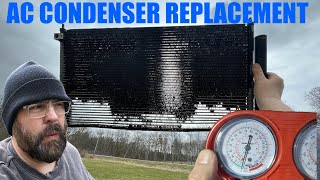
Technical Specifications
OEM Part Numbers: 80110-T2F-A01 80100-TVA-A01 80100-TVA-A02
Design: Parallel Flow
We Have This Part in Stock




The information in this article is provided for general reference and educational purposes only. Vehicle specifications, procedures, and part compatibility can vary by production date, trim level, and region. Always consult your vehicle's factory service manual and verify part numbers before purchasing or performing repairs. Safety-critical components such as airbags, seat belts, and braking systems should be installed by a qualified professional.
- Honda Accord:
- 🎬 Helpful Videos
- 🛍️ Shop This Part
- Known Issues by Accord Generation
- 2018-2025 Honda Accord (10th & 11th Gen): Widespread Condenser Leaks
- 2013-2017 Honda Accord (9th Gen): Standard Failure Modes
- Symptoms of a Failing A/C Condenser
- Buying a Used A/C Condenser: What to Check
- 1. Verify Compatibility and Part Numbers
- 2. Perform a Thorough Physical Inspection
- Replacement Cost Breakdown
- Installation Overview & Difficulty
- Basic Replacement Steps:
- Frequently Asked Questions (FAQ)
- 🎟️ Get 5% Off