

Ford Transit A/C Fan Failure (2015-2025): Warm Air at Idle, Fuse Issues, and Diagnosis
This guide covers the common failure symptoms, known fuse problems, and replacement costs for the A/C condenser fan assembly on the 2015-2025 Ford Transit-150, Transit-250, and Transit-350.
- The most common symptom of failure is A/C blowing warm at idle but getting cold while driving.
- For 2015-2017 models, always check for blown fuses (F8, F30, F31) and perform the TSB fuse upgrade before replacing the fan assembly.
- The two fans are wired in series for low speed, so if one motor fails, neither will work on the low-speed setting.
- Replacement is DIY-friendly by removing the front grille and accessing the assembly from the top, avoiding the need to drain coolant.
Symptoms of a Failing Ford Transit A/C Condenser Fan

When the condenser fan motor begins to fail on a Ford Transit-150, Transit-250, or Transit-350, the symptoms are often very distinct. Because the fans are most needed when there is no natural airflow from driving, the problems are most obvious at a standstill.
- A/C Blows Warm at Idle, Cold While Driving: This is the most common and classic symptom. When you're stopped in traffic or at a red light, the A/C blows warm or barely cool air. Once you start driving at city or highway speeds, the air gets cold again. This happens because the vehicle's movement forces enough air through the condenser to cool the refrigerant, temporarily doing the broken fan's job.
- Engine Temperature Creeps Up in Traffic: The condenser fans also help with engine cooling at low speeds. If they fail, you may notice the engine temperature gauge rising above its normal position while idling, but returning to normal once you're moving again.
- Loud or Grinding Noises: A failing fan motor bearing can produce a loud whirring, grinding, or buzzing sound from the front of the van whenever the A/C is turned on.
- Visible Fan Inactivity: With the engine running, turn the A/C on to its maximum setting. Look through the grille at the two fans. Both should be spinning. If one or both are stationary, there is a fault in the system.
- Burning Smell: In severe cases, an overheating fan motor or the resulting high pressure in the A/C system can cause a burning smell from melting plastic components or wiring.
Known Issues, Recalls, and Technical Service Bulletins (TSBs)

For these Ford Transit models, a known electrical issue is often mistaken for a failed fan motor.
Special Service Message SSM 46923: Blown Fuses (2015-2017 Models)
Important: Before replacing the fan assembly on a 2015-2017 Ford Transit with a 3.5L or 3.7L engine, check the fuses in the engine compartment fuse box. Many instances of fan failure are due to blown fuses caused by high electrical draw.
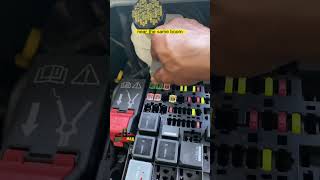
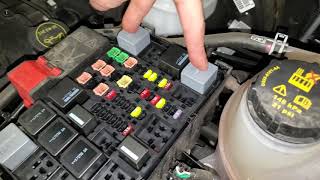
The issue involves the following fuses: F8 (20A), F30 (40A), and F31 (40A). If the fans are not working, check if these fuses are blown. Ford's recommended fix is to upgrade fuse F8 from a 20-amp to a 30-amp fuse and replace the 40-amp fuses if they are also blown. The required fuses are a specific type known as FMX-LP. 🎬 Watch: How to locate and check your Transit's A/C fuses and relays. Performing this fuse upgrade can often restore fan function without needing to replace the entire assembly.
Recalls and Other Bulletins
As of early 2026, there are no specific recalls for the A/C condenser fan motor on these vehicles. However, other related service actions exist:
- TSB 19-2388: Some 2015-2019 Transits may experience poor A/C performance due to a leaking evaporator core, which is a separate issue from the fan motor.
- Customer Satisfaction Program 24P28: Affects some 2024 model year Transits, involving potential A/C compressor failure, not the fan motor.
Step-by-Step Diagnosis

The Ford Transit uses a dual-fan system with two operating speeds, low and high. The way they are wired is key to diagnosis.
- Low-Speed Circuit (Series): For low-speed operation, the two fan motors are wired in series. This is like a string of old Christmas lights—if one bulb (motor) burns out, the entire circuit breaks, and neither fan will spin.
- High-Speed Circuit (Parallel): For high-speed operation, each fan gets its own power and ground. In this mode, if one motor has failed, the other one can still run.
This leads to a common diagnostic scenario: a driver reports the A/C works poorly at idle (no low-speed fans), but the system seems to kick on intermittently with one fan running very fast (the high-speed circuit activating due to high pressure). If you ever see only one fan spinning 🎬 Watch: A professional diagnostic walkthrough for fans that aren't spinning., it's almost certain that the other fan motor has failed.
To test the system:
- Start the engine and turn the A/C to MAX.
- Visually inspect the fans through the grille. Both should start spinning at low speed.
- If neither fan spins, first check the fuses mentioned in SSM 46923. If fuses are good, the problem could be a relay or a failure in both motors (less likely).
- If only one fan spins (likely at high speed), the non-spinning fan motor has almost certainly failed, requiring replacement of the assembly.
Buying a Used A/C Condenser Fan Motor
A used OEM fan assembly is an excellent, cost-effective alternative to expensive new parts, especially since aftermarket units can sometimes have issues with fitment or electrical connectors. Here’s what to inspect before buying a recycled part.
- Physical Inspection: Check the entire plastic shroud for cracks or broken mounting tabs. Damage here can cause vibrations and noise.
- Spin the Blades by Hand: Each fan blade should spin freely and smoothly. Any grinding, resistance, or wobbling indicates a bad motor bearing.
- Inspect the Electrical Connector: Look closely at the main electrical plug. The pins should be straight and clean, with no signs of corrosion or melted plastic, which would indicate an electrical short or overheating.
- Check the Fan Blades: Ensure the blades themselves are not chipped, cracked, or warped. A damaged blade will be out of balance and can cause noise and premature motor failure.
- Verify Compatibility: Double-check that the part comes from a vehicle with the same engine configuration. The assembly for 2015-2019 models with the 3.5L Turbo or 3.7L engine is different from the one for 2020 and newer models with the standard 3.5L gasoline engine. Match OEM part numbers when possible.
Replacement Overview and Difficulty
Replacing the condenser fan assembly on a Ford Transit is moderately difficult but can be done by a DIYer with common hand tools.
- Installation Difficulty: 2.5 out of 5
- Estimated Time: 2-3 hours
- DIY Feasible: Yes
Pro Tip: While the official Ford service procedure may suggest removing the radiator and A/C condenser from below, a much easier method is to remove the assembly from the top. This involves taking off the front grille, and possibly the driver-side headlight and upper radiator support bracket. This approach avoids the need to drain the engine coolant or discharge the A/C refrigerant, saving significant time and complexity.
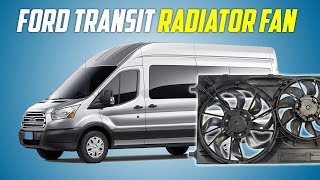
🎬 See how to replace the fan assembly without draining the coolant.Cost Comparison: New vs. Used A/C Condenser Fan
Prices for the complete fan assembly can vary significantly. Here is an estimated breakdown:
| Part Type | Estimated Cost |
|---|---|
| New OEM | $270 - $440 |
| New Aftermarket | $100 - $200 |
| Used OEM | $75 - $150 |
| Shop Labor | $250 - $450 |
Frequently Asked Questions (FAQ)
Can I replace just the fan motor instead of the whole assembly?
Generally, no. The fan motors are integrated into the shroud and are sold as a complete assembly including both fans and the housing. This ensures proper fit and function.
My A/C blows warm at idle. Is it definitely the fan?
It is the most likely cause, but not the only one. Low refrigerant is another common reason for poor A/C performance. However, if the A/C gets cold as soon as you start driving, the fan assembly is the primary suspect.
Is the A/C condenser fan the same as the radiator fan?
On the Ford Transit, they are the same unit. The dual-fan assembly serves to cool both the A/C condenser and the engine's radiator.
Why did only one of my fan motors fail?
It's common for one motor to fail before the other due to wear and tear on its internal components. On the Transit, the passenger-side fan is often reported to fail first. Because of the series wiring for the low-speed setting, the failure of one motor prevents both from working at low speed.
Helpful Videos
Technical Specifications
OEM Part Numbers: CK418C607CD CK418C607CE LK418C607AD LK4Z8C607B LK4Z8C607E RF315 RF381 RF865 CK4Z8C607B CK4Z8C607D LK4Z-8C607-F
Dual electric fan assembly with integrated shroud. Operates on two speeds via series (low) and parallel (high) wiring.
We Have This Part in Stock



The information in this article is provided for general reference and educational purposes only. Vehicle specifications, procedures, and part compatibility can vary by production date, trim level, and region. Always consult your vehicle's factory service manual and verify part numbers before purchasing or performing repairs. Safety-critical components such as airbags, seat belts, and braking systems should be installed by a qualified professional.
- Ford Transit-150:
- Ford Transit-250:
- Ford Transit-350:
- 🎬 Helpful Videos
- 🛍️ Shop This Part
- Symptoms of a Failing Ford Transit A/C Condenser Fan
- Known Issues, Recalls, and Technical Service Bulletins (TSBs)
- Special Service Message SSM 46923: Blown Fuses (2015-2017 Models)
- Recalls and Other Bulletins
- Step-by-Step Diagnosis
- Buying a Used A/C Condenser Fan Motor
- Replacement Overview and Difficulty
- Cost Comparison: New vs. Used A/C Condenser Fan
- Frequently Asked Questions (FAQ)
- 🎟️ Get 5% Off