

2002-2007 Mitsubishi Lancer A/C Condenser Fan: Solving Overheating and Warm A/C
This guide explains the common failure symptoms of the A/C condenser fan on 2.0L Lancer models and how to diagnose and replace it.
- The most common symptom of failure is A/C that blows warm when the car is stopped but gets cold when driving.
- This single-fan assembly fits only 2.0L non-turbo Lancer models; it does NOT fit the dual-fan setup on Evolution and Ralliart models.
- Diagnosis is straightforward: check the fuse, relay, and then test the fan motor directly with 12V power.
- Replacement is a simple DIY job, typically taking about an hour with basic tools.
Symptoms of a Failing Condenser Fan
When the A/C condenser fan on a 2002-2007 Mitsubishi Lancer fails, the symptoms are usually very clear and consistent. Recognizing them early can prevent further stress on your A/C system and engine.
- A/C Blows Warm Air at Idle or in Traffic: This is the most common symptom. The A/C might work reasonably well while driving at higher speeds because air is naturally forced through the condenser. However, when you stop at a red light or get stuck in traffic, the lack of airflow causes the fan's absence to become obvious, and the air from the vents will quickly turn warm.
- Engine Temperature Rises in Traffic: The condenser fan also helps cool the engine's radiator. If the fan isn't working, you may notice the engine temperature gauge creeping up while idling, especially with the A/C on. The temperature will typically return to normal once the car starts moving again.
- Visible Fan Inactivity: A simple visual check can often confirm the problem. With the engine running and the A/C turned on to its coldest setting, the condenser fan should be spinning. If it is not moving, the fan motor or its electrical circuit has failed.
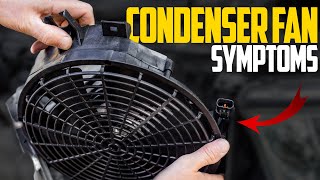
- Burning Smell: In some cases, a failing fan motor can overheat and produce a burning plastic or electrical smell from the front of the engine bay. This indicates the motor itself is burning out. 🎬 Watch: How to diagnose a bad AC condenser fan
Diagnosing the Problem: A Step-by-Step Guide
Before buying a new part, a few simple tests can confirm that the fan assembly is the true cause of the problem. You will need basic hand tools and a multimeter for some tests.
- Visual Inspection: With the engine off, look for any debris like leaves or plastic bags that might be jamming the fan blades. Check the fan's electrical connector for any obvious damage, corrosion, or loose wires.
- Check the Fuse and Relay: The first step in any electrical diagnosis is to check the fuse. Locate the A/C condenser fan fuse in the under-hood fuse box. If it's blown, replace it. If the new fuse blows immediately, you have a short circuit, likely in the fan motor itself. You can also swap the A/C fan relay with an identical one (like the horn relay) to see if the fan starts working.
- Test the Fan Motor Directly: This test bypasses the car's wiring to see if the motor itself is functional. Disconnect the fan's electrical connector. Using jumper wires, carefully apply 12V power directly from the car's battery to the two pins on the fan motor's connector. If the fan spins, the motor is good, and the problem lies in the vehicle's wiring, relay, or control module. If the fan does not spin, the motor is dead and the assembly needs to be replaced.
Compatibility Warning: This single A/C condenser fan assembly is only for 2002-2007 Mitsubishi Lancer models with the 2.0L non-turbo engine (ES, LS, OZ Rally). It will NOT fit Lancer Evolution or 2.4L Ralliart models, which use a different dual-fan setup.
Buying a Used 2002-2007 Lancer A/C Fan Assembly
Purchasing a used OEM fan assembly can be a cost-effective solution. However, it's important to inspect the part carefully to ensure you're getting a reliable unit.
- Physical Inspection: Check the entire plastic shroud for any cracks, especially around the mounting points. A cracked shroud can cause vibrations and noise. Ensure all four fan blades are intact and free of cracks or significant damage.
- Check the Connector: Verify that the part has the correct 2-pin electrical connector. The pins should be clean, straight, and free of corrosion.
- Spin the Fan by Hand: The fan blade should spin freely with minimal resistance. If it feels gritty, stiff, or makes a grinding noise, the motor's internal bearings are worn out, and the part should be rejected.
- Why Used OEM is a Good Choice: A good-condition used OEM (Original Equipment Manufacturer) fan assembly often provides better fitment and durability than a cheap, new aftermarket part. OEM motors are typically built to a higher quality standard, ensuring proper electrical draw and a longer service life.
Known Issues, Recalls, and TSBs
For the 2002-2007 Lancer generation, there are no specific recalls or Technical Service Bulletins (TSBs) directly related to the A/C condenser fan assembly itself. The primary known issue is simply the eventual failure of the electric motor from age and use. Forum discussions among owners confirm that motor burnout is the typical reason for replacement.
There was a significant recall (NHTSA ID: 16V458000) for these vehicles concerning corrosion of the front cross-member in states that use road salt, which could lead to the detachment of a lower control arm. While unrelated to the fan, it's a critical safety issue for any owner of these vehicles to be aware of.
Cost Comparison
The cost to replace the A/C condenser fan assembly can vary significantly based on the part source.
| Part Source | Estimated Cost |
|---|---|
| New OEM | $445 |
| New Aftermarket | $40 - $110 |
| Used OEM | $35 - $75 |
| Shop Labor | $61 - $90 |
Frequently Asked Questions (FAQ)
Can I drive my Lancer with a broken A/C condenser fan?
Yes, but with caution. Your car's A/C will not work when you are stopped or in slow traffic. More importantly, the engine is at a higher risk of overheating in these conditions, especially in warm weather. Avoid heavy traffic and extended idling until the fan is replaced.
Is the A/C condenser fan the same as the radiator fan?
On the 2.0L non-turbo Lancer, there are two fans. The A/C condenser fan is one, and the radiator cooling fan is the other. They work together, but are separate parts. The A/C fan's primary trigger is the A/C system being turned on, while the radiator fan is primarily triggered by engine coolant temperature.
Why does my A/C get cold only when the car is moving fast?
This is the classic symptom of a failed condenser fan. When you drive at speed, the natural airflow is enough to cool the condenser. When you slow down or stop, there is no airflow without the fan, so the A/C system can no longer cool the refrigerant effectively.
Is replacing the fan assembly a difficult job for a DIYer?
No, it is a relatively simple job. It typically involves removing a few bolts, disconnecting the electrical plug, and possibly moving the upper radiator hose out of the way. Most DIY mechanics with basic tools can complete the replacement in about an hour. 🎬 See this step-by-step Lancer AC repair walkthrough The difficulty is rated 2 out of 5.
Helpful Videos
Technical Specifications
OEM Part Numbers: MN185142 MR513042 MR568812 MR568816 MR958398 MB61012A MR233814
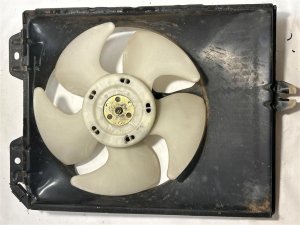
Single fan assembly with 4-blade fan and a 2-pin electrical connector. Designed for 2.0L non-turbocharged engines.
We Have This Part in Stock


The information in this article is provided for general reference and educational purposes only. Vehicle specifications, procedures, and part compatibility can vary by production date, trim level, and region. Always consult your vehicle's factory service manual and verify part numbers before purchasing or performing repairs. Safety-critical components such as airbags, seat belts, and braking systems should be installed by a qualified professional.
- Mitsubishi Lancer: