

VW & Audi A/C Compressor Guide (1997-2017): Control Valve Faults, Clutch Failures, and Replacement Costs
Covering Passat, Jetta, A4, GTI, and more, this guide explains the critical differences between older clutch-style compressors and modern variable units prone to control valve failure.
- For 2006+ models, intermittent or weak cooling is most often a faulty Refrigerant Control Valve (RCV), a cheap part that doesn't require replacing the whole compressor.
- If a compressor fails internally ("black death"), you MUST also replace the receiver/drier and expansion valve and flush the entire system, or the new compressor will fail immediately.
- Compatibility is critical. Part numbers must be matched, and for 2014-2015 models, you must visually check if you have a Denso or Sanden compressor as their control valves differ.
- Replacement is not a DIY job because it requires expensive, specialized equipment to safely and legally handle the A/C system's refrigerant.
A Tale of Two Compressors: Understanding Your VW/Audi A/C System

This guide covers a wide range of Volkswagen and Audi models that, despite their different names, share common A/C compressor designs. However, not all compressors covered here are the same. There is a major technology difference between the early and late models in this group, which completely changes how you diagnose problems.
Group 1: Clutch-Style Compressors (1997-2005)
Vehicles: 1997-2002 Audi A4, 1998-2005 Volkswagen Passat (B5/B5.5 platform)
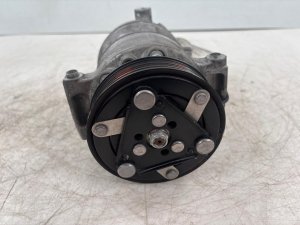
These earlier models use a traditional A/C compressor with an electromagnetic clutch. When you turn the A/C on, the clutch engages, connecting the compressor's pulley to its internal pump. When the desired temperature is reached or system pressures go out of range, the clutch disengages. Failures on these units are typically mechanical.
Group 2: Variable Displacement Compressors (2006-2017)
Vehicles: 2006-2015 VW Passat (B6/B7), 2006 Audi A3, 2013-2015 VW Beetle, 2013-2017 VW CC, 2007-2016 VW Eos, 2006 VW Golf, 2006-2009 VW GTI, 2013-2017 VW Jetta & Jetta GLI
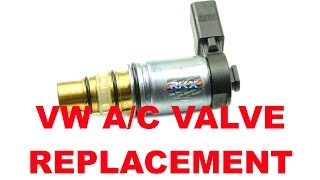
These newer models use a more modern, clutchless variable displacement compressor (often made by Denso or Sanden). The pulley is always spinning with the engine. Instead of a clutch, an electronic solenoid called a Refrigerant Control Valve (RCV), or N280 valve, constantly adjusts the compressor's internal mechanics to change the amount of refrigerant being pumped. This is more fuel-efficient but introduces a very common electronic failure point.
Symptoms of a Failing A/C Compressor

Symptoms often differ between the two compressor types.
Common Symptoms (All Models)
- No Cold Air: The most obvious symptom is a complete lack of cold air from the vents.
- Grinding or Squealing Noises: Loud grinding or squealing from the engine bay when the A/C is turned on points to a failing internal bearing or a seized compressor. This is a serious issue that requires immediate attention.
- Visible Leaks: Oily, greasy residue on the compressor body indicates a leak from a shaft seal or housing gasket.
Symptoms Specific to Newer Variable Compressors (2006+)
- Intermittent Cooling: The A/C blows cold, then warm, then cold again. This is the classic symptom of a failing Refrigerant Control Valve (RCV).
- A/C Only Works at High RPM: The system cools when you're driving on the highway but gets warm at idle or in stop-and-go traffic. This also strongly points to a faulty RCV.
- Stripped Pulley Hub: You may hear a rattling noise, and inspection may reveal the center bolt of the pulley is spinning but the pulley plate is not. The splines on this plate are designed to shear off to protect the serpentine belt if the compressor seizes.
Symptoms Specific to Older Clutch-Style Compressors (1997-2005)
- Clutch Doesn't Engage: You turn on the A/C, but you don't hear the distinct 'click' of the compressor clutch engaging, and the center of the pulley never spins. This could be a failed clutch coil, a bad relay, a faulty pressure switch, or low refrigerant.
- A/C Works Intermittently at Stops: If the A/C gets warm at a red light but cools again when you start moving, it could be caused by a failing electric cooling fan not pulling enough air across the condenser. 🎬 Watch: Troubleshooting A/C that gets warm at red lights.
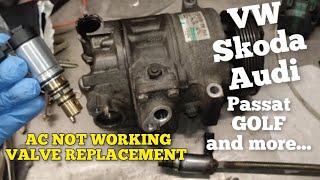
Pro Tip: On newer (2006+) models, intermittent or weak cooling is almost always caused by the cheap, replaceable Refrigerant Control Valve (RCV), not the compressor itself. Many shops will quote a full compressor replacement when only this $30 part is needed. 🎬 See how to diagnose and replace the Sanden RCV valve. Insist on having the RCV checked first.
Known Issues, TSBs, and Recalls

There are no widespread recalls for these A/C compressors, but several Technical Service Bulletins (TSBs) have been issued for the newer models.
- TSB 87-18-05 / 2044165: Addresses conditions where the A/C does not cool or the compressor is noisy on various VW models. It specifically points to a faulty A/C Compressor Regulator Valve (N280) on compressors made by Sanden.
- Compatibility Warning (2014-2015): The TSB notes that for Volkswagen Passat, Jetta, and Beetle models with 1.8T and 2.0T engines produced between June 2014 and February 2015, a mix of Denso and Sanden compressors were installed from the factory. The N280/RCV valves for these two brands are NOT interchangeable. You must visually inspect the compressor to identify the brand before ordering a replacement valve.
- Catastrophic Failure ("Black Death"): If an older compressor fails internally, it can contaminate the entire A/C system with a thick, black sludge of metal shavings and oil. If this occurs, you must replace the compressor, receiver/drier (or accumulator), and expansion valve, and thoroughly flush all lines, the condenser, and the evaporator. Failure to do so will destroy the replacement compressor, and the repair will not be covered by warranty. 🎬 Learn more about identifying and fixing 'Black Death' contamination.
Buying a Used A/C Compressor: What to Check

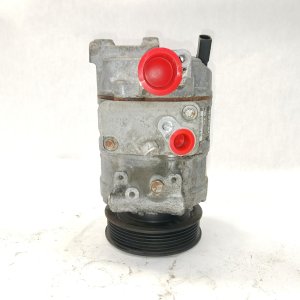
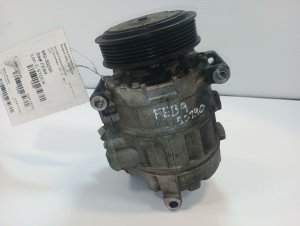
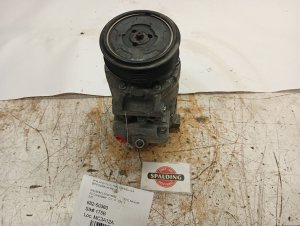
A used OEM compressor can be a smart buy, especially for newer models where the main body is robust and the common failure point (the RCV) is a cheap, separate part. Here’s what to look for:
- Verify Part Numbers: Match the OEM part number exactly. For newer models, the `1K0...` numbers often supersede each other (e.g., 1K0820859S replaces 1K0820859M). For older models, you'll be looking for an `8D0...` part number. Always confirm fitment for your specific year, model, and engine.
- Physical Inspection:
- Check the Ports: Look inside the inlet and outlet ports. They should be clean and oily. If you see any black, gritty residue, this is a sign of "black death." Do not buy this part.
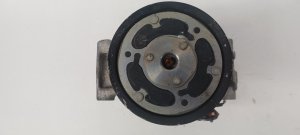
- Spin the Pulley: The pulley should spin smoothly by hand with minimal resistance and no grinding or gritty sounds. On older clutch-style units, the center hub should be stationary while the pulley spins.
- Inspect the Body: Look for any signs of leaks, especially around the seams and the shaft seal behind the pulley. A coating of oily dirt is a red flag.
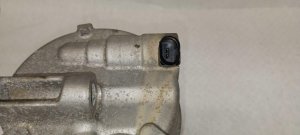
- Check the Connector: Ensure the electrical connector and its pins are clean, straight, and free of corrosion.
- Source and Mileage: Purchase from a reputable seller that provides the mileage and VIN of the donor vehicle. A compressor from a lower-mileage, front-end collision vehicle is often a good bet.
- Why Used OEM vs. New Aftermarket: For these vehicles, a used OEM Denso or Sanden compressor is often more reliable than a cheap, new aftermarket unit. The build quality and internal tolerances of the original parts are typically superior. Given that the most common failure on newer models is the inexpensive RCV, a used OEM body with a new RCV installed can be a very reliable and cost-effective repair.
Replacement Overview & Difficulty
Replacing the A/C compressor is an advanced job, primarily because it requires specialized equipment to handle the refrigerant.
- Difficulty: 4 out of 5
- DIY Feasible: No. The system must be professionally evacuated before work begins and then vacuumed and recharged after the repair. Venting refrigerant into the atmosphere is illegal and harmful to the environment.
- General Steps:
- Have a shop evacuate the A/C system.
- Disconnect the battery.
- Remove the engine belly pan.
- Release tension on the serpentine belt and remove it from the compressor pulley.
- Disconnect the electrical connector and the refrigerant lines from the compressor. Be prepared for a small amount of residual PAG oil to drip out.
- Unbolt the compressor (typically three bolts) and remove it from the vehicle. Access can be tight, especially on models like the Jetta TDI, sometimes requiring other components to be moved.
- CRITICAL: Install a new receiver/drier and expansion valve. This is mandatory for the warranty on most new and remanufactured compressors.
- Add the correct amount and type of PAG oil to the new compressor before installation.
- Install the new compressor and reconnect lines with new O-rings.
- Reinstall the serpentine belt.
- Have the shop pull a deep vacuum on the system to remove all air and moisture, then recharge it with the specified amount of refrigerant.
Warning: If you are replacing the compressor, you MUST also replace the A/C receiver/drier (also called an accumulator) and the expansion valve. The receiver/drier contains a desiccant that absorbs moisture, and it becomes saturated the moment the system is opened to air. Skipping this step will lead to poor performance and premature failure of your new compressor.
Cost Comparison
Prices can vary significantly based on brand, location, and the condition of your existing system.
| Part/Service | Estimated Cost | Notes |
|---|---|---|
| New OEM Compressor | $350 - $1,100 | From online dealers or local dealership parts counters. |
| New Aftermarket Compressor | $150 - $350 | Brands include GPD, Four Seasons, Nissens. Quality can be inconsistent. |
| Used OEM Compressor | $75 - $250 | A popular, cost-effective option from salvage yards or online sellers. |
| Remanufactured OEM | $200 - $400 + Core | A rebuilt original compressor. Often requires returning your old part. |
| Refrigerant Control Valve (RCV) Only | $25 - $50 | The likely culprit for cooling issues on 2006+ models. |
| Shop Labor (Compressor Replacement) | $250 - $600 | Includes evacuation, recharge, and installation. |
| Total Professional Replacement | $950 - $1,800+ | Using a new OEM or aftermarket part at a repair shop. |
Frequently Asked Questions (FAQ)
Can I just replace the A/C control valve (RCV) instead of the whole compressor?
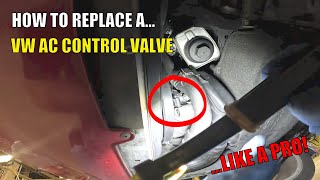
Yes! On the newer (2006+) variable displacement compressors, this is a very common and recommended repair if you have intermittent or weak cooling. The valve is held in with a simple snap ring and can be replaced without removing the compressor from the car, though the system must still be evacuated and recharged.
Can I just replace the A/C clutch on my older (pre-2006) compressor?
Sometimes. If only the clutch coil has failed or the bearing is noisy, clutch replacement kits are available. However, if the compressor is old or the clutch failed due to the compressor starting to seize, it's often more cost-effective in the long run to replace the entire compressor assembly.
Do I really need to flush the system and replace the drier and expansion valve?
Yes, it is absolutely mandatory, especially if the old compressor failed internally (created "black death"). Metal debris from the old compressor will circulate and immediately destroy the new one. The receiver/drier is a filter that also absorbs moisture, and it is considered a single-use part that must be replaced any time the sealed system is opened to the atmosphere. Most part warranties are void if you do not replace these components and have proof of a system flush.
My A/C isn't working, but the compressor seems fine. What else could it be?
Before condemning the compressor, check the simple things. Low refrigerant is a common cause of no cooling. On older cars, a bad A/C relay or pressure switch can prevent the clutch from engaging. On all models, ensure your engine's electric cooling fans are working; if they fail, the A/C can't dissipate heat and will shut down, especially at low speeds.
Helpful Videos


Technical Specifications
OEM Part Numbers: 1K0820803N 1K0820859D 1K0820859E 1K0820859M 1K0820859S 1K0820859SX 8D0260805D 8D0260805DX 8D0260805F 8D0260805FX 8D0260805M 8D0260805MX 8D0260811A
Compressor Type: Clutch-style (pre-2006 models), Variable Displacement (2006+ models). Refrigerant Type: R134a. Oil Type: PAG 46.
We Have This Part in Stock

The information in this article is provided for general reference and educational purposes only. Vehicle specifications, procedures, and part compatibility can vary by production date, trim level, and region. Always consult your vehicle's factory service manual and verify part numbers before purchasing or performing repairs. Safety-critical components such as airbags, seat belts, and braking systems should be installed by a qualified professional.
- Volkswagen Passat:
- Audi A3:
- Audi A4:
- Volkswagen Beetle:
- Volkswagen CC:
- Volkswagen Eos:
- Volkswagen Golf:
- Volkswagen GTI:
- Volkswagen Jetta:
- Volkswagen Jetta GLI:
- Volkswagen Tiguan:
- 🎬 Helpful Videos
- 🛍️ Shop This Part
- A Tale of Two Compressors: Understanding Your VW/Audi A/C System
- Group 1: Clutch-Style Compressors (1997-2005)
- Group 2: Variable Displacement Compressors (2006-2017)
- Symptoms of a Failing A/C Compressor
- Common Symptoms (All Models)
- Symptoms Specific to Newer Variable Compressors (2006+)
- Symptoms Specific to Older Clutch-Style Compressors (1997-2005)
- Known Issues, TSBs, and Recalls
- Buying a Used A/C Compressor: What to Check
- Replacement Overview & Difficulty
- Cost Comparison
- Frequently Asked Questions (FAQ)
- 🎟️ Get 5% Off