

Tesla Model 3, Y, S & X A/C Compressor Guide (2017-2026): Heat Pump vs. Non-Heat Pump Failures
This guide covers the critical differences between early resistive-heat A/C compressors and the later heat pump systems, helping you diagnose failures and buy the right used part for your Tesla Model 3, Model Y, Model S, or Model X.
- There are two incompatible A/C compressor types: part numbers starting with '1088198' are for older (2017-2020 Model 3) non-heat pump cars, while '1501256' parts are for newer (2021+) models with a heat pump.
- A loud, high-pitched squeal from the front of the car in cold weather is a critical warning sign of mechanical compressor failure in heat pump models and requires immediate attention to avoid contaminating the entire system.
- Replacement is not a DIY job. It requires specialized equipment to handle high-voltage systems and refrigerant, as well as software to configure the new part.
- If the old compressor failed internally, the entire A/C system must be flushed and the desiccant bag replaced to prevent the new compressor from being damaged by debris.
Compatibility: The Most Important Check Before You Buy

Not all A/C compressors for these Tesla models are the same. The most significant change was the switch from a simpler resistive heating system to a more efficient heat pump system. This changeover happened at different times for different models, making it essential to verify which system your vehicle has.
Warning: The two systems are not interchangeable. Installing a heat-pump compressor in a non-heat-pump car (or vice-versa) will not work.
System Types & Part Numbers
- Non-Heat Pump (Resistive Heat): Found in 2017-2020 Tesla Model 3s. These systems use a more traditional A/C compressor for cooling only and a separate resistive element for heating, similar to a space heater. Common part numbers for this system begin with 1088198.
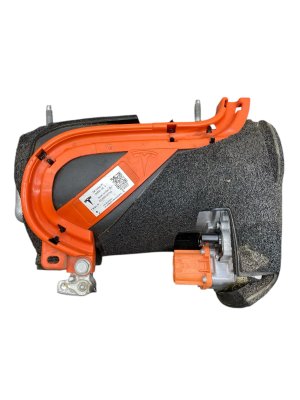
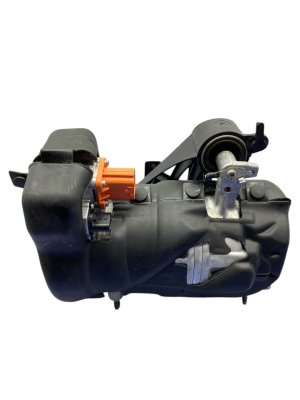
- Heat Pump System: Found in all 2020+ Model Y, 2021+ Model 3, 2021+ Model S ('Palladium'), and 2021+ Model X ('Palladium') vehicles. This system is more complex, using the A/C compressor and an 'Octovalve' manifold to provide both cooling and highly efficient heating. Common part numbers for this system begin with 1501256.
How to be certain: The easiest way to confirm which system your Model 3 has is to check the 10th character of your VIN. An 'M' (for 2021) or newer indicates a heat pump system, while an 'L' (for 2020) or older means it has the resistive heater. For all Model Y, and 2021+ Model S/X, they are equipped with the heat pump system.
Symptoms of a Failing Tesla A/C Compressor

Unlike gas-powered cars where a failing compressor might squeal from a slipping belt, Tesla compressor issues often manifest as noises, error messages, or a complete loss of climate control.
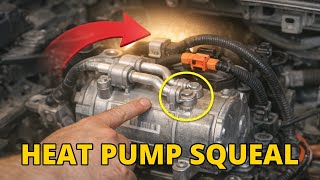
- Loud Squealing or Grinding Noise in Cold Weather: A very common symptom for heat pump models is a loud, high-pitched squeal or grinding sound coming from the front of the car, especially when preconditioning in freezing temperatures. 🎬 Watch: Hear what a failing heat pump compressor sounds like This often indicates the compressor's internal bearings are failing due to thickened, cold oil, which can lead to metal shavings contaminating the system.
- Complete Loss of Heating or Cooling: The most obvious sign is a total failure of the HVAC system. You may get an error message on the screen indicating a fault with the cabin climate control system.
- Weak Airflow or Inconsistent Temperatures: Before a total failure, the system might struggle to maintain the set temperature or produce weak airflow from the vents.
- Error Messages: A message like 'Cabin Climate Control System Requires Service' is a direct indicator of a problem. A specific diagnostic trouble code (DTC) often associated with this is VCFRONT_a447.
- Visible Refrigerant Leaks: While less common, you might see oily residue on the compressor body or its connections, indicating a refrigerant leak.
Known Issues, TSBs, and Recalls

Heat Pump Failures in Cold Climates
The early heat pump systems in 2020-2022 Model 3 and Model Y vehicles were known to have issues in extremely cold weather. Both Transport Canada and the U.S. National Highway Traffic Safety Administration (NHTSA) opened investigations into complaints of heating systems failing in freezing temperatures, which could prevent the windshield from defrosting effectively.
NHTSA Recall 22V-050: This recall addressed a software issue in certain 2020-2022 Model Y and 2021-2022 Model 3, S, and X vehicles. A software command could cause the electronic expansion valve (EXV) to remain open, trapping refrigerant and causing the compressor to stop, leading to a loss of cabin heat. The fix was a free over-the-air (OTA) software update (version 2021.44.30.7 or later) and does not require a service visit.
Pro Tip: Even with the software fix, mechanical failures of the compressor can still occur, especially if the unit was damaged by running improperly before the update. The high-pitched squeal in cold weather is a sign of a mechanical problem, not a software bug.
Buying a Used A/C Compressor: What to Check

A used OEM compressor can be a cost-effective solution, but careful inspection is key. Given the complexity and high-voltage nature of this part, a reliable unit is crucial.
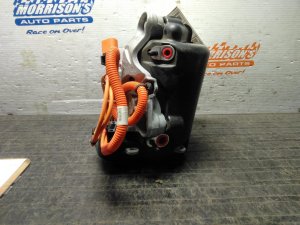
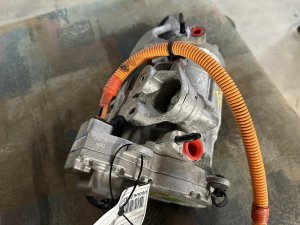
- Verify the Part Number: This is the most critical step. Match the part number from your original compressor exactly. The 1088198 series is for non-heat pump cars, and the 1501256 series is for heat pump cars. Do not attempt to interchange them.
- Inspect the Electrical Connector: Check the high-voltage electrical connector for any signs of corrosion, bent pins, or heat damage. A clean, undamaged connector is essential for proper operation.
- Check for Leaks: Look for any oily residue around the hose ports and seams of the compressor body. This indicates a refrigerant leak, and the part should be rejected.
- Ask About the Donor Vehicle: If possible, find out the mileage of the vehicle the compressor came from. Lower mileage is always better. Also, ask if the donor vehicle showed any climate control error codes before it was dismantled.
- Ensure Ports are Capped: The seller should have capped or sealed the refrigerant ports to prevent moisture and debris from entering the compressor during storage. An open compressor is likely contaminated and should be avoided.
- Why Used OEM is a Good Choice: For a high-voltage, system-critical component like this, a recycled OEM part is often superior to a new, cheap aftermarket alternative. OEM units are built to Tesla's exact specifications for electrical performance and durability, ensuring proper communication with the vehicle's control modules.
A/C Compressor Replacement Overview
- Difficulty: 4 out of 5
- DIY Feasible: No. This is not a recommended DIY repair.
Replacing the A/C compressor on these Tesla models is a complex job best left to qualified technicians with experience in high-voltage EV systems. The procedure involves:
- Properly disabling the high-voltage system to prevent electric shock.
- Using a specialized machine to safely recover the A/C refrigerant from the system.
- Removing the front underhood storage unit ('frunk') and other components to access the compressor.
- Physically removing and replacing the compressor unit.
- Crucially, flushing the entire A/C system if the old compressor failed internally. This removes metal shavings that can destroy the new compressor.
- Replacing the desiccant bag in the receiver/drier.
- Performing a vacuum leak test and recharging the system with the correct type and amount of refrigerant.
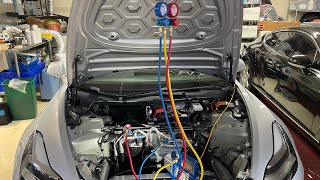
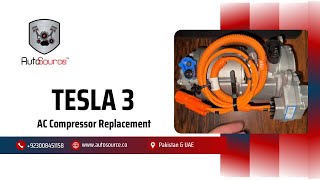
- Using Tesla's diagnostic software to configure the new compressor type in the vehicle's thermal controller. 🎬 Watch: Professional Tesla Model 3 AC compressor replacement walkthrough
Warning: The A/C system is a high-pressure, high-voltage system. Attempting this repair without proper training and equipment can result in serious injury or death.
Cost to Replace a Tesla A/C Compressor
Costs can vary significantly based on whether other components like the 'super manifold' or refrigerant lines also need replacement due to contamination from a failed compressor.
| Part/Service | Estimated Cost |
|---|---|
| New OEM Compressor | $700 - $1,100 |
| New Aftermarket Compressor | $350 - $600 |
| Used OEM Compressor | $150 - $400 |
| Shop Labor | $700 - $1,600+ |
| Total Estimated Cost (with Used Part) | $850 - $2,000 |
| Total Estimated Cost (with New OEM Part) | $1,400 - $2,700+ |
Note: Labor costs can be high because the job requires specialized equipment and can take between 4 to 8 hours. Some owners have reported total repair bills exceeding $3,000 when other system components are replaced.
Frequently Asked Questions
Do I need to replace anything else with the compressor?
Yes. Any time you replace an A/C compressor, you must also replace the desiccant bag (or the entire receiver/drier assembly). If the old compressor failed internally (made grinding noises), the entire system must be professionally flushed to remove metal debris that will damage the new compressor.
Can an independent shop replace my Tesla's A/C compressor?
Yes, but only if the shop is specifically trained and equipped to work on EV high-voltage A/C systems. They will need the correct refrigerant recovery/recharge machine and access to software that can configure the new compressor to the car. Not all shops are qualified.
What refrigerant does my Tesla use?
It depends on the model year and region. Early models typically used R134a, while newer models use R1234yf. There should be a sticker under the hood specifying the correct refrigerant type and capacity. Using the wrong type can damage the system.
Will a software update fix my noisy A/C compressor?
No. While software updates have fixed logic issues that caused the heat pump to stop working in the cold (Recall 22V-050), they cannot fix a mechanical failure. A loud squealing or grinding noise is a sign of a physical problem inside the compressor that requires replacement.
Helpful Videos

Technical Specifications
OEM Part Numbers: 1088198-00-J 1088198-00-L 1088198-00-M 1088198-00-N 1088198-00-P 1501256 1501256-00-F 1501256-00-G 1501256-00-I 1501256-00-J 1501256-00-L 1501256-00-M 1501256-01-L 1501256-01-M 1501256-98-M
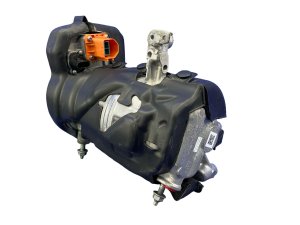
High-voltage electric scroll compressor. Integrated into the vehicle's thermal management system. Heat pump versions (1501256 series) are capable of reverse operation for heating.
We Have This Part in Stock


The information in this article is provided for general reference and educational purposes only. Vehicle specifications, procedures, and part compatibility can vary by production date, trim level, and region. Always consult your vehicle's factory service manual and verify part numbers before purchasing or performing repairs. Safety-critical components such as airbags, seat belts, and braking systems should be installed by a qualified professional.
- Tesla Model 3:
- Tesla Model Y:
- Tesla Model S:
- Tesla Model X:
- 🎬 Helpful Videos
- 🛍️ Shop This Part
- Compatibility: The Most Important Check Before You Buy
- System Types & Part Numbers
- Symptoms of a Failing Tesla A/C Compressor
- Known Issues, TSBs, and Recalls
- Heat Pump Failures in Cold Climates
- Buying a Used A/C Compressor: What to Check
- A/C Compressor Replacement Overview
- Cost to Replace a Tesla A/C Compressor
- Frequently Asked Questions
- 🎟️ Get 5% Off