

2003-2007 Saturn ION & Chevy Cobalt A/C Compressor: Engine Fitment and Failure Guide
This guide decodes the critical, engine-specific differences in A/C compressors for the Saturn ION and Chevrolet Cobalt and details how to diagnose, replace, and buy a used unit.
- There are two different compressors: one for the 2.2L/2.4L engines and a separate one for the 2.0L Supercharged (SS/Red Line) models. They are not interchangeable.
- When replacing the compressor, you MUST also replace the receiver/drier and orifice tube and flush the entire system to prevent immediate failure of the new part.
- Replacement is not recommended for most DIY mechanics due to the legal requirement and specialized equipment needed to handle refrigerant.
- Symptoms like intermittent cooling or the clutch not engaging can sometimes be caused by simpler electrical issues, not a failed compressor.
Critical Compatibility Warning: Not All Compressors Are the Same

Warning: The most common mistake when purchasing this part is getting the wrong compressor for your engine. The Saturn ION and Chevrolet Cobalt use different A/C compressors depending on the engine installed.
- 2.2L & 2.4L Naturally Aspirated Engines: The majority of IONs and Cobalts with the standard 2.2L (L61) and 2.4L (LE5) Ecotec engines share one type of A/C compressor.
- 2.0L Supercharged Engine (LSJ): The high-performance Saturn ION Red Line (2004-2007) and Chevrolet Cobalt SS Supercharged (2005-2007) use a completely different A/C compressor. This is due to the unique belt routing and mounting points required by the supercharger.
Always verify the engine in the vehicle before purchasing a replacement compressor. Installing the wrong part will not work and may cause damage.
Symptoms of a Failing A/C Compressor

When an A/C compressor starts to fail, it will give several distinct warning signs. Ignoring them can lead to more expensive repairs if the compressor seizes or sends debris through the system.
- No Cold Air: The most obvious symptom is warm or lukewarm air coming from the vents when the A/C is on. This happens when the compressor can no longer effectively pressurize the refrigerant.
- Loud Noises When A/C is On: A variety of sounds can point to a bad compressor. These often occur only when the A/C is turned on.
- Grinding or Squealing: Often indicates a failing bearing inside the compressor or a problem with the clutch.
- Rattling or Knocking: Can suggest that internal components are loose or have broken. If you hear this, turn the A/C off immediately to prevent further damage.
- Compressor Clutch Doesn't Engage: When you turn on the A/C, you should hear a distinct 'click' from the engine bay as the compressor's electromagnetic clutch engages. If the center part of the pulley isn't spinning with the outer part, the clutch is not engaged. This can be caused by a failed clutch, a bad electrical connection, low refrigerant pressure, or a faulty pressure switch.
- Intermittent Cooling: The A/C may work for a short time and then start blowing warm air. This can be a sign of an overheating clutch coil or a faulty pressure switch that is incorrectly reading system pressures.
- Visible Refrigerant Leaks: The compressor has seals that can fail over time. You may see a greasy, grimy residue on the body of the compressor, which is a mix of refrigerant oil and dirt.
Diagnosing the Problem

Before condemning the compressor, perform a few simple checks:
- Check Fuses and Relays: A blown fuse or a bad A/C compressor relay is a common and inexpensive fix. Consult your owner's manual for their locations.
- Visual Inspection: With the engine off, look at the compressor. Is the electrical connector plugged in securely? Is there visible damage or oily residue?
- Watch the Clutch: Have a helper turn the A/C on and off while you watch the compressor pulley. The center hub of the pulley should engage and spin with the outer pulley when the A/C is on, and stop when it's off. If it doesn't engage, the problem could be electrical or a failed clutch. 🎬 Watch: How to diagnose and fix a compressor that won't engage.
- Check for Electrical Faults: On these specific vehicles, electrical issues can mimic compressor failure. Some Cobalt owners have found that a loose connector on the back of the climate control panel can cause the A/C to work only on certain fan speeds. On the ION, a faulty engine coolant temperature sensor can sometimes prevent the A/C from turning on.
Buying a Used A/C Compressor: What to Look For

A quality used OEM compressor can be a reliable and cost-effective alternative to expensive new parts. Cheap aftermarket compressors often have lower build quality and can fail prematurely. Here’s what to inspect before you buy:
- Verify Engine Compatibility: This is the most important step. Double-check that the donor vehicle had the same engine as yours (2.0L SC vs. 2.2L/2.4L NA).
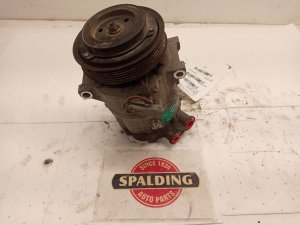
- Inspect the Clutch and Pulley: Spin the outer pulley by hand. It should spin smoothly and quietly. Try to turn the inner clutch hub by hand (it may be stiff, but it should turn). If it's completely seized and won't budge, the compressor has failed internally and should be rejected.
- Check for Leaks: Look for excessive oily residue around the seals and where the lines connect. A little grime is normal, but a wet, oily film indicates an active leak.
- Examine the Electrical Connector: Ensure the connector isn't cracked, broken, or corroded.
- Confirm Ports Were Capped: A reputable seller will cap or plug the inlet and outlet ports to prevent moisture and debris from entering the unit. If the ports are open to the air, the internal desiccant may be saturated and the compressor could be contaminated.
Pro Tip: When replacing a compressor, you MUST also replace the A/C receiver-drier (also called an accumulator) and the orifice tube. You must also have the entire system professionally flushed to remove old oil and any debris from the previous compressor's failure. Skipping this step will cause your replacement compressor to fail very quickly.
Replacement Overview & Difficulty
- Difficulty Rating: 4 out of 5. This is an advanced DIY job.
- Key Challenges: The primary difficulty is the legal and technical requirement for handling refrigerant. You cannot legally vent refrigerant into the atmosphere. The system must be evacuated with a special machine before work begins and then properly recharged and tested with a vacuum pump and manifold gauges after installation. Access to the compressor itself can also be tight, often requiring removal of the passenger side wheel and inner fender liner. 🎬 Watch: A complete walkthrough of the compressor replacement process.
Cost to Replace A/C Compressor
| Part/Service | Estimated Cost |
|---|---|
| New OEM Compressor | $200 - $450 |
| New Aftermarket Compressor | $120 - $310 |
| Used OEM Compressor | $50 - $125 |
| Shop Labor (including evacuation & recharge) | $220 - $760 |
| Total Professional Replacement | $950 - $1,420+ |
OEM Part Numbers & Engine Compatibility
While part numbers can be superseded, this table provides a general guide. Always verify fitment with the seller using your vehicle's VIN.
| Engine | Known OEM Part Numbers |
|---|---|
| 2.2L L61 & 2.4L LE5 | 15231223, 15255655, 15893103, 22736034, 19130592, 22729162 |
| 2.0L Supercharged LSJ | 22709081, 15255654, 15893104, 22853678 |
Frequently Asked Questions (FAQ)
Can I just replace the A/C clutch and not the whole compressor?
Sometimes, yes. If the compressor itself is confirmed to be in good working order and only the clutch coil or bearing has failed, you can replace just the clutch assembly. However, this requires special tools, and often the cost of a complete used compressor is comparable to a new clutch kit, making a full swap an easier option.
My A/C works when the car is moving, but not at a stop. Is that the compressor?
This is more likely an issue with your engine's cooling fan. The fan is supposed to pull air across the A/C condenser when the vehicle is stationary. If the fan isn't working, the pressure in the A/C system gets too high at idle, and a pressure switch will shut off the compressor to protect it.
Do I need to add oil to the new compressor?
Yes, but the amount is critical. New and remanufactured compressors may come pre-filled with oil, but you must verify the amount and type (PAG oil) are correct for your system. Used compressors will have some residual oil, but you should drain it and add the specified amount of new oil before installation. Over or under-filling with oil will destroy the compressor.
Is there a recall on the A/C compressor for the Cobalt or ION?
No, there are no specific recalls for the A/C compressor on the 2003-2007 Saturn ION or 2005-2007 Chevrolet Cobalt.
Helpful Videos

Technical Specifications
OEM Part Numbers: 15231223 15255655 15893103 22736034 22853678 15255654 15893104 19130592 22729162 22709081
System uses R134a refrigerant and PAG 46 oil. Specific oil capacity varies by exact model and year; consult service manual.
We Have This Part in Stock





The information in this article is provided for general reference and educational purposes only. Vehicle specifications, procedures, and part compatibility can vary by production date, trim level, and region. Always consult your vehicle's factory service manual and verify part numbers before purchasing or performing repairs. Safety-critical components such as airbags, seat belts, and braking systems should be installed by a qualified professional.
- Saturn ION:
- Chevrolet Cobalt:
- 🎬 Helpful Videos
- 🛍️ Shop This Part
- Critical Compatibility Warning: Not All Compressors Are the Same
- Symptoms of a Failing A/C Compressor
- Diagnosing the Problem
- Buying a Used A/C Compressor: What to Look For
- Replacement Overview & Difficulty
- Cost to Replace A/C Compressor
- OEM Part Numbers & Engine Compatibility
- Frequently Asked Questions (FAQ)
- 🎟️ Get 5% Off