

2012-2019 Kia Rio & Hyundai Accent A/C Compressor: Why It Fails and How to Buy the Right One
This guide covers the common failure symptoms, replacement costs, and the critical compatibility difference between automatic and manual climate control systems for the A/C compressor in your Rio or Accent.
- You MUST verify if your car has Automatic Temperature Control (with an 'AUTO' button) or Manual Control (with simple knobs) before buying; the compressors are not interchangeable.
- Common failure symptoms include no cold air, grinding/squealing noises when the A/C is on, and intermittent cooling in hot weather.
- When replacing the compressor, it is mandatory to also replace the A/C receiver/drier to prevent moisture contamination and ensure the new part's longevity.
- Replacement is not a simple DIY job as it requires specialized equipment to legally and safely handle A/C refrigerant.
Symptoms of a Failing A/C Compressor

When the A/C compressor in a 2012-2019 Kia Rio or Hyundai Accent begins to fail, it will usually provide several warning signs. Ignoring these can lead to more expensive repairs if the compressor fails catastrophically and sends metal debris throughout the A/C system.
1. No Cold Air or Warm Air from Vents
This is the most obvious symptom. If the compressor isn't pressurizing the refrigerant, the system cannot cool the air. You might notice the air is only slightly cool or blows at the same temperature as the outside air. Sometimes, this failure can be intermittent, with the A/C working one moment and blowing warm the next.
2. Grinding, Squealing, or Rattling Noises
Unusual noises from the engine bay that start or change when you turn the A/C on are a major red flag.
- Grinding or Squealing: This often points to a failing internal bearing or a problem with the compressor's clutch. The compressor may be seizing up.
- Rattling: This can indicate a loose clutch or mounting bolts, but it could also be a sign of failing internal components.
3. A/C Clutch Does Not Engage
The A/C compressor has a clutch on the front of its pulley that is activated by an electromagnet. When you turn the A/C on, you should hear a distinct 'click' from the engine bay as the clutch engages, and the center part of the pulley will begin to spin with the outer part. If this clutch doesn't engage, the compressor won't run. This can be caused by a failed clutch coil, a blown fuse, a bad relay, or low refrigerant pressure that prevents the system from turning on as a safety measure.
4. A/C Cuts Out in Hot Weather or Traffic
Some owners report that the A/C works fine in mild weather but stops cooling when the outside temperature is very high or when the car is stopped in traffic. This can be a symptom of a worn compressor clutch that disengages when it gets too hot, or an electrical issue like undervoltage.
5. Visible Refrigerant Leaks
The compressor has several seals that can fail over time, leading to leaks. You might see a greasy, oily residue on the body of the compressor or on the A/C lines connected to it. Leaking refrigerant not only stops the A/C from working but is also harmful to the environment.
Compatibility Warning: Automatic vs. Manual Climate Control
This is the single most important detail when buying a replacement A/C compressor for these vehicles. The compressor is different for cars with Automatic Temperature Control (ATC) and those with Manual Climate Control. Installing the wrong one will not work.
- Automatic Climate Control: Your dashboard controls will have an "AUTO" button and a screen that displays a specific temperature (e.g., 72°F). You set a temperature, and the system automatically adjusts fan speed and air flow to maintain it.
- Manual Climate Control: Your dashboard controls will have three simple knobs: one for temperature (with a blue-to-red gradient), one for fan speed (with settings like 1-2-3-4), and one for air direction (face, feet, etc.).
Before ordering, you MUST verify which system your car has. The provided OEM part numbers (977011R100, 977011W600, etc.) are typically for models equipped with Automatic Temperature Control.
Known Issues for 2012-2019 Rio & Accent

While generally reliable, a few common issues have been reported by owners and mechanics for the A/C systems in these cars.
- A/C Compressor Clutch Failure: The electromagnetic clutch that engages the compressor is a known failure point. It can wear out, causing intermittent cooling or a complete failure to engage. In some cases, the clutch assembly can be replaced separately, but often a full compressor replacement is more economical.
- Electrical and Voltage Problems: Some A/C failures are not due to the compressor itself but to the electrical system that controls it. One documented issue is an undervoltage problem caused by a faulty wiring harness, which prevents the compressor clutch from getting enough power to engage. Problems with the A/C relay or fuses can also mimic a compressor failure.
- No Specific Recalls: As of early 2026, there are no specific NHTSA recalls for the A/C compressor on the 2012-2019 Kia Rio or Hyundai Accent. A large fire-risk recall issued in 2023 for these models was related to the ABS module and is not connected to the A/C system.
Buying a Used A/C Compressor: What to Check

A quality used OEM compressor can be a great value, often outlasting a cheap new aftermarket part. Here’s what to inspect before you buy.
- Verify Compatibility: First and foremost, confirm the donor vehicle had the same climate control system (Automatic or Manual) as yours. Match the part number if possible.
- Inspect the Clutch and Pulley: The pulley on the front should spin freely by hand with no grinding or wobble. The clutch plate in the center should be straight and not show signs of extreme heat (discoloration) or damage.
- Check for Leaks: Look for oily residue around the hose connections and the seams of the compressor body. A clean, dry compressor is a good sign.
- Look Inside the Ports: The inlet and outlet ports should have been capped on the donor car to keep moisture and debris out. If they are open, shine a light inside. The presence of black, gritty oil or metal shavings is a deal-breaker. This indicates a catastrophic internal failure, and installing it would contaminate your entire A/C system.
- Test the Clutch (Bench Test): If possible, you can test the clutch with a 12V power source. Connect the negative lead to the compressor body (ground) and the positive lead to the single pin on the electrical connector. You should hear a solid 'click' as the clutch engages.
Pro Tip: When replacing the compressor, you MUST also replace the A/C Receiver/Drier (also called the desiccant bag). This component absorbs moisture from the system. A new one is required to ensure the longevity of your replacement compressor, and nearly all warranties for new or remanufactured compressors are voided if the drier is not replaced at the same time.
Replacement Cost & Difficulty

Replacing the A/C compressor is a moderately difficult job that requires specialized tools, making it a challenging task for most DIY mechanics.
| Category | Details |
|---|---|
| Installation Difficulty | 4 out of 5 (Difficult) |
| Reasoning | The job requires the legal recovery and vacuuming/recharging of refrigerant using specialized A/C service equipment. Failure to do this correctly can damage the new compressor and is illegal. |
| Estimated Time | 3 - 6 hours |
| DIY Feasible? | Not recommended without proper A/C equipment and training. | 🎬 See this full walkthrough of a Kia Rio A/C replacement.
Cost Comparison
Prices can vary by location and supplier, but this provides a general estimate.
| Part Type | Estimated Cost |
|---|---|
| New OEM | $290 - $710 |
| New Aftermarket | $150 - $450 |
| Used OEM | $75 - $150 |
| Remanufactured | $110 - $250 |
| Shop Labor | $300 - $900 |
Frequently Asked Questions (FAQ)
Can I just replace the A/C compressor clutch?
Sometimes, yes. If only the clutch coil or bearing has failed, it is possible to replace just the clutch assembly. However, the cost of the clutch kit plus the labor to install it can sometimes be close to the cost of a complete used or remanufactured compressor. If the compressor is old or has high mileage, replacing the entire unit is often a safer bet.
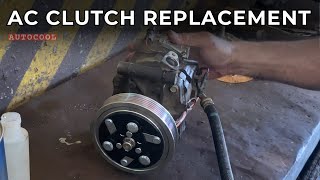
🎬 Watch: Step-by-step guide to replacing just the A/C compressor clutch.Do I need to add oil to the new compressor?
Yes, but the amount is critical. New and remanufactured compressors often come pre-filled with oil, but you must verify the amount and type (PAG oil) are correct for your vehicle's system. If you are installing a used compressor, you should drain the old oil and add the specified amount of new oil to ensure proper lubrication and prevent damage.
Why did my original A/C compressor fail?
Compressors can fail for several reasons. The most common is simple wear and tear on internal components or the clutch after many years and miles. Other causes include a loss of refrigerant from a leak elsewhere in the system (refrigerant carries the lubricating oil), or a blockage in the system that causes extreme pressure and strain on the compressor.
Can I drive my car with a bad A/C compressor?
Yes, but with a major caution. If the compressor has only failed internally and no longer cools, you can drive the car indefinitely. However, if the compressor pulley bearing has seized, the serpentine belt will not be able to turn, which will stop the alternator and water pump from working. This will cause the engine to overheat and the battery to die quickly. If you hear a loud grinding or the belt is squealing, it is not safe to drive until the issue is addressed.
Helpful Videos

Technical Specifications
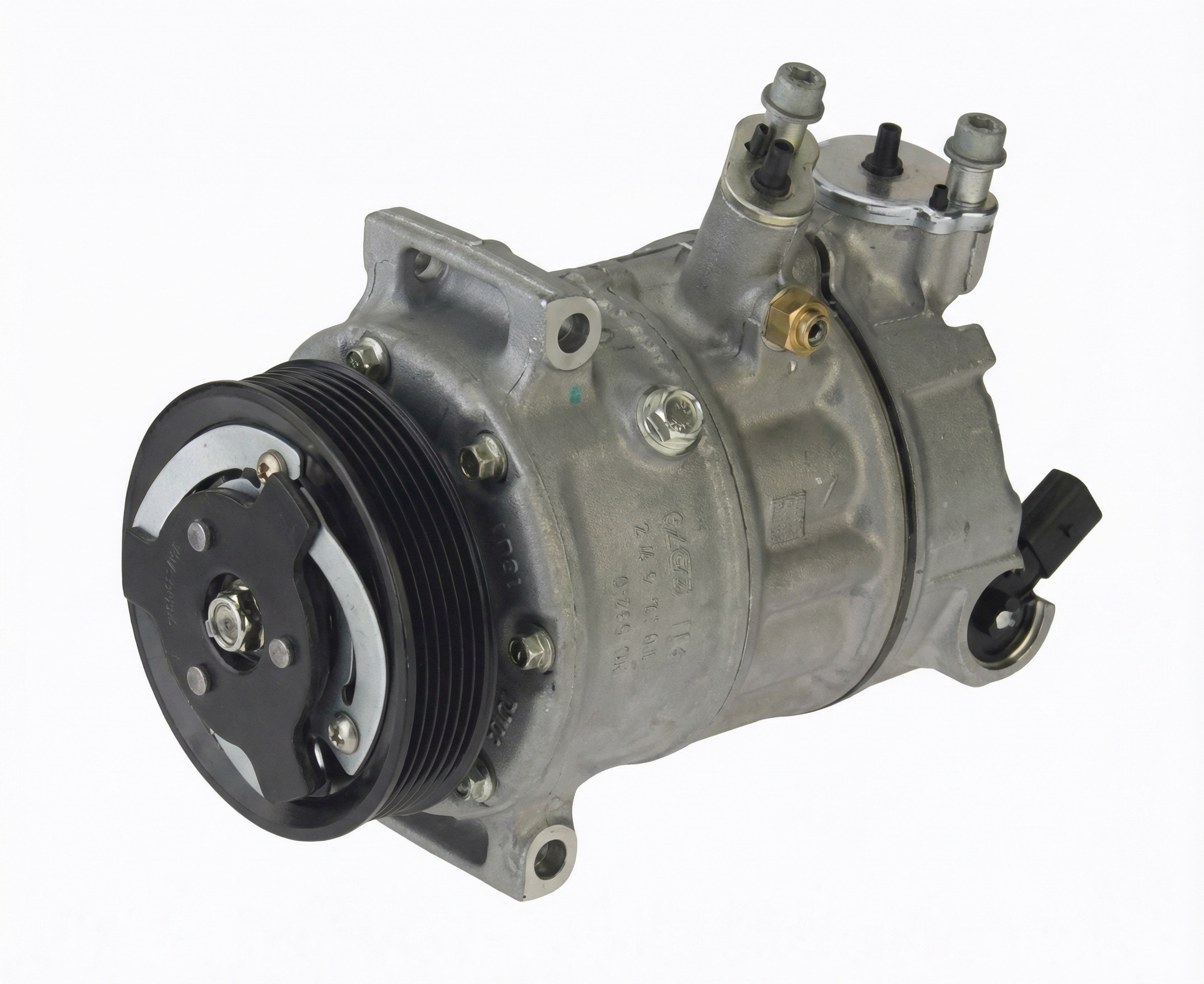
OEM Part Numbers: 977011R100 977011W600 97701H9150 977011R100DR 977011W610 97701H9150RU
Fits 1.6L engines. Compatibility is dependent on whether the vehicle is equipped with Automatic Temperature Control (ATC) or Manual climate controls. Features a plug-in style control valve on the rear of the unit.
We Have This Part in Stock




The information in this article is provided for general reference and educational purposes only. Vehicle specifications, procedures, and part compatibility can vary by production date, trim level, and region. Always consult your vehicle's factory service manual and verify part numbers before purchasing or performing repairs. Safety-critical components such as airbags, seat belts, and braking systems should be installed by a qualified professional.
- Kia Rio:
- Hyundai Accent:
- 🎬 Helpful Videos
- 🛍️ Shop This Part
- Symptoms of a Failing A/C Compressor
- 1. No Cold Air or Warm Air from Vents
- 2. Grinding, Squealing, or Rattling Noises
- 3. A/C Clutch Does Not Engage
- 4. A/C Cuts Out in Hot Weather or Traffic
- 5. Visible Refrigerant Leaks
- Known Issues for 2012-2019 Rio & Accent
- Buying a Used A/C Compressor: What to Check
- Replacement Cost & Difficulty
- Cost Comparison
- Frequently Asked Questions (FAQ)
- 🎟️ Get 5% Off