

2000-2009 Hyundai Accent A/C Compressor: A Guide to Noises, Leaks, and Compatibility
This guide covers common failure symptoms, replacement costs, and how to choose the correct A/C compressor for your 1.5L or 1.6L Accent engine.
- Compatibility is critical and depends on the generation: 2000-2006 (LC) models have 1.5L or 1.6L engines, while 2006-2009 (MC) models use a different 1.6L compressor with a 4-groove pulley.
- When replacing the compressor, you MUST also replace the receiver/drier and expansion valve, and flush the system to prevent immediate failure of the new part.
- A seized compressor pulley can break the serpentine belt, disabling the power steering and alternator, making the car undrivable.
- Proper refrigerant and oil levels are essential. Both generations use R134a refrigerant and PAG 46 oil, but the fill capacity is different between the LC (~550g) and MC (~500g) generations.
Generational Differences: 2000-2006 (LC) vs. 2006-2009 (MC)

The 2000-2009 Hyundai Accent spans two distinct generations, which use different A/C compressors. Choosing the correct part is critical for fitment and function. The most significant differences are engine type and the compressor's physical design.
- First Generation (LC; 2000-2006): These Accents were available with a 1.5L SOHC or a 1.6L DOHC engine. The compressors for these engines are not interchangeable. It is essential to confirm your engine size before ordering a part.
- Second Generation (MC; 2006-2009): These Accents primarily used a 1.6L DOHC engine. The compressor for this generation features a 4-groove pulley and is designed for vehicles with manual A/C controls only. It will not work on the rare models equipped with automatic climate control.
Symptoms of a Failing A/C Compressor

A failing A/C compressor on a Hyundai Accent will provide several clear warning signs. Ignoring them can sometimes lead to the serpentine belt breaking, which disables the alternator and power steering.
- Warm Air From Vents: The most obvious symptom. If the compressor isn't pressurizing refrigerant, the cooling cycle cannot start.
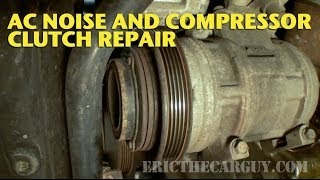
- Loud Grinding or Squealing Noises: A grinding or growling sound when the A/C is turned on often points to failing internal bearings or components. A squealing noise could be a worn clutch bearing. If the noise is constant even with the A/C off, the pulley's sealed bearing may have failed. 🎬 See how to diagnose AC clutch noise and repair it
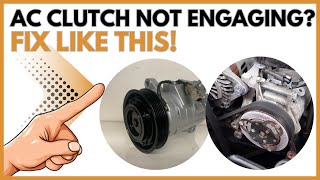
- Clutch Fails to Engage: The compressor pulley spins with the engine belt, but the center clutch plate only engages when the A/C is on. If you turn on the A/C and don't hear a 'click' or see the center plate start spinning, the clutch is not engaging. This can be caused by a bad clutch coil, a blown fuse, a bad relay, or low refrigerant pressure preventing the system from turning on. 🎬 Watch: Quick fixes when your AC clutch won't engage
- Visible Refrigerant Leaks: The A/C system uses PAG 46 oil that circulates with the refrigerant. A common failure point is the compressor's front shaft seal. If this seal fails, it will sling a greasy, oily residue onto the compressor body, the subframe, and the hood liner.
Warning: A seized compressor pulley is a serious failure. If the pulley cannot spin freely, it will destroy the serpentine belt. This will cause a loss of power steering and stop the alternator from charging the battery, making the vehicle unsafe to drive and leaving you stranded.
Known Issues, Recalls, and TSBs

As of mid-2026, there are no specific recalls or widespread Technical Service Bulletins (TSBs) from Hyundai or the NHTSA for A/C compressor failure on the 2000-2009 Hyundai Accent. Most failures are due to normal wear and tear over time.
However, one common issue in many A/C systems, including the Accent's, is internal contamination after a compressor failure. If the compressor fails internally, it can send metal shavings throughout the entire system. This is sometimes called "black death." If you simply install a new compressor without addressing this contamination, the debris will destroy the replacement part very quickly.
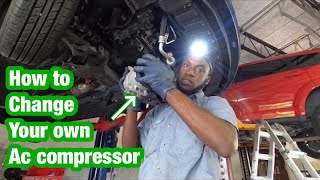
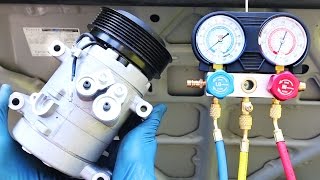
Pro Tip: When replacing the compressor, it is absolutely mandatory to also replace the A/C Receiver/Drier 🎬 Watch this step-by-step compressor and expansion valve replacement (also called an accumulator) and the expansion valve. You must also flush the condenser, evaporator, and lines with an approved A/C system flush to remove any old oil and potential debris. Failure to do so will void the warranty on most replacement compressors and lead to premature failure.
Buying a Used A/C Compressor: What to Check

A low-mileage used OEM compressor can be a reliable and cost-effective alternative to a new aftermarket part. Here’s what to inspect before you buy:
- Confirm Compatibility: This is the most important step. Double-check the year, engine (1.5L or 1.6L), and A/C control type (manual). For 2006-2009 models, ensure the replacement has a 4-groove pulley. Compare the electrical connector to your old part to ensure it matches.
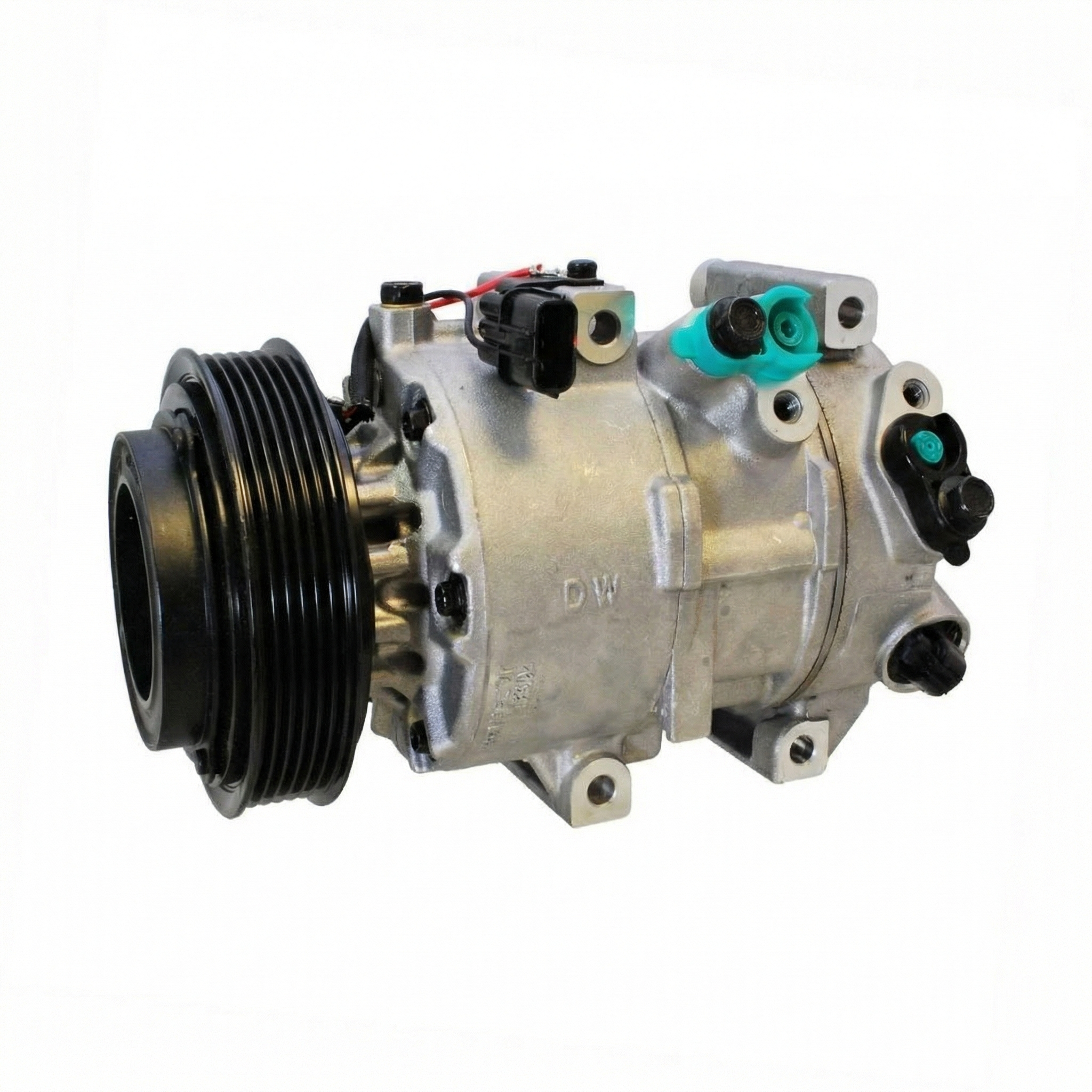
- Inspect the Pulley and Clutch: Spin the outer pulley by hand. The bearing should feel smooth, with no grinding or roughness. Next, try to spin the inner clutch hub. It should turn separately from the pulley with some resistance. If the pulley is seized or the clutch hub spins with no resistance, reject the part.
- Check for Leaks: Look for oily, grimy residue around the front shaft seal (behind the clutch) and where the two halves of the compressor body are bolted together. Any sign of an oil leak means the seals are bad.
- Examine the Ports: If the ports are open to the air, moisture has contaminated the internal desiccant bag and potentially caused corrosion. Look for units that were capped or sealed immediately after removal from the donor vehicle.
- Ask About the Donor Vehicle: A compressor from a vehicle that suffered a rear-end or side collision is often a better bet than one from a car with a blown engine or high mileage, as the A/C system was likely functional before the accident.
Cost Comparison for A/C Compressor Replacement
Prices can vary significantly based on part type and your location. The labor for this job typically includes legally required refrigerant evacuation and recharge.
| Part or Service | Estimated Cost | Notes |
|---|---|---|
| New OEM | $570 - $980 | Highest quality and price, direct from Hyundai. |
| New Aftermarket | $70 - $450 | Wide range of quality. Brands like Denso or UAC are generally more reliable than no-name online parts. |
| Remanufactured OEM | $225 - $350 | A good value, rebuilt by Hyundai to factory specs. |
| Used OEM | $50 - $125 | A cost-effective option if inspected carefully. Price depends on mileage and condition. |
| Shop Labor (including recharge) | $250 - $450 | Includes evacuating the old refrigerant, pulling a vacuum, and recharging the system. |
Frequently Asked Questions (FAQ)
Can I just replace the A/C clutch and not the whole compressor?
While clutch kits are sometimes available, it's often not practical. The cost of the specialized tools needed to remove and install the clutch can be more than a complete remanufactured or used compressor. Furthermore, if the clutch failed due to a leak from the compressor's front seal, replacing only the clutch won't solve the underlying problem.
Do I need to add oil to my replacement compressor?
Yes, but the amount is critical. New and remanufactured compressors often come pre-filled with some oil, but it may not be the full system amount. You must drain the shipping oil from the replacement compressor to measure how much is inside, then add the correct type (PAG 46) and total system amount, distributing it between the compressor, condenser, and receiver/drier per the service manual. Too little or too much oil will damage the compressor.
What is the refrigerant capacity for a 2000-2009 Accent?
The system uses R134a refrigerant. The capacity varies by generation: First generation (LC, 2002-2005) models hold approximately 550 grams (19.4 oz). Second generation (MC, 2006-2009) models hold approximately 500 grams (17.6 oz). Always verify the exact capacity on the sticker under your vehicle's hood.
Why did my A/C stop working right after I recharged it with a DIY can?
DIY recharge cans can be risky. If the system was low on refrigerant due to a leak, you haven't fixed the root cause. More importantly, these cans can easily introduce too much refrigerant or air into the system. An overcharged system creates excessively high pressure, which can damage the compressor and other components. It's always best to have the system professionally evacuated and recharged by weight.
Helpful Videos
Technical Specifications
OEM Part Numbers: 97701-1C150 97701-25000 97701-25100 9770117511 977011E000 977011E001 0K30A-61450C 0K30A-61450D 0K30A-61450E
Refrigerant Type: R134a. Refrigerant Capacity (2000-2006 LC): ~550g / 19.4 oz. Refrigerant Capacity (2006-2009 MC): ~500g / 17.6 oz. Compressor Oil Type: PAG 46. Pulley (2006-2009): 4-Groove Serpentine.
We Have This Part in Stock



The information in this article is provided for general reference and educational purposes only. Vehicle specifications, procedures, and part compatibility can vary by production date, trim level, and region. Always consult your vehicle's factory service manual and verify part numbers before purchasing or performing repairs. Safety-critical components such as airbags, seat belts, and braking systems should be installed by a qualified professional.
- Hyundai Accent:
- 🎬 Helpful Videos
- 🛍️ Shop This Part
- Generational Differences: 2000-2006 (LC) vs. 2006-2009 (MC)
- Symptoms of a Failing A/C Compressor
- Known Issues, Recalls, and TSBs
- Buying a Used A/C Compressor: What to Check
- Cost Comparison for A/C Compressor Replacement
- Frequently Asked Questions (FAQ)
- 🎟️ Get 5% Off