

2017-2025 Ford F-150 A/C Compressor: Engine-Specific Fitment and Failure Guide
This guide covers the common failure points and critical, engine-specific compatibility warnings for the 2017-2025 Ford F-150 A/C compressor.
- Fitment is extremely specific. You must match the compressor to your F-150's exact year, engine (2.7L, 3.3L, 3.5L, 5.0L), and whether it has the optional 'Hot Climate Package'.
- These trucks use R-1234yf refrigerant, which requires special, expensive equipment to handle. This makes the replacement not feasible for most DIYers.
- When replacing the compressor, it is mandatory to also replace the receiver/drier (desiccant) and expansion valve to prevent contamination and premature failure.
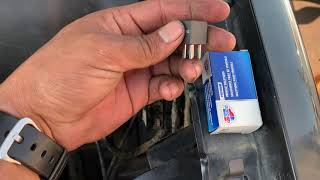
- Before condemning the compressor for a 'no-click' issue, always check the A/C clutch fuse and relay first, as this is a common, inexpensive failure point.
Critical Fitment Warnings: Engine & Climate Options

Choosing the correct A/C compressor for a 2017-2025 Ford F-150 is more complicated than for many other vehicles. Ford used different compressors based on the engine, model year, and even the climate package the truck was built with. Installing the wrong compressor can lead to immediate failure, damage to other A/C components, or simply a system that does not work. Always verify compatibility using your vehicle's VIN and the OEM part number on your original compressor.
Warning: The information below is based on verified fitment data but always double-check your specific vehicle. Part numbers can be superseded, and mid-year production changes can occur.
Fitment by Engine:
- 2.7L V6 EcoBoost: These models require a specific compressor designed for the turbo engine's configuration.
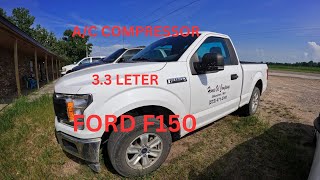
- 3.3L V6 / 3.5L V6 (Non-Turbo): Fitment can be year-specific. For example, one common compressor fits 2017 models with the 3.5L non-turbo V6, but also fits 2018-2020 models with the 3.3L V6. 🎬 See this step-by-step compressor replacement on a 3.3L V6 engine.
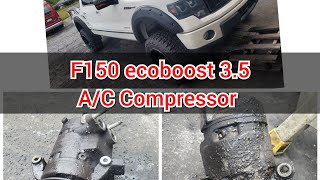
- 3.5L V6 EcoBoost: These turbocharged models often use a different compressor than their non-turbo counterparts. 🎬 Watch: A helpful walkthrough for replacing the 3.5L EcoBoost compressor.
- 5.0L V8: These engines have their own designated compressor.
The 'Hot Climate Package' Exception
Many F-150 compressors are for standard climate systems only. Ford offered an optional 'Hot Climate Package' (sometimes called high temp package) which included a different, higher-capacity A/C compressor. If your truck has this package, a standard compressor will not fit or function correctly. Check your vehicle's original window sticker or consult a dealer with your VIN to determine if you have this option before ordering a part.
Refrigerant Type: R-1234yf
These modern F-150s use R-1234yf refrigerant, not the older R-134a. The two are not interchangeable. The system components, lubricating oil (PAG oil), and service ports are different. Using the wrong refrigerant will damage the system and is illegal. Servicing an R-1234yf system requires specialized, more expensive equipment.
Common Symptoms of a Failing F-150 A/C Compressor


A failing A/C compressor can present several distinct symptoms. Early diagnosis can sometimes prevent more extensive damage to the rest of the system.
- A/C Blows Warm Air: This is the most obvious symptom. If the refrigerant level is correct, the problem often points to the compressor or its clutch.
- Loud Noises When A/C is On: Grinding, rattling, or squealing noises that start when you turn on the A/C and stop when you turn it off are a classic sign of internal compressor failure or a bad clutch bearing.
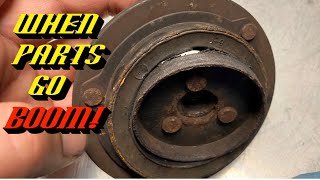
- Visible Debris from Clutch: Some owners report seeing black, rubbery debris splattered in the engine bay around the compressor. This is the result of the clutch's rubber dampener disintegrating from heat and slippage. 🎬 Watch: See examples of these common Ford compressor clutch failures.
- Compressor Clutch Does Not Engage: When you turn on the A/C, you should hear a distinct 'click' from the engine bay as the electromagnetic clutch engages. If there's no click, the issue could be a bad clutch coil, a blown fuse, a faulty relay, or a pressure switch preventing engagement due to low or high refrigerant pressure.
- Leaking Fluid: The compressor contains PAG oil mixed with refrigerant. If you see a greasy, grimy buildup on the compressor body, it's likely the shaft seal is leaking.
Known Issues, TSBs, and Recalls

As of early 2026, there are no specific NHTSA safety recalls for the A/C compressor itself on 2017-2025 Ford F-150s. However, Ford has issued Technical Service Bulletins (TSBs) for related A/C issues.
- TSB for Inoperative A/C: One TSB addresses an inoperative A/C system that only blows warm air, accompanied by Diagnostic Trouble Code (DTC) P2CFC in the Body Control Module C (BCMC) on some 2021-2024 F-150s. This indicates the issue may be electronic rather than a mechanical compressor failure.
Owners in online forums frequently discuss premature clutch failure, where the rubber dampener on the clutch melts or tears apart, causing the clutch to stop engaging the compressor shaft. In these cases, the compressor itself may still be good, but replacing just the clutch is often nearly as expensive in parts and labor as replacing the entire compressor assembly.
Buying a Used A/C Compressor: What to Check
A used OEM compressor can be a reliable and cost-effective alternative to expensive new parts, especially when cheap aftermarket options have a high failure rate. Here’s what to inspect before you buy.
- Verify the Part Number: This is the most critical step. Match the OEM part number from your old compressor to the used one. The provided list of OEM numbers is a starting point, but physical verification is best.
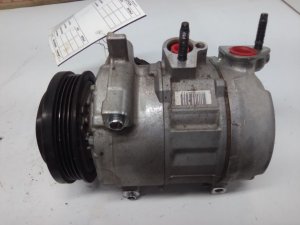
- Inspect the Clutch and Pulley: Spin the outer pulley by hand. It should spin smoothly and silently. A rough or noisy bearing is a major red flag. Next, try to spin the center clutch plate. It should also turn by hand (with some resistance from the compressor internals), separate from the pulley. If it's seized or spins with no resistance, pass on it.
- Check for 'Black Death': Look inside the inlet and outlet ports. If you see any metallic shavings or a thick, black, sludgy residue, the compressor has suffered a catastrophic internal failure. This is known as 'black death.' Do not buy it. A compressor that fails this way has sent metal debris throughout the entire A/C system, requiring a complete and costly system flush and replacement of multiple components.
- Examine the Housing: Look for any cracks in the aluminum housing or damage to the mounting tabs. Check the electrical connector for bent, corroded, or broken pins.
- Confirm It Was Capped: A reputable recycler will cap or plug the refrigerant ports immediately after removal to keep moisture and debris out. Moisture is the enemy of an A/C system, as it can mix with refrigerant and oil to form corrosive acid.
Pro Tip: When replacing a compressor, you MUST also replace the A/C receiver/drier (or desiccant bag) and the expansion valve (or orifice tube). Failure to do so will contaminate your new compressor and void most warranties.
Replacement Overview & Difficulty
Replacing the A/C compressor on an F-150 is a mechanically straightforward but logistically difficult job for a DIYer.
- Difficulty Rating: 4 out of 5
- Primary Challenge: Federal law requires the use of a specialized machine to safely recover the R-1234yf refrigerant before opening the system and to pull a deep vacuum after installation. These machines are expensive and not typically owned by home mechanics.
General Steps:
- Have a professional shop recover the refrigerant from the system.
- Disconnect the battery.
- Loosen the serpentine belt tensioner and remove the belt from the compressor pulley.
- Disconnect the A/C line manifold and the electrical connector from the compressor.
- Unbolt the compressor from its mounting bracket. Access can be tight, sometimes requiring removal of the passenger side front wheel and inner fender liner.
- Install the new compressor, ensuring the correct amount of PAG oil is added if it wasn't pre-filled.
- Reconnect lines with new O-rings, the electrical connector, and reinstall the belt.
- Return the vehicle to a shop to have the system vacuum tested for leaks and recharged with the precise weight of R-1234yf specified on the under-hood sticker.
Cost Comparison
Prices can vary significantly based on engine type, brand, and your location. The following is an estimate to help understand the value of a used OEM part.
| Part Type | Estimated Cost |
|---|---|
| New OEM (Ford/Motorcraft) | $500 - $1,100 |
| New Aftermarket | $250 - $600 |
| Used OEM | $125 - $350 |
| Remanufactured | $200 - $450 |
| Shop Labor (Replacement & Recharge) | $500 - $800+ |
Frequently Asked Questions (FAQ)
Can I just replace the A/C compressor clutch?
While it is sometimes possible, it is often not recommended. If the clutch failed due to a seizing compressor, replacing only the clutch will result in another immediate failure. Furthermore, the cost of an OEM clutch kit can be almost as much as a complete used or aftermarket compressor assembly, and the labor can be just as intensive.
What happens if I don't vacuum the A/C system after replacement?
Skipping the vacuum step will leave atmospheric air and moisture in the system. This moisture will mix with the refrigerant and PAG oil to create a corrosive acid, which will quickly destroy your new compressor, expansion valve, and condenser from the inside out. This is a critical, non-negotiable step.
My A/C clutch isn't engaging. Is the compressor definitely bad?
Not necessarily. The system has several safety switches. The clutch will not engage if the refrigerant pressure is too low (from a leak) or too high. It can also be caused by a simple blown fuse or a bad A/C clutch relay in the under-hood fuse box. Always check fuses and relays first, as they are a cheap and easy fix.
Do I need to add oil to my new compressor?
Most new and remanufactured compressors come pre-filled with oil, but you must verify the amount and type are correct for your vehicle. Used compressors will have been drained. You must add the correct specification and quantity of PAG oil before installation. The total system oil capacity is specified by the manufacturer; this oil is distributed between the compressor, condenser, evaporator, and receiver/drier.
Helpful Videos
Technical Specifications
OEM Part Numbers: FL3H19D629AB FL3H19D629CA FL3H19D629CB FL3H19D629EB FL3Z19703A FL3Z19703C FL3Z19703E FL3Z19703F HL3H19D629CA HL3H19D629CB HL3H19D629CC HL3H19D629CD HL3H19D629HA HL3H19D629HB HL3H19D629HC JL3Z19703LB HL3Z-19703-Y
Refrigerant Type: R-1234yf. Lubricant: PAG Oil. Pulley: Typically 4-groove, ~110mm diameter.
We Have This Part in Stock




The information in this article is provided for general reference and educational purposes only. Vehicle specifications, procedures, and part compatibility can vary by production date, trim level, and region. Always consult your vehicle's factory service manual and verify part numbers before purchasing or performing repairs. Safety-critical components such as airbags, seat belts, and braking systems should be installed by a qualified professional.
- Ford F-150:
- 🎬 Helpful Videos
- 🛍️ Shop This Part
- Critical Fitment Warnings: Engine & Climate Options
- Fitment by Engine:
- The 'Hot Climate Package' Exception
- Refrigerant Type: R-1234yf
- Common Symptoms of a Failing F-150 A/C Compressor
- Known Issues, TSBs, and Recalls
- Buying a Used A/C Compressor: What to Check
- Replacement Overview & Difficulty
- General Steps:
- Cost Comparison
- Frequently Asked Questions (FAQ)
- 🎟️ Get 5% Off